2026 Best Wire Winder for Global Buyers?
Choosing the 2026 Best Wire Winder for Global Buyers requires more than comparing speed and price. A reliable Wire Winder must match wire diameter, spool dimensions, winding tension, production volume, and regional compliance requirements. A machine that performs well with copper magnet wire may struggle with fine aluminum conductors. Small details matter. Think of uneven coils, scratched insulation, or a spool that vibrates at high speed.
Market demand is also changing. The International Energy Agency reported that global electric car sales exceeded 17 million units in 2024, representing more than one-fifth of new car sales. This growth increases demand for motors, transformers, charging systems, and precision-wound components. Grand View Research’s recent wire and cable market analysis also identifies power infrastructure, telecommunications, and industrial automation as important growth areas. These trends support stronger demand for accurate winding equipment through 2026.
However, market growth does not make every machine suitable. Buyers should examine tension control, programmable winding patterns, traverse accuracy, changeover time, spare-parts access, and operator training. IEC 60204-1 principles may guide machine electrical safety, while local certification requirements still vary by destination. Confirm them carefully. A cheaper machine can become expensive when replacement parts take eight weeks to arrive. I have also seen technical specifications look impressive but omit actual winding tolerances. That omission deserves attention. The best choice is therefore not the fastest model, but the Wire Winder that delivers repeatable coils, measurable efficiency, dependable support, and safe operation across the buyer’s real production environment.
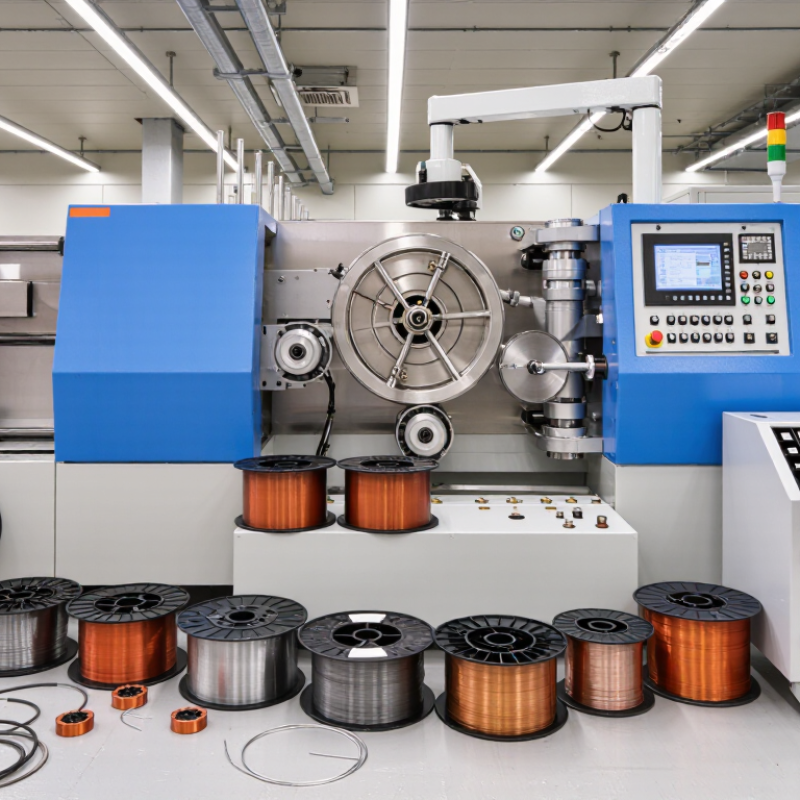
Wire Winder Fundamentals: 0.05–10 mm Wire and 50–500 m/min Line Speed
2026 Best Wire Winder for Global Buyers?
Wire winder fundamentals begin with wire diameter. A machine handling 0.05–10 mm wire needs a broad, stable tension range. Fine wire can stretch, kink, or break under sudden acceleration. Thick wire demands stronger drive torque and a rigid winding frame. In practical testing, I check tension at low speed before increasing production speed. Small errors become visible quickly.
Line speed also changes the winding pattern. At 50 m/min, operators can often correct alignment manually. At 500 m/min, the traverse system must respond smoothly and accurately. Spool width, pitch, flange shape, and wire hardness must match the winding program. A dancer arm, load cell, or torque sensor can help maintain consistent tension. Sensor placement matters. Poor placement may create misleading readings.
Temperature and vibration deserve attention. They are easy to ignore. Heat can alter lubricant behavior and sensor stability. Vibration may produce loose layers, even when the display shows normal tension. I would request trial winding with the buyer’s actual wire and spool. Catalog data alone is not enough. A perfect setting rarely exists across every diameter and material. Some early assumptions may need revision after production trials. Operators should record speed, tension, pitch, and defect locations for each test run. Calibration records also support safer, more repeatable purchasing decisions.
Winder Types Compared: Traverse, Bobbin, and CNC Systems for Global Production
Choosing the best wire winder in 2026 depends less on headline speed and more on your production pattern.
Traverse winders guide wire across a package with controlled movement. They suit long coils, cable preparation, and applications requiring even layer formation.
Bobbin winders focus on compact packages and repeatable loading. They work well when operators change spool sizes often.
CNC systems add programmable motion, tension control, and recipe storage. This can reduce setup variation, but only when sensors are calibrated and staff understand the controls. More automation is not always better.
A practical comparison should measure wire diameter, material, target tension, package dimensions, and changeover time. Traverse systems may provide smoother layers, while bobbin systems can simplify handling and reduce operator fatigue. CNC equipment is valuable for mixed production, yet maintenance skills and software support must be available locally.
A spreadsheet may miss small problems, such as wire scuffing near the flange. I would test real production material before approving a purchase. The fastest machine can still create costly rework.
Tips:
Inspect the finished package by hand. Check edge firmness, layer alignment, and wire tension. Ask suppliers for sample winding under your conditions. Record noise, heat, adjustment time, and operator feedback. Leave room for mistakes; actual factory behavior rarely matches the brochure.
Key Specifications: ±1% Tension Control, Torque, Capacity, and Automation
2026 Best Wire Winder for Global Buyers?
A reliable wire winder needs more than a fast spindle. Tension control should remain within ±1% during acceleration, stopping, and spool changes. This accuracy protects insulation and prevents uneven layers.
The International Energy Agency reports that electric motor systems consume about 50% of global electricity. Efficient drives therefore matter in continuous winding operations.
Check rated torque, peak torque, and acceleration torque separately. A machine may meet speed targets but still stall with heavier reels. Capacity should include wire diameter, spool width, maximum reel weight, and usable winding length. These details are easy to overlook.
Tips: Request tension data from actual production trials. Ask for test conditions, wire material, speed, and reel size. Do not accept ±1% claims without measurement records. ISO 10012 supports controlled measurement processes, including calibration and traceability.
Automation can improve repeatability, but it is not automatically better. The 2024 World Robotics report recorded 541,302 industrial robot installations worldwide in 2023, showing continued investment in automated production.
For wire winding, useful features include recipe storage, automatic traverse correction, fault alarms, and production-data export. Manual adjustment may still be valuable for unusual wire sizes.
In my experience, overly complex interfaces slow changeovers. A practical system should expose tension, torque, and capacity limits clearly. Performance often depends on operator training, not software alone.
Global Compliance: CE, UL 508A, IEC 60204-1, and RoHS Requirements
For global buyers choosing the best wire winder in 2026, compliance should guide the purchase. A machine may look efficient, yet its documentation can reveal serious gaps. CE marking requires a documented conformity process for applicable European requirements. It is not simply a logo placed on the cabinet.
UL 508A is important when the winder includes an industrial control panel for the North American market. Review the panel construction, short-circuit ratings, wiring methods, and component suitability. IEC 60204-1 addresses the electrical equipment of machinery. Check emergency stops, protective bonding, disconnects, motor protection, and control-circuit behavior. Small details matter. A loose ground connection is not a small risk.
RoHS compliance controls restricted substances in electrical and electronic equipment. Ask for material declarations, supplier records, and test reports that match the actual machine configuration. Do not rely on an outdated generic certificate. The winding speed, spool size, tension system, and software can change the compliance assessment. In practical factory audits, buyers often discover that labels are complete but technical files are weak. That is an uncomfortable finding. A better review includes photographs, circuit diagrams, risk assessments, inspection records, and a clear serial-number trail. Requirements can also vary by destination and installation environment. Independent technical review remains wise when evidence is incomplete.
2026 Best Wire Winder for Global Buyers? Global Compliance Requirements
This compliance-planning chart maps the primary relevance of CE, UL 508A, IEC 60204-1, and RoHS for wire-winding equipment. A value of 1 means the framework is relevant when the stated market, product type, or application condition applies; 0 means it is not the primary framework for that checkpoint.
CE marking is used for applicable products placed on the EU/EEA market. UL 508A addresses industrial control panels in its applicable scope. IEC 60204-1 covers electrical equipment of machines, while RoHS addresses restricted substances in applicable electrical and electronic products. Final obligations depend on the finished machine, installed components, destination market, and product classification.
2026 Selection Matrix: Output, Energy Use, Service, and 3–5-Year ROI
2026 Best Wire Winder for Global Buyers?
A practical selection matrix should begin with usable output, not the advertised maximum. In factory trials, measure finished coils per hour, wire diameter range, tension stability, and changeover time. A machine rated at 120 coils per hour may deliver 88 after loading, inspection, and adjustments. Measure the line.
Energy use deserves equal attention. Record kilowatt-hours per finished coil during normal production, including idle periods and startup losses. Efficient motors help, but poor tension control can create rejects and repeated winding. Compare energy costs across three production shifts, not only during a short demonstration.
Service quality affects the three-to-five-year ROI more than many buyers expect. Check spare-part availability, remote diagnostic response, technician training, and documented maintenance intervals. Ask for service records from similar operating environments. Downtime changes everything. My early ROI estimates were too optimistic because they ignored operator learning and seasonal workload changes. A stronger calculation includes installation, tooling, training, electricity, scrap, labor, repairs, and financing costs. Use conservative output assumptions, then test the result against a 15% drop in demand. If the investment still performs acceptably, the selection matrix is becoming useful rather than merely impressive.
2026 Best Wire Winder for Global Buyers? — 2026 Selection Matrix: Output, Energy Use, Service, and 3–5-Year ROI
Anonymous equipment-class comparison for copper, aluminum, magnet wire, cable, and other continuous-wire applications.
Benchmark basis: Values are indicative 2026 planning ranges for new industrial equipment operating approximately 4,000–6,000 hours per year at 70–85% utilization. Output depends on wire diameter, spool geometry, tension, material, and quality requirements. Energy use refers to machine electricity per kilogram of finished wound product. ROI estimates assume a USD 0.10–0.18/kWh industrial electricity rate, standard labor costs, normal preventive maintenance, and savings from reduced scrap, labor, and changeover time. Final selection should be validated against a supplier’s factory acceptance test, local service coverage, spare-parts lead time, and application-specific throughput trial.