


7 Tips for Choosing the Right Portable Crusher?
Choosing the right Portable Crusher is rarely a simple equipment purchase. It affects production speed, fuel use, site safety, and long-term operating costs. A machine that performs well in a quarry may struggle on a small demolition site. Real conditions matter.
This guide presents seven practical tips for making a more informed choice. It examines material hardness, maximum feed size, required output, mobility, power source, maintenance access, and total ownership cost. Operators should inspect the loading area, transport route, and discharge space before comparing models. Small details matter. A narrow track or weak access road can quickly change the decision.
Experienced contractors also consider dust control, noise limits, spare parts, and local service support. These factors may seem less important during a sales demonstration. They become critical after several months of daily use. A reliable Portable Crusher should match the work, not merely display impressive specifications. Rated capacity can be misleading when material is wet, oversized, or poorly fed. That deserves careful thought.
No single crusher suits every project. Sometimes, the cheapest option becomes the most expensive after frequent downtime. Sometimes, a larger model offers power but creates transport and maintenance problems. Buyers should verify performance data, request references, and compare realistic operating conditions. The following seven tips provide a practical framework for choosing equipment with greater confidence, fewer surprises, and a clearer understanding of long-term value.
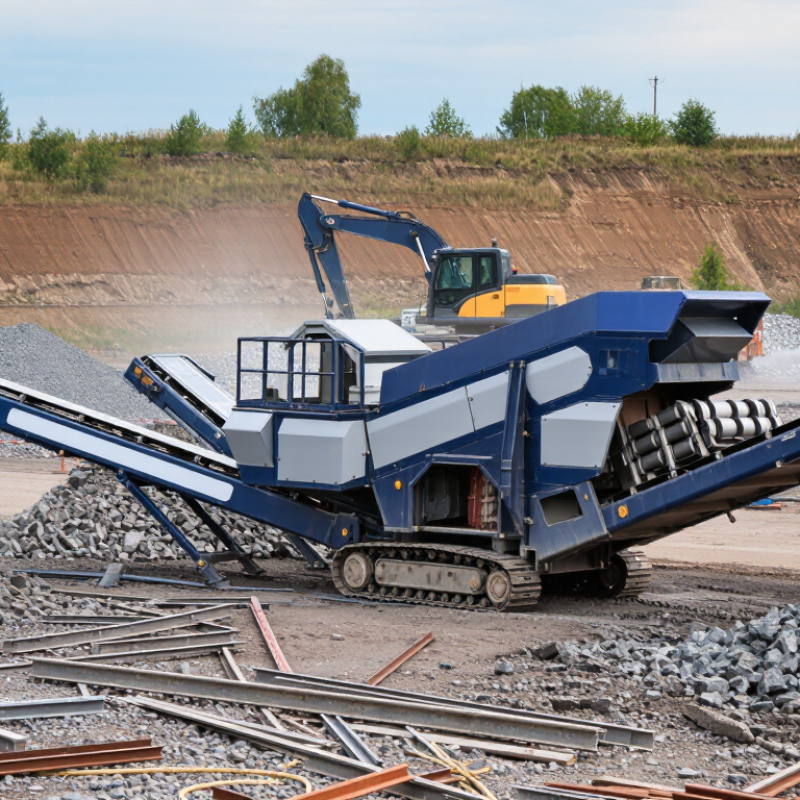
Define the Material, Output, and Crushing Requirements
Tip 1: Define the material before comparing portable crushers. Describe its hardness, moisture, abrasiveness, and maximum feed size. Limestone behaves differently from recycled concrete or river stone. A damp, sticky feed may block the inlet and reduce production. Collecting a small sample from several stockpile areas gives more reliable information than judging one handful. That step is easy to skip.
Tip 2: Set a realistic output target. Specify the required tons per hour, product sizes, and acceptable fines. A crusher producing impressive peak capacity may struggle with your actual material. Check the discharge opening, screening arrangement, and recirculation needs together. In field assessments, I have seen output estimates fall when operators use oversized feed. Measure the result, not just the brochure figure. A simple trial often exposes this gap.
Tip 3: Match the machine to your crushing conditions. Consider transport limits, available power, ground conditions, dust control, and daily operating hours. A compact unit may suit short projects, while continuous production demands stronger feeding and maintenance access. Ask for verified test data and inspect wear areas carefully. I would also leave capacity margin for unexpected moisture or harder rock. Perfect predictions are rare. Recheck your assumptions after the first operating shift.
7 Tips for Choosing the Right Portable Crusher? — Define the Material, Output, and Crushing Requirements
| Tip | Decision Dimension | Material Conditions | Key Crushing Requirement | Recommended Selection Direction | Important Check |
|---|---|---|---|---|---|
| 1 | Identify the Feed Material | Hard rock such as granite, basalt, and quartzite; medium-hard rock such as limestone and sandstone; or recycled concrete and asphalt. | Determine hardness, abrasiveness, moisture content, and whether the material contains steel, wood, clay, or other contaminants. | Use a jaw crusher for primary reduction of hard, abrasive rock. Consider an impact crusher for less-abrasive limestone, recycled concrete, and asphalt when a cubical product is required. | Obtain a representative sample and confirm the material’s compressive strength, abrasiveness, and maximum lump size. |
| 2 | Define the Maximum Feed Size | Feed size may range from small screened material to large blasted rock or demolition pieces. | The crusher’s maximum feed opening must safely accept the largest expected particle, not only the average particle. | Choose a feed opening with sufficient clearance for the actual top-size material. Oversized rocks should be reduced before entering the crusher. | Compare the largest feed dimension with the manufacturer’s rated maximum feed size and maintain a practical safety margin. |
| 3 | Set the Required Output | Common portable-crushing outputs include base material, recycled aggregate, manufactured sand feed, and construction stone. | Establish the target product size, such as 0–20 mm, 20–40 mm, or another project-specific gradation. | Select the crusher type, chamber configuration, and closed-side setting according to the required reduction ratio and final product size. | Request a product gradation curve rather than relying only on the crusher’s maximum capacity. |
| 4 | Calculate Required Capacity | Capacity depends on feed size, material density, moisture, crusher setting, crushing stage, and the required product gradation. | Define the required throughput in metric tonnes per hour and include peak production periods. | Size the plant for the required average rate while allowing for normal feed variation. Typical portable units may be rated from below 100 t/h to several hundred t/h, depending on configuration. | Confirm whether the quoted capacity is based on loose feed, a specific material, a stated setting, and a particular product size. |
| 5 | Choose the Crushing Stage | Primary crushing handles large feed; secondary and tertiary crushing produce smaller and more controlled aggregate sizes. | A single-stage process may be adequate for simple reduction, while tighter gradation or smaller products may require multiple stages. | Use jaw crushing for primary reduction, then consider cone crushing for consistent aggregate production from hard rock. Impact crushing is often suitable for shaping and recycling applications. | Review the complete circuit, including the feeder, screen, conveyors, recirculation loop, and stockpile arrangement. |
| 6 | Assess Mobility and Site Access | Worksites may include quarries, road projects, demolition areas, temporary construction sites, and locations with limited space. | Consider transport dimensions, operating footprint, setup time, ground conditions, and the frequency of relocation. | Choose tracked mobility for frequent movement over rough ground and wheeled mobility where road transport and rapid relocation between prepared sites are priorities. | Verify legal transport width, length, height, total mass, lifting points, access-road limits, and required setup clearance. |
| 7 | Review Operating and Safety Needs | Dust, noise, vibration, tramp metal, wet feed, and changing weather can affect production and maintenance requirements. | The plant should provide safe access, guarding, emergency stops, dust suppression, overload protection, and practical maintenance access. | Prioritize automatic control, hydraulic adjustment, tramp-release protection, magnetic separation for recycled feed, and water-spray or dust-control provisions where required. | Compare fuel or energy consumption, wear-part life, service intervals, spare-part availability, operator visibility, and local regulatory requirements. |
Note: Actual capacity, product gradation, fuel consumption, and wear rates vary with material properties, feed gradation, crusher setting, moisture, and circuit configuration. Confirm final specifications through a site-specific application review.