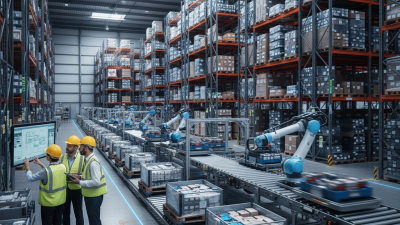

In modern warehousing, efficiency is critical for success. The adoption of the ASRS racking system has revolutionized how businesses handle inventory. This automated solution offers numerous benefits that can enhance overall operations.
With its compact design, the ASRS racking system maximizes storage capacity while minimizing the footprint. It allows for quick access to items. This leads to improved productivity and reduces the time spent searching for products. Moreover, it decreases the likelihood of human error during order picking, a significant factor in maintaining inventory accuracy.
However, the installation of an ASRS racking system may pose challenges. It requires a significant upfront investment and careful planning. Also, staff training is essential to ensure smooth operation. Despite these potential hurdles, the benefits of using an ASRS racking system often outweigh the drawbacks. The blend of automation and space optimization presents opportunities for warehouses to adapt to the growing demands of e-commerce.

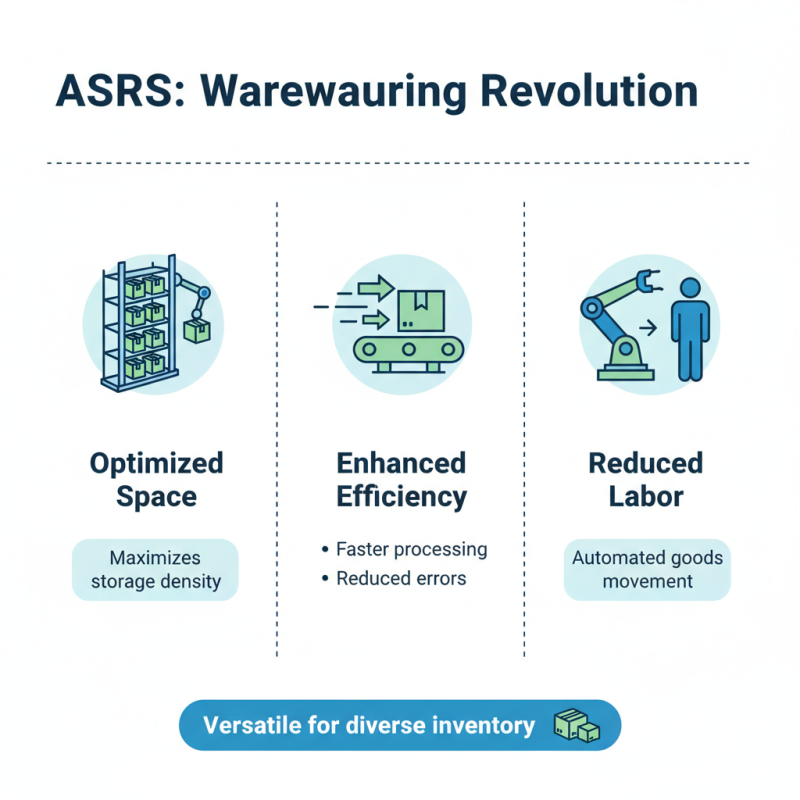
Automated Storage and Retrieval Systems (ASRS) are revolutionizing modern warehouses. These systems optimize space and enhance efficiency. By automating the movement of goods, warehouses can reduce manual labor. This leads to fewer errors and faster processing times. ASRS can handle various product sizes, making it versatile for different inventory types.
One of the key benefits is space optimization. ASRS allows for taller storage configurations, thus increasing vertical space usage. This can be vital in areas where floor space is limited. Consider that wasted space directly impacts operational costs. Finding ways to utilize every inch is essential.
Tip: Regular maintenance is crucial for ASRS efficiency. Schedule routine inspections to identify potential issues early.
Another advantage is improved inventory accuracy. Automated systems track items precisely. This minimizes stock discrepancies and improves order fulfillment rates. However, oversight is still needed. Human intervention may sometimes be required to handle exceptions.
Tip: Train staff on system usage. Knowledgeable employees can quickly resolve issues.
Embracing ASRS can be daunting but worthwhile. While the initial investment may be high, the long-term benefits typically outweigh the costs. Exploring this technology can provide substantial returns in efficiency and accuracy.
Modern warehouses face the ever-increasing demand for space efficiency. Automated Storage and Retrieval Systems (ASRS) provide a way to improve this. With sophisticated technology, these systems maximize vertical space effectively. By utilizing the height of warehouses, ASRS can significantly increase storage density. This method is especially useful in tight urban settings or when expansion is not an option.
Moreover, ASRS can reduce the amount of aisle space required. Traditional racking systems need wide aisles for manual operations. In contrast, ASRS allows for narrower aisles since machines handle the picking. This change can free up more space for shelving or workstations. However, the transition to ASRS can be daunting. Implementing new technology requires training and adjustment. Employees may need time to adapt. This is a process that needs careful planning.
While ASRS can optimize space, it is vital to consider its limitations. Not all items are suited for automated systems. Some products may need manual picking due to size or fragility. Balancing automated and manual processes is essential for efficiency. Ultimately, while ASRS offers enhanced space efficiency, its successful integration hinges on thoughtful implementation.
| Benefit | Description | Impact |
|---|---|---|
| Increased Space Efficiency | Maximizes vertical space and reduces the footprint of storage. | Up to 50% more space utilization. |
| Improved Inventory Management | Automated tracking and sorting of products. | Reduces errors and enhances inventory accuracy. |
| Enhanced Picking Speed | Accelerates the picking process with rapid retrieval systems. | Increases order fulfillment rate by 30%. |
| Labor Cost Reduction | Less manual labor required due to automation. | Cost savings up to 40% on labor expenses. |
| Increased Safety | Reduced risk of workplace accidents due to fewer manual handling tasks. | Lowered injury rates and insurance costs. |
| Reduced Product Damage | Minimized handling reduces the likelihood of product damage. | Improves overall product quality. |
| Real-Time Data Analytics | Enhanced data collection for better decision-making. | Increased operational efficiency. |
| Scalability | Easily expandable to accommodate growth. | Supports future business needs without major investment. |
| Energy Efficiency | Automated systems optimize energy use. | Lower utility costs and carbon footprint. |
| Improved Customer Satisfaction | Quicker order processing leads to faster shipping. | Higher customer retention and loyalty. |
Automated Storage and Retrieval Systems (ASRS) enhance inventory accuracy significantly. They reduce human errors associated with manual handling. As products move swiftly in and out, the likelihood of misplacing items decreases. With real-time data tracking, warehouses can monitor stock levels accurately. This level of precision is crucial in high-demand environments.
Tips: Regularly update system software. This ensures features work optimally. Additionally, train staff on the new technology. Familiarity leads to fewer mistakes.
Despite these advantages, not every warehouse is ready for such a transition. The investment in technology can be high. Training staff may also present challenges. Moreover, a reliance on automation could lead to oversight of other critical areas.
Tips: Conduct a cost-benefit analysis before investing. Understand the unique needs of your operation. Sometimes, simpler solutions yield better results. Balancing automation with human oversight can be essential for maintaining accuracy.
Automated Storage and Retrieval Systems (ASRS) are transforming modern warehousing. Recent studies indicate that implementing ASRS can increase labor productivity by up to 30%. These systems reduce the time workers spend searching for items. Instead of navigating aisles, employees can focus on value-added tasks.
ASRS technology streamlines operations significantly. With real-time inventory management, workers retrieve items faster. The average retrieval time drops from minutes to just seconds. A report shows that companies using ASRS experience a 50% reduction in order processing time. However, it's not all perfect. High initial costs can be a barrier for some.
Even advanced technology can face challenges. Improperly integrated systems can lead to delays. Changes in warehouse design may also disrupt workflows. Addressing these issues requires careful planning and adaptability. Adjusting strategies can enhance overall efficiency and improve labor productivity.
Modern warehouses face challenges in efficient inventory management. Integrating Automated Storage and Retrieval Systems (ASRS) can dramatically enhance operations. The real-time data management capabilities of ASRS provide insights that improve decision-making. With instant access to inventory levels, warehouses can streamline their supply chain.
This technology allows for better forecasting of stock needs. Data is collected continuously, enabling managers to adjust strategies quickly. Imagine a scenario where a spike in demand is detected. The system can immediately signal replenishment efforts, preventing stockouts. Yet, not all warehouses can fully harness this potential. Training staff to utilize data effectively is often overlooked.
Understanding and interpreting data can be daunting. Organizations may find themselves relying too heavily on the system without critical evaluation. Continuous learning is vital for maximizing these systems. Refining data analysis processes leads to better-informed decisions and, ultimately, enhanced operational efficiency. It’s a journey of adaptation and reflection.