Top 10 Benefits of Automated Storage and Retrieval Systems?
In today's fast-paced world, businesses seek efficient solutions for inventory management. An automated storage and retrieval system offers such a solution. This technology improves storage efficiency and enhances retrieval speed. However, it is important to recognize the complexities involved in this system.
Automated storage and retrieval systems can greatly reduce labor costs. They minimize human error and improve operational accuracy. Moreover, these systems enable better space utilization, allowing companies to maximize their existing facilities. Despite these advantages, companies must consider the initial investment and ongoing maintenance costs.
The integration of automated storage solutions requires careful planning. Organizations need to tailor the system to their unique workflows. Understanding the benefits and challenges is crucial. Businesses should thoughtfully evaluate how this technology can enhance their operations, ensuring it meets their specific needs.

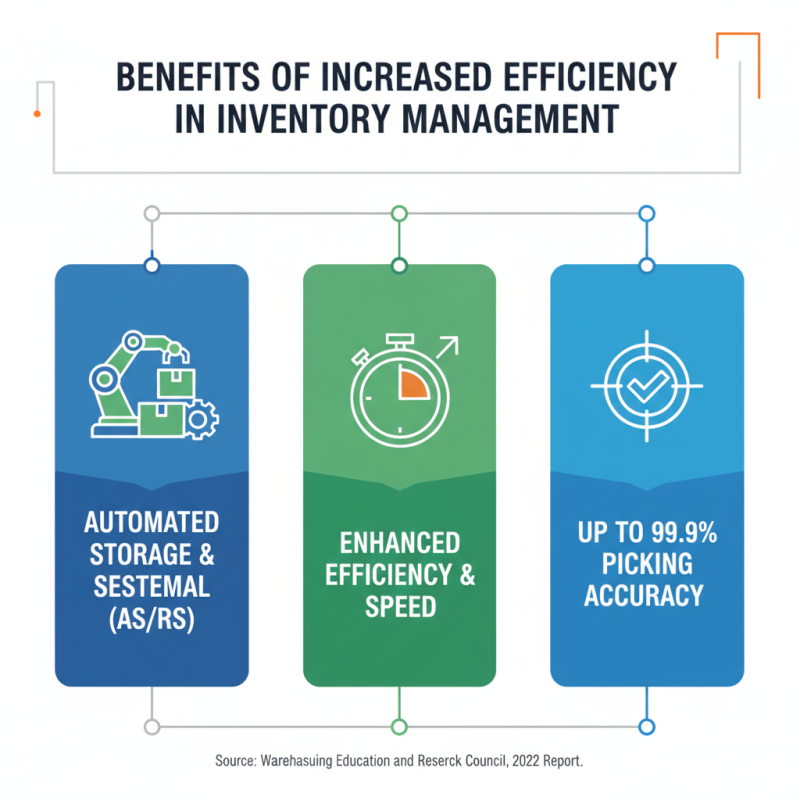
Benefits of Increased Efficiency in Inventory Management
Automated Storage and Retrieval Systems (AS/RS) revolutionize inventory management. These systems enhance efficiency, critical in fast-paced environments. According to a 2022 report by the Warehousing Education and Research Council, AS/RS can increase picking accuracy by up to 99.9%. This precision significantly reduces errors, allowing businesses to fulfill customer orders with confidence.
These systems reduce labor costs. Traditional warehousing relies heavily on manual labor, which is not only time-consuming but also prone to errors. By automating repetitive tasks, companies can reallocate employees to more strategic roles. A study by the Material Handling Industry of America indicates that AS/RS can decrease labor costs by 30%. Companies often struggle with balancing efficiency and labor costs, but automation provides a solution.
Inventory turnover is also impacted positively. With enhanced visibility and organization, businesses can track inventory levels accurately. Reports, such as one from McKinsey, show that increased turnover rates can lead to improved cash flow. However, integration of these automated systems requires upfront investment and potential disruption during implementation. Companies must weigh these factors carefully.
Reduction of Operational Costs through Automation
Automated Storage and Retrieval Systems (AS/RS) significantly reduce operational costs. By streamlining storage and retrieval processes, businesses minimize labor costs and improve efficiency. Warehouse space is utilized more effectively, resulting in lower overhead. AS/RS enhances inventory management, reducing excess stock and waste. This leads to improved cash flow and better resource allocation.
**Tips:** Implement regular maintenance on your AS/RS. Neglecting maintenance can lead to costly downtime. Training staff properly is essential. Trained personnel can avoid errors, further cutting costs.
Automated systems also reduce the risk of human error. Manual processes often lead to mistakes, impacting productivity. With AS/RS, consistency in picking and placing items improves accuracy. This results in fewer returns and increases customer satisfaction. However, adapting to automation can be challenging. Employees may resist change, impacting initial productivity.
**Tips:** Communicate the benefits of automation clearly. Engage employees in the transition process to foster a smoother adaptation. Regular feedback sessions can help address concerns and improve the system.
Top 10 Benefits of Automated Storage and Retrieval Systems - Reduction of Operational Costs through Automation
| Benefit |
Description |
Cost Reduction (%) |
| Increased Efficiency |
Automation reduces the time needed for storage and retrieval tasks. |
30% |
| Space Optimization |
Maximizes warehouse space usage by organizing inventory better. |
20% |
| Reduction of Labor Costs |
Less manual handling of items leads to lower labor expenses. |
25% |
| Improved Accuracy |
Reduces errors in picking and storing inventory. |
15% |
| Enhanced Safety |
Less manual intervention reduces the risk of workplace injuries. |
10% |
| Faster Inventory Turnover |
Efficient retrieval increases the speed of inventory movement. |
18% |
| 24/7 Operations |
Automated systems can function continuously without breaks. |
22% |
| Lower Maintenance Costs |
Modern automated systems often require less maintenance. |
12% |
| Scalability |
Easily adapt to increasing inventory without significant cost. |
16% |
| Enhanced Reporting |
Automated systems provide real-time data and analytics. |
14% |
Enhanced Accuracy and Reduced Human Error in Order Fulfillment
Automated Storage and Retrieval Systems (AS/RS) transform order fulfillment by reducing human error and enhancing accuracy. These systems streamline inventory management. They minimize the risk of mistakes that often occur during manual processes. Warehouse staff can focus on more critical tasks while AS/RS handles repetitive ones efficiently.
One key benefit is the precise inventory tracking. Each item is scanned and logged, ensuring that the data is always up-to-date. This level of accuracy allows businesses to fulfill orders quickly. Inaccurate inventory is costly. It leads to stockouts or overstock situations that can disrupt operations.
Tip: Implement regular training sessions for your staff. Familiarity with the AS/RS technology helps in optimizing its use and maintaining accuracy.
Despite their advantages, AS/RS systems require periodic maintenance. They are complex and can malfunction if neglected. Regular checks on sensors and software are essential to ensure smooth operations.
Tip: Schedule maintenance during low-traffic hours. This approach prevents disruptions in daily activities.
Incorporating automated solutions is vital for efficiency. Yet, businesses must remain vigilant. Continuous monitoring and occasional manual checks are necessary to uphold accuracy. Balancing automation with human oversight enhances the overall system reliability.
Improved Space Utilization and Inventory Density
Automated Storage and Retrieval Systems (ASRS)
significantly enhance space utilization and inventory density in warehouses. By optimizing vertical space, these systems allow for a denser arrangement of products.
This means more items can be stored within the same footprint.
High racks and compact configurations maximize usable space, reducing the need for larger facilities.
The reliability of ASRS improves inventory accuracy. Automated systems minimize human errors related to stock counts. With precise inventory tracking, companies can
reduce excess stock.
However, a shift to automation may require training for existing staff.
Embracing technology doesn't eliminate the need for human oversight. Inventory management can become complex, especially during transitions to automated systems.
Investing in an ASRS may initially feel daunting. Costs can be high, and the change can disrupt established workflows.
But the potential for improved efficiency and reduced operational costs is compelling.
Businesses must weigh these aspects carefully. The goal should be to find a balance that supports both automation and human input.
Faster Retrieval Times and Enhanced Customer Satisfaction
Automated Storage and Retrieval Systems (AS/RS) are transforming how warehouses operate. According to industry reports, these systems can boost retrieval speeds by up to 300%. Speedy retrieval is crucial for maintaining customer satisfaction. When customers expect quick delivery, every second counts. A faster system means less waiting time and better service.
Moreover, AS/RS can reduce human error significantly. Errors in picking orders lead to delays and dissatisfaction. Reports reveal that automated systems achieve error rates as low as 0.5%. This improvement directly correlates with enhanced customer trust. Customers appreciate accurate orders and timely deliveries. Even a small percentage of errors can impact a company's reputation.
However, not every implementation is flawless. Many businesses face challenges during the transition to automation. Initial costs can be high, and training staff takes time. It's essential to assess the compatibility of AS/RS with existing processes. Only then can a business truly realize its potential benefits. Balancing speed and accuracy with operational realities is vital for success.
Top 10 Benefits of Automated Storage and Retrieval Systems