


Top 10 Benefits of Using Cartesian Robots in Modern Automation Systems
In the rapidly evolving landscape of modern automation, Cartesian robots have emerged as indispensable components that enhance efficiency, precision, and flexibility in various industrial applications. As a leading expert in automation technology, Dr. Emily Carter highlights the transformative impact of these robotic systems, stating, "The integration of Cartesian robots into production lines not only streamlines operations but also enables manufacturers to achieve unprecedented levels of accuracy and speed."
With their straightforward design and remarkable adaptability, Cartesian robots facilitate a wide range of tasks, from assembly to packaging and material handling. These systems leverage three linear axes to position tools and components with exceptional precision, making them a preferred choice for industries looking to optimize their workflows. Furthermore, the modularity of Cartesian robots allows for seamless integration into existing systems, paving the way for a more efficient and automated future.
As we delve into the top 10 benefits of using Cartesian robots in modern automation systems, it becomes clear that their role in enhancing productivity and driving innovation remains at the forefront of technological advancement. By embracing these robotic solutions, businesses can not only reduce operational costs but also maintain a competitive edge in today's fast-paced market.

Advantages of Cartesian Robots in Streamlining Production Processes
In modern automation systems, Cartesian robots play a crucial role in streamlining production processes across various industries. Their linear movement capabilities allow for precise positioning and repetition, which is essential for tasks such as assembly, packaging, and material handling. According to a recent report by the International Federation of Robotics, the adoption of robotic systems, including Cartesian configurations, has increased by over 15% annually, highlighting their growing significance in enhancing operational efficiency.
One of the key advantages of Cartesian robots is their ability to minimize setup and changeover times in production lines. With their simple mechanical design and straightforward programming requirements, these robots can be quickly adapted for different tasks or product variations. Research indicates that companies implementing Cartesian robots have experienced a reduction in cycle times by as much as 30%, allowing for faster production rates while maintaining accuracy. This efficiency not only improves output but also contributes to lower operational costs, making Cartesian robots an attractive solution for manufacturers looking to optimize their processes.
Moreover, the scalability of Cartesian robots supports the needs of evolving production demands. Businesses can easily upgrade their systems by adding more axes of movement or integrating advanced technologies, such as vision systems for enhanced quality control. A study by McKinsey & Company found that automation technologies, including Cartesian robots, have the potential to boost global productivity by up to 1.4% annually, affirming their importance in adapting to market fluctuations and achieving long-term growth.
Top 10 Benefits of Using Cartesian Robots in Modern Automation Systems
| Benefit | Description | Impact on Production |
|---|---|---|
| High Precision | Cartesian robots offer high positional accuracy for repetitive tasks. | Reduces waste and increases product quality. |
| Flexible Applications | Can be used in various processes such as assembly, welding, and packaging. | Increases versatility in production lines. |
| Cost-Effective | Relatively lower initial investment compared to other robot types. | Shorter ROI period for businesses. |
| Simplicity in Programming | Easy to program, often requiring basic coding skills. | Reduces training time for operators. |
| Compact Design | Space-saving footprint allows for efficient use of factory floor. | Maximizes production area utilization. |
| Consistency | Delivers the same quality over time without fluctuations. | Ensures steady production outputs. |
| Reduced Labor Costs | Minimizes the need for manual labor in repetitive tasks. | Lowers operational costs in the long term. |
| Improved Safety | Reduces human exposure to hazardous tasks. | Enhances workplace safety and compliance. |
| Scalability | Easily scalable to meet increasing production demands. | Supports business growth and expansion. |
| Integration with Modern Technologies | Easily integrates with IoT and AI technologies. | Enables smarter, more efficient production processes. |

Related Posts
-
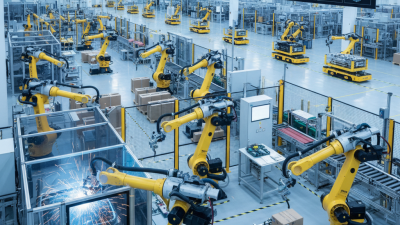
Top 10 Fanuc Robot Applications in Manufacturing and Automation Industry
-
How to Choose the Right Manufacturing Robots for Your Production Needs
-
Revolutionizing Manufacturing: How Industrial Robotics Are Shaping the Future of Automation
-
Exploring the Future of Manufacturing: The Rise of Cartesian Robots in Automation
-
Why You Should Invest in a Pick and Place Robot for Your Assembly Line Efficiency
-

Why Choose a Pick and Place Robot? Boost Efficiency with 70% Increased Productivity