


7 Best Automatic Checkweigher Machines for 2026
Selecting an Automatic Checkweigher for 2026 means looking beyond the speed listed on a product sheet. The right machine must weigh consistently, reject out-of-range packs reliably, and fit the real pace of your production line. A lightweight pouch and a rigid carton can behave very differently on the same conveyor. Small details matter: belt vibration, product spacing, washdown needs, and how quickly operators can change recipes. A quick demo helps. So does a careful test with your own products.
Quality-management expert W. Edwards Deming’s well-known line, “In God we trust; all others must bring data,” offers a useful principle for evaluating weighing systems. It is not a checkweigher-specific recommendation, but it underscores why measurable performance matters. This guide compares seven leading machines for 2026, considering accuracy, throughput, integration, usability, and support. Not every plant needs the fastest model. In fact, buying extra capacity can add cost without solving the actual bottleneck. There are trade-offs. The best choice depends on your product, line conditions, and verification routine—not just a headline accuracy figure. A few questions remain worth asking: How stable is performance during a full shift? How clear are the records? And can staff troubleshoot a missed reject without slowing the line? These comparisons provide a practical starting point, while leaving room for the imperfect realities of production.
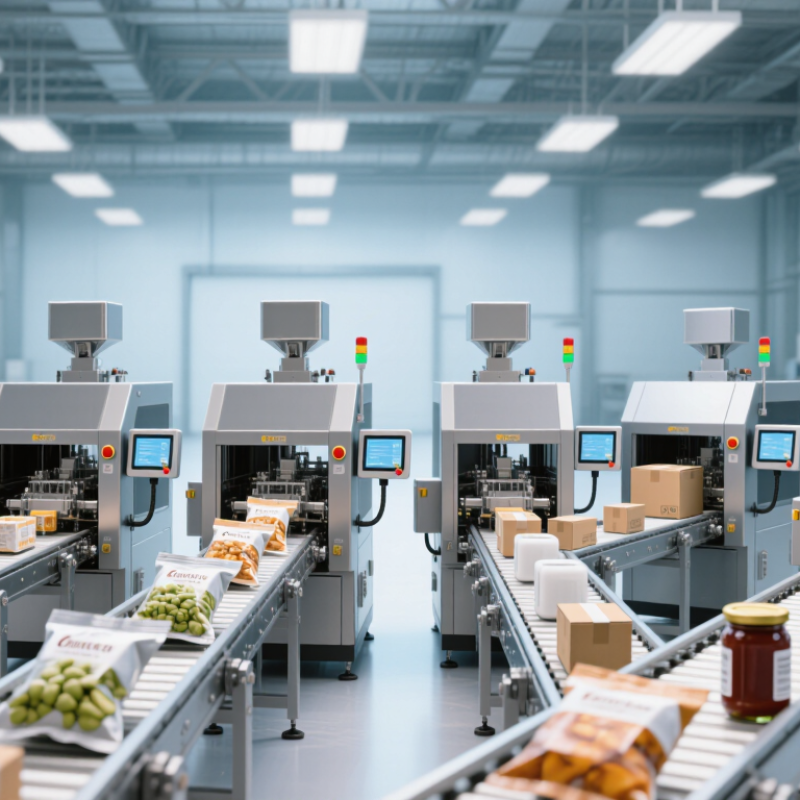
What an Automatic Checkweigher Does in a Packaging Line
On a packaging line, an automatic checkweigher weighs each filled pack as it moves over a conveyor. A load cell records its weight without stopping the line. The system compares that reading with preset limits, then signals a reject device when a pack falls outside them. A correctly timed air jet or pusher can remove one pack without disturbing the next. Small differences matter. A checkweigher also tracks weight trends, helping operators spot filler drift before repeated underfills or excess product build up.
The scale of food loss makes accurate process control relevant, but it needs careful context. FAO’s 2023 report, The State of Food and Agriculture, estimates that 13.2% of food was lost after harvest and before retail. That figure does not measure checkweigher performance; it describes a wider supply-chain problem. On a real line, readings can shift with vibration, product movement, or poorly spaced packs. Operators should verify performance with suitable test weights and review reject records, not assume the machine catches every issue. It is not a cure-all. Stable results also depend on correct setup, routine checks, and a reject mechanism that actually removes the flagged pack. A poorly tuned system can create false rejects—or miss a genuine weight deviation.
7 Best Automatic Checkweigher Machines for 2026 — What an Automatic Checkweigher Does in a Packaging Line
An automatic checkweigher weighs products while they move along a conveyor, compares each measured weight with configured limits, and can trigger a reject or line-control action. The options below are machine configurations—not brand rankings. Speed and product-weight figures are indicative planning ranges; actual performance depends on product, package, conveyor setup, and site testing.
| Machine configuration | Best suited to | Indicative product weight | Indicative throughput | Typical line features | Key selection consideration |
|---|---|---|---|---|---|
| 1. Compact checkweigher | Small cartons, sachets, pouches, and limited-floor-space lines | About 1 g–1 kg | About 30–150 packs/min | Short conveyor layout; commonly paired with a pusher or air-blast reject, subject to pack size and stability | Confirm that the smallest product is stable on the weigh conveyor and can be reliably rejected. |
| 2. General-purpose conveyor checkweigher | Flow-wrapped products, bags, cartons, and mixed standard packaging | About 5 g–5 kg | About 60–300 packs/min | Configurable conveyor sections, weight-limit monitoring, and production data outputs | Match belt width, product spacing, and conveyor speed to the existing packaging line. |
| 3. High-speed checkweigher | Fast-moving, consistently presented consumer goods packages | About 5 g–2 kg | About 200–600 packs/min | Rapid signal processing and synchronized rejection; maximum rates depend strongly on product dimensions and spacing | Validate performance at the required line speed using actual products and packaging. |
| 4. Bottle and rigid-container checkweigher | Bottles, jars, cans, and other rigid containers | About 50 g–10 kg | About 60–400 containers/min | Guides or stabilizing belts can help control container movement; reject devices are selected for container shape and mass | Check container stability, spacing, and the risk of tipping or bouncing during weighing. |
| 5. Tray and clamshell checkweigher | Prepared foods, produce trays, and lightweight rigid packs | About 100 g–5 kg | About 40–200 packs/min | Can be configured for irregular product presentation and gentle handling | Moisture, product movement, and variable pack geometry can affect repeatability; test representative packs. |
| 6. Case and carton checkweigher | Shipping cases, multipacks, and heavier finished packages | About 1–30 kg | About 10–60 cases/min | Heavy-duty conveyor and reject or divert arrangements suited to larger packages | Confirm conveyor load capacity, package dimensions, and safe handling of rejected cases. |
| 7. Multi-lane checkweigher | Parallel lanes of small, regularly spaced products | About 1 g–1 kg per product | About 120–900 products/min total, depending on lane count and speed | Multiple weighing lanes can measure products in parallel; lane-specific tracking and rejection may be required | Verify lane-to-lane accuracy, product tracking, and access for cleaning and maintenance. |
Buying note: Treat the throughput and weight ranges as initial screening guidance, not guaranteed specifications. Request a product trial and confirm the required weighing performance, reject verification, calibration procedure, cleanability, and any applicable legal-for-trade or package-control requirements for your market.