

Choosing the right Drip Hose can decide whether a field receives steady moisture or suffers from dry patches. Global buyers face many options, including inline drip hose, online drip hose, porous soaker hose, pressure-compensating hose, and heavy-duty agricultural models. Each type responds differently to soil texture, crop spacing, water pressure, climate, and installation methods. A hose that performs well in sandy soil may clog faster in untreated surface water. Practical experience shows that product labels alone cannot reveal the full operating picture.
This guide compares the top 10 Drip Hose types through measurable, purchasing-focused factors. These include emitter spacing, flow rate, pressure range, filtration needs, wall thickness, connection quality, and expected service life. Export buyers should also examine packaging, technical documentation, sample testing, and supplier support. Small details matter. A weak connector can waste water across an entire greenhouse row. No single hose is best for every market. That conclusion may sound obvious, yet it is often ignored during bulk purchasing. Cost per roll can also mislead buyers when replacement labor and water loss remain uncounted. The comparison offers a reliable starting point, but field trials are still essential. Soil, water quality, and installation skill can change the final result. A careful choice balances performance, durability, compliance, and long-term value rather than chasing the lowest quotation.
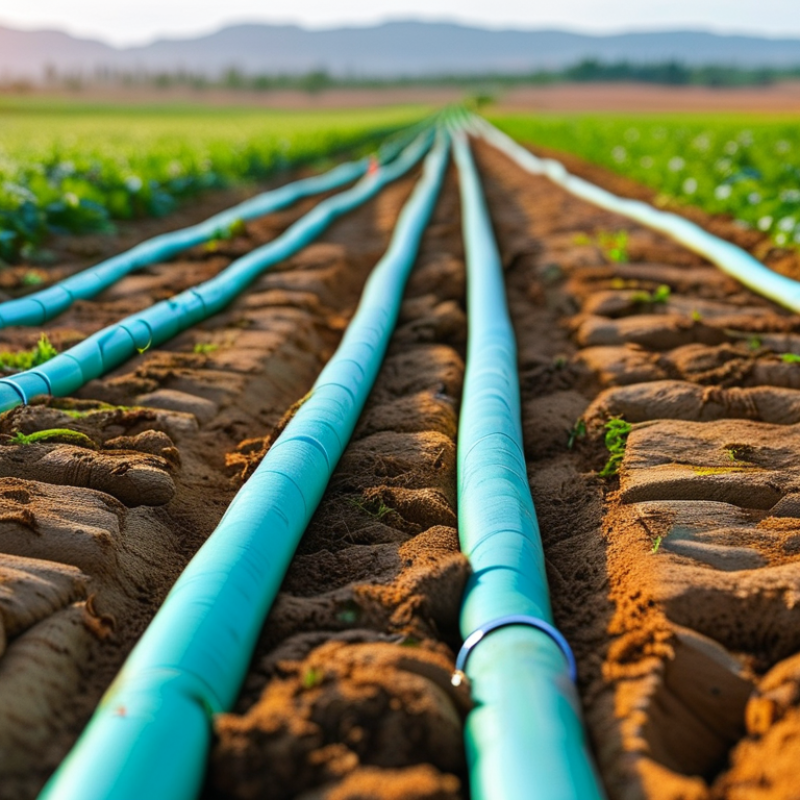
A drip hose is a flexible irrigation line that releases water through small emitters. These outlets are spaced along the hose, often every 20–40 centimeters. Water moves under pressure, then exits slowly near each plant’s root zone. This reduces wetting between crop rows and limits evaporation from exposed soil. In practical installations, the hose may lie on the surface or beneath mulch. Subsurface placement can protect it from sunlight, but maintenance becomes less visible.
The system needs more than a hose. A filter removes sand and organic particles. A pressure regulator keeps flow stable. Without these parts, emitters may clog or discharge unevenly. The FAO report Water for Sustainable Food and Agriculture identifies agriculture as the largest user of freshwater worldwide, accounting for roughly 70% of withdrawals. FAO irrigation guidance commonly places well-designed drip efficiency around 90–95%, compared with much lower performance from some surface methods. Actual results vary with pressure, soil texture, filtration, and installation quality.
For global buyers, surface dripline suits seasonal vegetables and open fields. Thicker-wall hose works better for repeated use. Thin-wall hose costs less, but it can tear during handling. I have seen buyers focus on flow rate and ignore filtration. That is an expensive mistake. A porous soaker hose is also not identical to a pressure-compensating dripline; its distribution can change across uneven ground. No hose is perfect. Field testing remains essential.[temp?]
Typical operating pressure by drip hose type
Drip hoses deliver water directly to the root zone through emitters or porous walls, reducing evaporation and runoff. Pressure-compensating dripline is generally preferred for uneven terrain, while drip tape and porous soaker hose are economical choices for seasonal or low-pressure irrigation. Values shown are typical design-pressure reference points; actual requirements vary by product specification, hose length, filtration, elevation, and water quality.
Top 10 Drip Hose Types: Which One Is Best for Global Buyers?
Drip hoses match different crops, soils, pressures, and installation cycles. FAO AQUASTAT reports that agriculture uses about 70% of global freshwater withdrawals. This makes accurate water delivery commercially important. Thin-wall drip tape suits seasonal vegetables and short-term projects. It is affordable, light, and easy to remove. However, rough handling can cause leaks. Thick-wall hoses last longer for orchards, vineyards, and repeated seasonal use. Their higher initial cost may reduce replacement expenses.
Inline hoses place emitters inside the tube. They provide neat spacing for beds and greenhouse rows. Online emitters attach externally, allowing flexible spacing around trees. Non-pressure-compensating emitters work well on short, level runs. Pressure-compensating types perform better on slopes or longer rows. Porous and soaker hoses release water across their surfaces, but clogging and uneven wetting remain concerns. According to USDA Natural Resources Conservation Service guidance, filtration, pressure control, and maintenance strongly influence system performance. Ignoring these details is a costly mistake.
Tips: Match emitter flow to soil texture, not only crop demand. Use stronger filtration with surface water. Test pressure at the farthest outlet. For global buyers, compare wall thickness, UV resistance, connector standards, packaging, and available spare parts. The 2024 MarketsandMarkets irrigation report identifies water-saving irrigation as a continuing growth area, but market forecasts are not field guarantees. A hose may perform well in one region and poorly in another. Trial samples matter.
Top 10 Drip Hose Types: Which One Is Best for Global Buyers?
Drip hose performance begins with material, not packaging. Agriculture uses about 70% of global freshwater withdrawals, according to FAO AQUASTAT data. Therefore, buyers should assess water delivery, service life, and repair needs together. Polyethylene hoses offer flexibility and resist many fertilizers. PVC versions provide stronger dimensional stability but can become brittle under intense sunlight. Recycled compounds may reduce material use, yet their quality can vary between production batches. That deserves attention.
Design changes water behavior. Pressure-compensating emitters maintain more consistent flow across long rows and uneven fields. Non-compensating emitters usually cost less and suit shorter, flatter beds. A 16-millimeter hose with 30-centimeter emitter spacing may fit vegetables, while wider spacing often suits orchards. Wall thickness also matters. Thin hoses are easier to install, but stones, rodents, and repeated seasonal handling can shorten their lives.
Small details decide field results. U.S. EPA WaterSense guidance indicates properly designed drip irrigation can reach roughly 90% efficiency. However, clogged filters can erase that advantage quickly. Buyers should request flow-rate tests, pressure ranges, ultraviolet-resistance data, and recycled-content disclosures. FAO’s irrigation guidance also stresses filtration and maintenance for reliable micro-irrigation. I would not call one hose universally best. A durable hose may be wasteful for one short crop cycle, while a cheaper hose may fail before harvest. Suppliers should test actual water quality, not rely only on catalog claims.
| Drip Hose Type | Typical Material and Wall Structure | Emitter or Outlet Design | Typical Operating Pressure | Common Outlet Spacing | Typical Service or Reuse Profile | Best Applications | Main Performance Consideration |
|---|---|---|---|---|---|---|---|
| 1. Thin-Wall Drip Tape | Flexible polyethylene tape, approximately 0.10–0.20 mm wall thickness. | Integrated labyrinth emitters formed during tape manufacturing. | Approximately 0.4–0.8 bar. | 10–30 cm. | Usually seasonal; commonly installed and removed after one crop cycle. | Annual vegetables, melons, strawberries, and short-term field crops. | Very economical and easy to transport, but more sensitive to punctures, excessive pressure, and rough handling. |
| 2. Medium-Wall Drip Tape | Polyethylene tape, approximately 0.20–0.40 mm wall thickness. | Integrated non-pressure-compensating labyrinth emitters. | Approximately 0.5–1.0 bar. | 10–30 cm. | Typically one to several crop cycles when filtered and handled carefully. | Commercial vegetable production and protected cultivation. | Offers a practical balance between price, flexibility, puncture resistance, and flow uniformity. |
| 3. Thick-Wall Dripline | Durable polyethylene tubing, approximately 0.40–1.00 mm wall thickness. | Welded or molded inline labyrinth emitters. | Approximately 0.7–1.5 bar. | 20–60 cm. | Reusable for multiple seasons under suitable filtration and maintenance. | Orchards, vineyards, nurseries, and long-cycle crops. | Better resistance to abrasion, rodents, pressure variation, and repeated installation than thin tape. |
| 4. Pressure-Compensating Dripline | Medium- or thick-wall polyethylene tubing with molded pressure-regulating emitters. | Pressure-compensating diaphragm or labyrinth emitter. | Approximately 0.8–3.0 bar, depending on emitter design. | 30–100 cm. | Multiple seasons with correct filtration and flushing. | Sloping fields, long rows, orchards, vineyards, and uneven terrain. | Maintains more consistent discharge across pressure changes, but generally costs more and requires clean water. |
| 5. Non-Pressure-Compensating Dripline | Polyethylene tubing with standard inline emitters and a uniform wall structure. | Fixed-flow labyrinth emitter; discharge changes with pressure. | Approximately 0.6–2.0 bar. | 20–60 cm. | Several seasons when properly installed and protected. | Level or gently sloping fields with short-to-medium lateral lengths. | Simple and cost-effective, but pressure loss along the lateral can create uneven watering. |
| 6. Subsurface Dripline | Thick-wall polyethylene tubing, often designed with root- and clog-management features. | Buried inline emitters with filtration and flushing provisions. | Approximately 0.8–2.5 bar. | 30–100 cm. | Several seasons; durability depends strongly on installation depth and maintenance. | Row crops, permanent beds, orchards, and water-conservation projects. | Reduces surface evaporation and interference with farm machinery, but requires careful filtration, flushing, and leak detection. |
| 7. Porous or Oozing Hose | Porous recycled or virgin rubber, polyethylene, or flexible composite material. | Water seeps continuously through micropores along the hose wall. | Approximately 0.3–1.0 bar. | Continuous seepage rather than fixed emitters. | Often reusable for multiple seasons if protected from ultraviolet exposure and abrasion. | Garden beds, landscape areas, hedges, and closely spaced plants. | Creates gentle, broad wetting, but output can vary considerably with hose length, water quality, pressure, and terrain. |
| 8. Perforated Soaker Hose | Flexible rubber, PVC, or porous composite hose with small drilled or molded openings. | Regular perforations that release water in localized streams or sprays. | Approximately 0.5–1.5 bar. | Commonly 15–30 cm, depending on the design. | Generally reusable, but perforations may clog or enlarge with rough handling. | Small beds, landscaping, nurseries, and low-pressure irrigation systems. | Easy to install and inexpensive, but its discharge uniformity is usually lower than that of engineered inline dripline. |
| 9. Laser-Perforated Drip Tape | Thin polyethylene tape with precision-made micro-openings or outlet patterns. | Laser-formed holes or micro-outlets designed for controlled discharge. | Approximately 0.4–0.8 bar. | 10–30 cm. | Usually seasonal, with reuse depending on wall thickness and handling quality. | Vegetable beds, dense row crops, and short-cycle commercial production. | Can provide accurate outlet placement and low material usage, but the thin structure remains vulnerable to clogging and mechanical damage. |
| 10. Biodegradable Drip Tape | Biodegradable polymer blend or coated polyethylene alternative designed for temporary use. | Integrated labyrinth emitters or precision micro-outlets. | Approximately 0.4–0.8 bar. | 10–30 cm. | Designed for one growing season; degradation time depends on soil, moisture, temperature, and formulation. | Annual crops where retrieval and disposal of conventional tape are difficult. | May reduce collection requirements, but storage stability, degradation timing, and local composting or waste rules must be verified. |
Crop spacing, climate, and farm size should guide drip hose selection. The FAO AQUASTAT database reports that agriculture uses about 70% of global freshwater withdrawals. Efficient application matters. The U.S. Environmental Protection Agency places well-designed drip irrigation near 90% efficiency, although poor filtration can reduce performance quickly. Thin-wall drip tape suits seasonal vegetables and small farms because it costs less and installs easily. Heavy-wall hose lasts longer for orchards, vineyards, and permanent beds.
Pressure-compensating hose is useful on sloped fields, where elevation changes can create uneven flow. Non-compensating hose works better on short, level plots. Subsurface drip can reduce evaporation in hot, dry climates, but root intrusion and maintenance require careful planning.
In windy regions, buried or low-flow systems often protect water placement better than surface lines. Sandy soils need closer emitters, while clay soils may require wider spacing. Small farms often benefit from simple inline hose. Large farms usually need stronger hose, filtration, pressure control, and measurable flushing points.
No hose fits every crop. That is the difficult part. The FAO’s 2023 irrigation guidance emphasizes matching irrigation design with soil, climate, and crop demand. Buyers should test flow at the farthest row before purchasing thousands of meters. I would not treat catalog flow rates as guarantees; dirty water, heat, and weak pressure change real results. A cheaper hose can become expensive after repeated clogging, replacement, and uneven harvests.
Top 10 Drip Hose Types: Which One Is Best for Global Buyers?
Global buyers often compare surface dripline, inline hose, online emitters, and pressure-compensating designs. Other options include non-compensating hose, thick-wall tubing, thin-wall tubing, lay-flat hose, porous soaker hose, and underground dripline. Each type suits different crops, field sizes, pressure levels, and installation methods.
Quality starts with measurable details, not a glossy specification sheet. Check wall thickness, emitter spacing, flow rate, pressure range, and filtration needs. Ask for production samples and independent flow tests. In my field experience, uneven emitter output becomes obvious when several rows receive different water volumes. UV resistance also matters in hot, open fields. A hose can look strong and still crack after one season.
Cost comparisons should include shipping volume, connectors, filters, labor, and replacement rates. Thin-wall hose may reduce freight costs, but it usually needs careful handling. Thick-wall hose costs more, yet it can support repeated installation. Compatibility is easy to overlook. Match the hose diameter with pumps, valves, connectors, water pressure, and local irrigation practices. Soil type matters too. Porous hose may perform poorly in sandy ground without proper filtration. No single type wins everywhere. A low quote can become expensive. That lesson deserves a second check.


