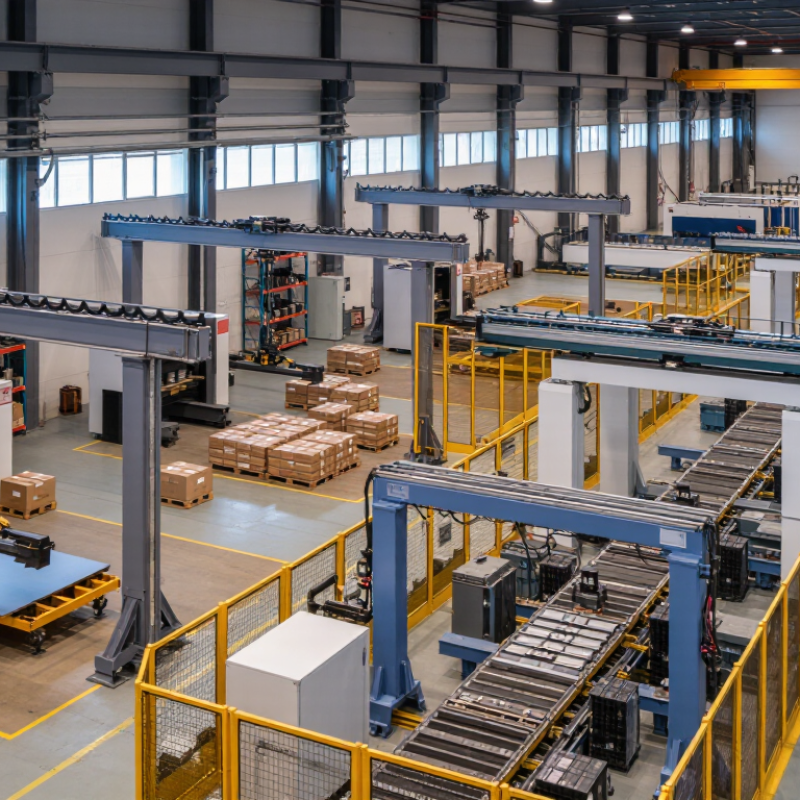
Choosing the five best gantry robots for global industrial buyers requires more than comparing payloads and travel speeds. A gantry robot may look impressive in a brochure, yet perform poorly beside a dusty cutting line or uneven factory floor. Real evaluation should include reach, repeatability, acceleration, safety integration, maintenance access, and local technical support. Buyers also need to examine power standards, controller languages, spare-part availability, and commissioning experience. These details often decide whether automation becomes productive or expensive.
Joseph F. Engelberger, a pioneer of industrial robotics, said, “The ultimate aim of robotics is to create a world where people are free from repetitive work.” That principle remains useful when assessing modern gantry systems. The strongest choices should reduce manual handling without creating new maintenance burdens. They should move heavy loads smoothly, protect operators, and fit existing production software. Some machines excel in palletizing. Others suit CNC loading, welding, packaging, or warehouse transfer. There is no universal winner. That is worth admitting. A high-speed model may waste energy in a low-volume plant, while a modest system may deliver better long-term value. This guide compares five leading gantry robot options through practical buyer criteria, including performance, integration, reliability, lifecycle cost, and global service coverage. Specifications matter. Factory reality matters more. The final ranking may change by application, region, and budget, but the comparison offers a clearer starting point for responsible investment.
A gantry robot is a Cartesian automation system that moves loads along precise linear axes. Unlike articulated robots, it usually travels on overhead beams or rigid floor frames. Its motion follows the X, Y, and Z directions, creating a predictable rectangular workspace.
The main structure includes parallel rails, a crossbeam, a moving carriage, a vertical actuator, and an end effector. Servo motors drive each axis through belts, racks, or ball screws. Encoders report actual position to the controller. It is not magic. The controller compares commanded movement with feedback, then adjusts speed and torque continuously. This process supports palletizing, machine tending, cutting, inspection, and material transfer.
In practical commissioning, alignment often matters more than advertised speed. A slight rail error can create vibration, uneven wear, or inaccurate placement. Small errors matter. Engineers should check payload, reach, cycle time, acceleration, guarding, emergency stops, and access for maintenance. Environmental conditions also deserve attention, especially dust, heat, moisture, and floor vibration. A useful design leaves room for cable routing and future tooling changes. Global buyers should request load calculations, repeatability data, electrical documentation, and safety evidence before purchase. The perfect layout rarely exists. A cheaper frame may increase service work later, while an oversized system can waste energy and floor space. Good selection depends on the real process, not only the robot’s maximum specifications.
5 Best Gantry Robots for Global Industrial Buyers?
Key Evaluation Criteria for Global Industrial Robot Buyers
The five best gantry robot configurations depend on the application, not marketing claims. Buyers should compare Cartesian, overhead, floor-mounted, cantilever, and multi-axis designs. Start with payload, working stroke, positioning repeatability, and cycle time. A robot moving 80 kilograms needs different guides than one handling small cartons. Measure the real workspace, including grippers, fixtures, guarding, and maintenance access. A compact machine may look efficient, yet restricted access can increase service time.
Global buyers should examine environmental performance carefully. Check dust protection, humidity tolerance, operating temperature, and available electrical standards. Confirm whether controllers support local language settings, remote diagnostics, and common industrial communication protocols. Service coverage matters too. Spare-part delivery, technician training, and documented maintenance procedures can affect production more than initial price. Total cost includes installation, tooling, energy use, software updates, and possible downtime.
Tips: Request a sample motion test using your actual load and product. Ask for measured cycle data, not estimated figures. Review safety functions with a qualified engineer before purchase. No scoring model is perfect. Leave space for uncertainty. An honest evaluation should record weaknesses, such as limited acceleration, complex programming, or difficult access to linear rails. Trial results from a clean factory may not reflect performance beside oil mist, vibration, or seasonal temperature changes.
Global buyers need more than payload figures when selecting gantry robots. The right design depends on reach, accuracy, floor space, and maintenance access. The International Federation of Robotics reported 541,302 industrial robot installations worldwide in 2023. Its World Robotics 2024 report also recorded 162 robots per 10,000 manufacturing employees. These figures show stronger automation demand, but not every factory needs the same gantry system.
A Cartesian gantry robot suits CNC loading, inspection, and precise assembly. It uses linear X, Y, and Z axes, making programming relatively clear. An overhead bridge gantry serves large welding, cutting, and material-handling zones.
A palletizing gantry handles cartons, bags, and cases with repeatable stacking patterns. High-speed pick-and-place gantries support packaging lines, especially where cycle times matter. A dispensing or welding gantry provides controlled movement across large workpieces.
Each type has limits. A fast system may sacrifice payload, while a rigid frame may consume valuable floor space. The MarketsandMarkets industrial robotics research identifies material handling as a major automation application, yet real performance still depends on gripper design and product variation.
Tips: Confirm the heaviest load, longest travel, and required cycle time before requesting quotations. Check guarding, safety circuits, spare-part availability, and operator training. Ask for test results using your actual products. A perfect simulation can still fail with flexible bags, dusty surfaces, or uneven cartons. Build in maintenance clearance; this detail is often underestimated.
Comparing Payload, Reach, Speed, Precision, and Total Ownership Costs
The five strongest gantry robot choices depend on the application, not appearance. A 2024 International Federation of Robotics report recorded 541,302 industrial robot installations worldwide in 2023. That growth increases pressure to select measurable performance, not attractive brochures.
Payload should exceed the heaviest product by 20–30%. Reach must cover the full work envelope without excessive deflection.
For fast packaging, cycle time matters more than headline speed. For machining, repeatability and thermal stability usually matter more. Precision figures should be checked under real load, temperature, and acceleration conditions. The ISO 9283 testing framework helps buyers compare these performance factors consistently.
Total ownership costs include tooling, programming, energy, maintenance, spare parts, training, and downtime. Deloitte’s 2024 smart manufacturing survey found that 86% of manufacturers expect smart operations to strengthen competitiveness. However, integration expenses are often underestimated. The spreadsheet rarely captures production disruption.
Tips: Request a loaded acceptance test. Measure cycle time, accuracy, noise, and energy use on your actual line. Ask for maintenance intervals and replacement-part lead times. A cheaper gantry robot can become expensive after one difficult retrofit. I would also challenge optimistic payback claims; local labor rates, safety requirements, and operator skill can change the result quickly.
5 Best Gantry Robots for Global Industrial Buyers?
For global buyers, the best gantry robot depends on the task, not the catalog photograph. Five practical choices include single-axis loaders, two-axis pickers, three-axis Cartesian systems, telescopic palletizers, and cleanroom gantries. Three-axis systems suit CNC tending and packaging because their travel paths remain predictable. Telescopic designs save aisle space, but their extended beams demand careful structural checks. Cleanroom models need compatible lubricants, sealed cables, and documented particle-control testing.
Installation begins with the floor. It matters.
Check level tolerance, anchor strength, overhead clearance, payload, and cable routing before shipment. A 2024 International Federation of Robotics report recorded 541,302 industrial robot installations worldwide in 2023. That scale increases demand for repeatable commissioning procedures. Qualified technicians should validate guarding, emergency stops, interlocks, and safe speed limits. ISO 10218 and ISO 13849 provide useful safety references, but local requirements still control acceptance. A remote inspection may reduce travel costs, yet it cannot replace a physical risk assessment.
Maintenance planning should specify lubrication intervals, belt or screw inspection, motor temperature checks, and spare-part lead times. Keep one critical sensor and cable carrier available locally. Small failures become expensive when borders delay delivery. Buyers should request electrical drawings, software backups, manuals, training records, and a clear warranty process. Confirm power frequency, language support, import documents, and service coverage before signing. The World Robotics data is persuasive, but it does not reveal every site problem. Dust, uneven floors, and underestimated cycle rates still cause avoidable failures. I would also budget for integration changes; the first layout is rarely perfect.
| Rank | Gantry Robot Type | Best-Fit Applications | Typical Working Envelope | Typical Payload | Typical Repeatability | Installation Requirements | Safety Considerations | Maintenance Profile | Global Purchasing Considerations |
|---|---|---|---|---|---|---|---|---|---|
| 1 |
Three-Axis Cartesian Gantry
Linear X-Y-Z configuration
|
CNC machine loading Packaging Material transfer Assembly and dispensing |
X axis: 0.5–10 m Y axis: 0.5–3 m Z axis: 0.2–2 m |
5–500 kg, depending on frame size and axis design | Approximately ±0.02–0.10 mm in controlled conditions |
Requires a level, rigid foundation and accurate rail alignment. Provide cable routing, pneumatic or electrical utilities, guarding space, and access for commissioning. Floor loading must be checked for large-span systems. |
Use perimeter guarding, interlocked access doors, emergency stops, and risk assessment before operation. Protect against crushing and shearing points along linear axes. Reference applicable requirements such as ISO 10218, ISO 13849-1, IEC 60204-1, and local regulations. |
Inspect linear guides, rack-and-pinion or belt drives, fasteners, cables, and lubrication points. Check positional accuracy and repeatability at scheduled intervals. Maintenance frequency commonly ranges from monthly inspection to annual major service, depending on duty cycle and environment. |
Confirm metric or imperial mounting standards, electrical voltage and frequency, PLC communication protocols, spare-parts availability, export packaging, and local service capability. Request a complete cycle-time calculation rather than relying only on maximum speed. |
| 2 |
Overhead Palletizing Gantry
High-speed Cartesian palletizing system
|
Case and carton palletizing Bag handling Warehouse and distribution automation End-of-line packaging |
Typical span: 3–15 m Typical travel height: 2–6 m |
20–300 kg, including end-of-arm tooling where specified | Approximately ±0.5–2.0 mm, normally sufficient for pallet patterns |
Requires structural verification of the overhead frame, floor supports, pallet locations, conveyor interfaces, and maintenance platforms. Allow clearance for pallet exchange, product accumulation, and tooling access. Commissioning should include empty-cycle and full-load testing. |
Install full perimeter guarding or a validated safeguarding design around the palletizing zone. Include light curtains or scanners at material entry points, safety-rated stop functions, and controlled restart procedures. Prevent personnel access beneath suspended or moving loads. |
Inspect lifting axes, timing belts or chains, grippers, vacuum circuits, sensors, and pallet-detection devices. Replace wear parts according to measured condition and manufacturer duty-cycle recommendations. Clean product debris from gripper surfaces and conveyor interfaces. |
Evaluate pallet dimensions, load stability, product temperature, dust level, line speed, and required pattern changes. Confirm compatibility with local pallet standards, power supply, network architecture, and warehouse-management interfaces. Include operator training and remote troubleshooting terms in the purchase contract. |
| 3 |
Four-Axis Pick-and-Place Gantry
Cartesian motion with rotary wrist
|
High-speed sorting Layer forming Tray loading Pick-and-place assembly Food and consumer-goods packaging |
X axis: 0.8–6 m Y axis: 0.4–2 m Z axis: 0.2–1.5 m Rotation: commonly up to 360° |
2–80 kg, depending on acceleration, tooling, and product geometry | Approximately ±0.05–0.20 mm |
Needs a rigid, level base and carefully positioned conveyors or fixtures. Product presentation should be consistent in spacing, orientation, and height. Vision systems, sensors, and tooling should be validated using the real product range. |
Guard moving axes and tooling, especially where high acceleration creates impact hazards. Validate gripper force, vacuum loss detection, and dropped-product protection. If collaborative operation is proposed, perform a documented application-specific risk assessment; a collaborative label alone does not ensure safe operation. |
Check belts, linear bearings, servo couplings, vacuum generators, gripper seals, cameras, and calibration targets. Clean optical sensors and verify tool-center-point calibration. Monitor cycle count, missed picks, vacuum pressure, and abnormal vibration. |
Compare total throughput, not only pick rate; include product changeover and recovery time. Confirm camera standards, industrial Ethernet support, software languages, recipe management, cybersecurity controls, and availability of replacement tooling. Ask for acceptance testing with representative products. |
| 4 |
Heavy-Duty Dual-Column Gantry
Large-span, high-load Cartesian system
|
Automotive component handling Foundry and forging operations Steel and construction-material handling Large-part machining Die and mold transfer |
X axis: 2–20 m Y axis: 1–8 m Z axis: 0.5–5 m |
250–5,000 kg or more, subject to structural and dynamic analysis | Approximately ±0.10–1.00 mm, depending on span, payload, and thermal conditions |
Requires engineered foundations, anchor-bolt calculations, structural deflection analysis, and alignment surveying. A dedicated lifting and installation plan is normally required. Consider temperature variation, vibration, dust, heat sources, and access for heavy maintenance equipment. |
Use engineered guarding, safety-rated motion monitoring, lockout/tagout procedures, load-retention measures, and exclusion zones. Conduct a formal risk assessment for stored energy, suspended loads, pinch points, and unexpected restart. Safety systems should be validated after installation and after major modifications. |
Requires scheduled inspection of rails, gearboxes, bearings, structural joints, brakes, encoders, cable carriers, and load-bearing components. Lubricant condition, alignment, backlash, and foundation settlement should be monitored. Keep critical spare drives, sensors, brakes, and cables available because downtime costs can be substantial. |
Require detailed engineering drawings, foundation loads, transport dimensions, lifting points, and installation method statements before order placement. Clarify customs classification, import duties, site supervision, commissioning responsibility, warranty response time, and local technical support. Total cost should include civil works, rigging, guarding, training, spare parts, and validation. |
| 5 |
Enclosed or Clean-Environment Gantry
Protected Cartesian system for controlled environments
|
Electronics assembly Semiconductor and precision-component handling Medical-device production Laboratory automation Dust-sensitive inspection and dispensing |
X axis: 0.3–5 m Y axis: 0.3–2 m Z axis: 0.1–1 m |
0.5–50 kg, depending on clean-environment design and tooling | Approximately ±0.01–0.10 mm, subject to thermal stability and calibration |
Install on a stable, low-vibration base with controlled airflow and suitable cleanroom interfaces. Use compatible lubricants, seals, cables, and materials where contamination control is required. Commissioning should include particle-control procedures and environmental verification. |
Enclosures must not obstruct emergency stops, access controls, or visibility of hazardous motion. Interlocks should be designed so that opening a protected access point produces the required safe stop. Consider electrostatic discharge, chemical exposure, low-oxygen environments, and restricted-access procedures where applicable. |
Use cleanroom-approved inspection and lubrication methods. Check seals, bellows, cable carriers, vacuum lines, filters, sensors, and particle-generation points. Maintain calibration records and replace contamination-sensitive components under a controlled procedure. |
Specify the required cleanroom classification, particle limits, temperature and humidity range, ESD requirements, materials restrictions, and documentation package. Verify whether performance claims are tested or merely designed for the stated environment. Confirm local validation support, traceability records, software backups, and replacement-part lead times. |