

• Gantry Robot Manufacturer & Articulated Arm Integrator

What Is the Best Type of RO Water Filter in 2026?

Choosing the best Ro Water Filter in 2026 starts with the water you actually use, not a glossy product ranking. There is no universal winner. A compact countertop unit may suit a rental kitchen, while an under-sink system can provide filtered water without taking up counter space. Larger households may value a bigger storage tank or faster delivery. But size alone tells you little. That matters.

A careful comparison should consider your source water, daily use, installation limits, and willingness to replace filters on schedule. Check the exact model’s performance claims and relevant NSF/ANSI 58 certification; certification applies to specific claims, not every possible contaminant. A recent water report can help identify what needs attention, though private wells may require separate testing. Also compare wastewater output, replacement-filter costs, tank capacity, and the space needed beneath the sink. Small details count: a faucet that splashes or a tank that empties during dinner can become daily annoyances.

RO systems can reduce many dissolved substances, but results vary by model and water conditions. No filter fixes poor maintenance. I still find product comparisons confusing when they emphasize purity numbers but hide operating costs. A sensible choice balances verified performance, convenience, and upkeep. In this guide, we’ll compare common RO configurations and explain which type may fit different homes—without pretending one system is best for everyone.
What Is the Best Type of RO Water Filter in 2026?

How Reverse Osmosis Water Filters Work

What Is the Best Type of RO Water Filter in 2026?

How Reverse Osmosis Water Filters Work

Reverse osmosis (RO) pushes water through a semipermeable membrane under pressure. The membrane lets water molecules pass while limiting many dissolved salts and other contaminants. A typical under-sink system uses sediment and carbon prefilters to protect the membrane, then often sends water through a final carbon filter. Some water goes down the drain with concentrated contaminants. The US EPA’s WaterSense specification limits qualified point-of-use RO systems to 2.3 gallons of reject water per gallon treated. NSF/ANSI 58 includes a minimum 75% total dissolved solids reduction requirement for certified systems. Performance still depends on the model and incoming water.

At home, you may hear the storage tank refill or notice slower flow as filters age. Check the manufacturer’s replacement schedule and use a certified system whose specific contaminant-reduction claims match your water test. RO can reduce minerals, too, so the taste may seem flatter. It is not a magic fix. I find the drain line easy to forget; a kink or poor connection can affect operation.

Tips: Compare certified performance claims, not just filter stages. Test your tap water before choosing a system, and check the reject-water ratio. Replace cartridges on schedule. A neglected prefilter can make the membrane work harder.

Which Types of RO Water Filters Are Available in 2026?

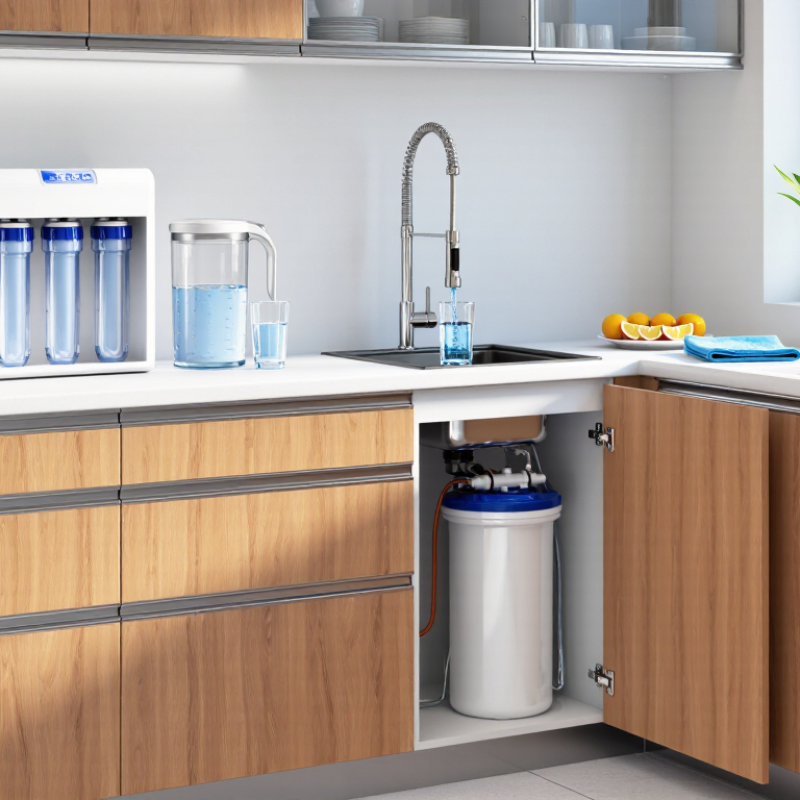
RO water filters come in several forms, and the right fit depends on space, water use, and maintenance habits. Under-sink systems are common: a set of cartridges and a membrane sits inside the cabinet, often feeding a separate faucet. Some include a storage tank, which can provide water quickly but takes up room. Tankless models filter water on demand and save cabinet space, though their output depends on membrane capacity and water pressure.

Space matters.

Countertop RO units need little installation and suit renters or small kitchens. They may take up counter space and require access to a power outlet or faucet connection. Whole-house RO systems are also available, but they are less common because they cost more, need substantial installation, and can waste considerable water.

Check the system’s tested contaminant-reduction data, not just the number of filtration stages. More stages do not automatically mean better water. Some models add minerals back after filtration; this can change taste, but it is optional.

Filters and membranes need replacement on schedule. I’ve seen maintenance plans look simple on paper, then get delayed when replacement parts are hard to find.

It is not magic.

How RO Systems Differ in Filtration, Wastewater, and Maintenance

In 2026, choosing an RO filter means comparing more than its listed stages. Most systems use sediment and carbon prefilters to protect a semipermeable membrane, followed by a post-filter that can improve taste. A tank model stores treated water; a tankless model filters it on demand. Neither is automatically better. Flow rate, household demand, and installation space matter.

Wastewater figures need careful reading. Some units send several gallons to the drain for each gallon produced, while efficient designs may use less. Actual performance changes with feed pressure, temperature, and membrane condition. Check the tested wastewater ratio and the conditions behind it. Maintenance differs, too: clogged prefilters can slow production, while neglected carbon filters may affect taste. Replace cartridges on schedule, using water quality and falling flow as clues. Hard water can shorten membrane life. That detail is easy to overlook.

Tips: Keep a dated filter log. A TDS meter can track changes, but TDS alone cannot confirm water safety. Compare replacement costs and cartridge availability before buying. A log helps, though remembering to update it can be the weak point.

Which RO Filter Type Suits Different Homes and Water Sources?

The best RO filter depends on where the water comes from and how much filtered water a household uses. For city water with a noticeable chlorine taste, an under-sink system can provide drinking and cooking water without treating every tap. Check the local water report, then compare it with the filter’s documented reduction claims. For well water, test the water first; sediment, hardness, iron, or other contaminants may call for pretreatment. RO membranes can be affected by poor feed-water conditions. Small details matter.

A countertop RO unit may suit renters, small kitchens, or households that need limited daily output. It usually avoids plumbing changes, but takes counter space and may require frequent tank refills. Larger families may prefer an under-sink model with a storage tank, while whole-house RO is rarely practical for ordinary use because it can consume more water and require substantial maintenance. There is a trade-off. Look for clear replacement schedules, available filter specifications, and independent certification for the exact model and claimed contaminants. If the system’s flow rate, wastewater ratio, or upkeep seems unclear, pause before buying. I would not choose by the number of filtration stages alone; more stages do not automatically mean better water.

What Is the Best Type of RO Water Filter in 2026? — Which RO Filter Type Suits Different Homes and Water Sources?

RO Filter Type Best Suited For Typical Water Sources Main Advantages Key Limitations What to Check Before Choosing
Under-sink RO with a storage tank Most households that want filtered drinking and cooking water at a dedicated faucet. Municipal water, or well water that has been tested and has suitable pretreatment. Established design; stored water is available when the faucet is opened; generally fits beneath a kitchen sink. Requires cabinet space and a drain connection. The tank takes time to refill, and the system sends reject water to the drain. Confirm the unit’s rated production and storage capacity, replacement-filter availability, installation requirements, and model-specific contaminant-reduction claims.
Tankless under-sink RO Homes with limited under-sink space or a preference for on-demand production. Municipal water; some well-water installations may be suitable after testing and pretreatment. No separate storage tank; often includes a compact design and electronic filter-life indicators. Needs electricity for many models. Flow and performance depend on water pressure, temperature, and the specific system; filter replacements may be proprietary. Check operating-pressure requirements, rated production conditions, power needs, drain-water claims, and the cost and availability of replacement filters.
Countertop RO Renters, small households, or people who cannot make permanent plumbing changes. Usually tap water supplied to the countertop unit; source-water limits vary by model. Portable and typically does not require under-sink installation. Some units collect treated water in an onboard container. Uses counter space and may have a smaller treated-water capacity. Some models need electricity and manual filling or emptying. Verify that the model is designed for the source water, review its treatment and cleaning instructions, and check its daily capacity and certification claims.
Whole-house RO Special cases where treatment of all incoming water is needed and a water professional has confirmed RO is appropriate. Usually a tested private-well or other source with a documented treatment need and suitable pretreatment. Can treat water at the point where it enters the home, subject to system capacity and design. Typically involves greater cost, space, maintenance, and water-management requirements than point-of-use RO. It may require extensive pretreatment and post-treatment. Obtain a water analysis and professional system design. Confirm capacity for household demand, pretreatment, drain or reject-water handling, and any needed remineralization or corrosion control.
RO with a remineralization stage Households that prefer a different taste or want minerals added back after RO treatment. Municipal or appropriately pretreated well water, depending on the system’s specifications. Adds minerals to the treated water and can alter its taste and measured mineral content. Remineralization does not replace proper contaminant testing or prove that a system reduces a particular contaminant. Check what minerals are added, the maintenance schedule, and whether the RO unit’s performance claims are independently certified for the specific model.

Selection note: RO performance, water use, production rate, and contaminant reduction vary by model and operating conditions. Test private-well water before choosing a treatment system. For verified performance, look for certification to NSF/ANSI 58 and confirm that the specific contaminant-reduction claim is covered for the exact model. RO is generally used at the point of use; whole-house applications require careful sizing and professional assessment.

What to Check When Choosing an RO Water Filter in 2026?

When comparing reverse osmosis (RO) filters in 2026, start with your water report, not a feature list. Tap water can contain dissolved salts, lead, nitrate, or other contaminants, and one test cannot describe every home. If you use a private well, have it tested by a qualified laboratory. Municipal water reports are useful, but they may not reflect plumbing inside your home. Match a system’s independently verified reduction claims to contaminants actually found in your water. Check the exact model and certification details, not just the words “tested” or “certified.” Small print matters.

Then check the practical fit. Measure the cabinet space, including room for filter changes and any storage tank. Compare the stated flow rate and replacement schedule, and confirm that cartridges are easy to obtain. Ask how much wastewater the unit produces; the amount varies by system and water conditions. A low TDS reading is not a complete safety test. It cannot identify every contaminant. Check installation requirements and look for clear instructions on leak checks and maintenance. After installation, consider retesting for contaminants that were present before treatment. RO systems need upkeep, and a missed filter change can reduce performance.