


How to Choose an Industrial Floor Scrubber in 2026?
Choosing an Industrial Floor Scrubber in 2026 requires more than comparing brush width and battery capacity. The right machine must match your facility, cleaning schedule, floor material, and safety requirements. A compact walk-behind scrubber may suit narrow aisles, while a ride-on model can reduce labor across a large warehouse. Size matters.
Real-world performance depends on details that product brochures often simplify. Consider recovery-tank capacity, turning radius, noise levels, charging time, water usage, and access to replacement parts. On a concrete floor, aggressive brushes may remove grime effectively. On coated surfaces, they might cause premature wear. I have seen cleaning teams choose powerful equipment that could not enter their storage corridors. That mistake is expensive.
Reliable selection also requires evidence. Review manufacturer specifications, independent testing where available, service records, operator feedback, and warranty conditions. Ask whether local technicians can support the machine after purchase. A lower upfront price may become costly when batteries, squeegees, or software require frequent replacement. Maintenance is often overlooked. Do not assume automation guarantees better cleaning. Operators still need training, accurate chemical dosing, and regular inspections. Some recommendations may change after a site trial, and that uncertainty deserves attention. A short demonstration on your dirtiest floor can reveal more than a polished sales presentation. This guide examines practical criteria for selecting an Industrial Floor Scrubber that delivers measurable cleaning results, manageable operating costs, and dependable long-term service.
Define Industrial Floor Scrubber Types and Cleaning Applications
How to Choose an Industrial Floor Scrubber in 2026?
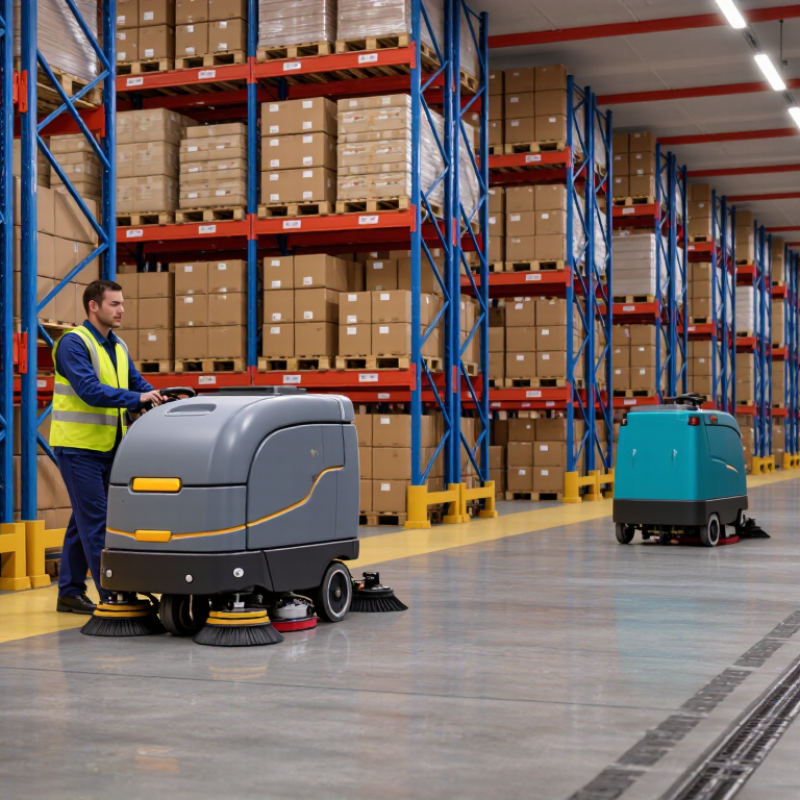
Industrial floor scrubbers differ by movement, cleaning head, and recovery system. Walk-behind models suit narrow aisles, workshops, and small production zones. Ride-on scrubbers cover large warehouses faster. Autonomous units can support repeated cleaning in predictable layouts, but they still need human checks. According to Grand View Research, the global floor cleaning machines market was valued at about USD 5.5 billion in 2023. Its forecast indicates strong growth through 2030, driven by automation and hygiene requirements.
Match the machine to the cleaning application, not only the floor size. Disc brushes work well on smooth concrete, sealed floors, and routine soil. Cylindrical brushes can collect small debris while scrubbing textured surfaces. Food-processing areas may require controlled water use and careful recovery. Healthcare spaces need low-residue cleaning and quieter operation. Warehouses often need wide cleaning paths, strong traction, and quick drying. A 2024 report from the International Sanitary Supply Association highlights labor efficiency as a continuing pressure in professional cleaning operations. Still, productivity claims can be misleading. A larger machine may waste time in congested aisles.
Tips: Measure aisle width, doorway height, and turning space before purchase. Test recovery on the actual floor. Check water capacity, battery runtime, brush pressure, noise, and service access. Do not ignore operator training. I have seen suitable machines underperform because users selected excessive detergent or rushed drying. Record cleaning time and water use for two weeks. Real site data is more useful than a brochure.
How to Choose an Industrial Floor Scrubber in 2026? - Define Industrial Floor Scrubber Types and Cleaning Applications
| Industrial Floor Scrubber Type | Typical Cleaning Path | Typical Productivity Range | Power and Operation | Typical Solution / Recovery Tank Capacity | Best-Fit Cleaning Applications | Recommended Floor Surfaces | Main Advantages | Important Limitations | Key Selection Criteria |
|---|---|---|---|---|---|---|---|---|---|
| Compact Walk-Behind Disc Scrubber | Approximately 35–55 cm | Approximately 1,000–2,000 m²/h theoretical cleaning rate | Battery-powered or corded electric; operator-controlled | Approximately 10–30 L solution and recovery tanks | Small production rooms, retail areas, schools, clinics, workshops, corridors, and congested spaces | Sealed concrete, vinyl, ceramic tile, terrazzo, epoxy-coated floors, and other smooth hard floors | Compact footprint, easy maneuverability, lower purchase and operating cost, and good visibility around obstacles | Lower coverage and tank capacity than larger machines; more operator walking and frequent refilling | Choose based on aisle width, door clearance, turning radius, battery runtime, brush pressure, and noise level |
| Standard Walk-Behind Disc Scrubber | Approximately 55–85 cm | Approximately 1,500–3,500 m²/h theoretical cleaning rate | Usually battery-powered; operator-controlled with traction assistance on many models | Approximately 30–80 L solution and recovery tanks | Medium-sized warehouses, manufacturing floors, supermarkets, parking structures, and institutional facilities | Concrete, terrazzo, vinyl, tile, epoxy, and other hard, relatively even surfaces | Good balance of productivity, maneuverability, cleaning control, and operating cost | Requires an operator; disc brushes may be less suitable for heavily textured or uneven surfaces | Compare brush width, down pressure, tank size, battery technology, charger time, and recovery-water pickup |
| Cylindrical Walk-Behind Scrubber | Approximately 50–80 cm | Approximately 1,200–3,000 m²/h theoretical cleaning rate | Battery-powered or corded electric; operator-controlled | Approximately 30–75 L solution and recovery tanks | Facilities requiring light debris collection, textured floors, grout-line cleaning, and routine maintenance cleaning | Textured concrete, anti-slip tile, grooved surfaces, quarry tile, and floors with joints or grout | Cylindrical brushes can sweep small loose particles while scrubbing and can reach some floor profile variations | Generally lower polishing performance on smooth floors; brush replacement and adjustment require maintenance | Consider debris size, floor texture, brush diameter, brush speed, water control, and availability of replacement brushes |
| Ride-On Disc Scrubber | Approximately 70–110 cm | Approximately 3,000–7,000 m²/h theoretical cleaning rate | Battery-powered; seated operator controls driving, scrubbing, solution flow, and recovery | Approximately 70–200 L solution and recovery tanks | Large warehouses, distribution centers, manufacturing plants, airports, shopping facilities, and parking decks | Large areas of sealed concrete, epoxy, terrazzo, vinyl, tile, and other hard surfaces | High coverage, larger tanks, reduced operator fatigue, and fewer interruptions for refilling and unloading | Higher capital cost, larger turning radius, limited access to narrow aisles, and greater storage requirements | Check aisle width, ramp capability, turning radius, battery capacity, operator visibility, and service access |
| Ride-On Cylindrical Scrubber | Approximately 70–110 cm | Approximately 3,000–7,000 m²/h theoretical cleaning rate | Battery-powered; seated operator controls the machine | Approximately 70–200 L solution and recovery tanks | Large textured industrial floors, logistics centers, food-processing support areas, and facilities with frequent dry debris | Ribbed or textured concrete, quarry tile, grooved floors, and surfaces with pronounced grout lines | Combines high productivity with better debris handling and improved cleaning of textured floor profiles | May leave a less polished appearance on smooth floors and can involve higher brush wear on abrasive surfaces | Evaluate debris load, floor roughness, brush durability, water recovery performance, and maintenance intervals |
| Heavy-Duty Ride-On Scrubber-Dryer | Approximately 90–140 cm | Approximately 5,000–10,000 m²/h theoretical cleaning rate | High-capacity battery system; designed for extended commercial or industrial shifts | Approximately 120–300 L solution and recovery tanks | Very large factories, distribution hubs, aircraft hangar support areas, wholesale facilities, and major parking structures | Large sealed concrete, epoxy, terrazzo, and other durable industrial hard floors | Very high coverage, long operating cycles, strong water recovery, and reduced labor per cleaned square meter | Requires wide travel lanes, trained operators, dedicated charging or parking space, and a higher investment | Prioritize facility size, shift length, charging infrastructure, transport routes, safety systems, and total cost of ownership |
| Orbital or Random-Action Scrubber | Approximately 40–75 cm | Approximately 800–2,500 m²/h theoretical cleaning rate | Battery-powered or corded electric; operator-controlled | Approximately 20–60 L solution and recovery tanks | Deep cleaning, finish removal, low-chemical maintenance, renovation preparation, and areas needing multidirectional agitation | Concrete, resilient flooring, stone, tile, and coated surfaces when the correct pad or brush is selected | Strong mechanical agitation, flexible pad selection, and effective cleaning with reduced chemical dependence in suitable conditions | Usually slower for very large open areas; incorrect pad selection can damage coatings or floor finishes | Match orbital action, pad size, operating pressure, pad type, dust or slurry control, and floor-finish requirements |
| Autonomous or Robotic Scrubber | Approximately 50–100 cm | Approximately 1,000–3,500 m²/h theoretical cleaning rate, depending on route and safety settings | Rechargeable battery; autonomous navigation with supervised operation and manual override | Approximately 40–150 L solution and recovery tanks | Large, repetitive, relatively open areas such as warehouses, supermarkets, airports, hospitals, and distribution facilities | Consistent, uncluttered hard-floor areas with reliable mapping and adequate route width | Supports scheduled cleaning, consistent route coverage, labor reallocation, and operational data collection | Higher technology cost, route-planning requirements, sensitivity to clutter, and the need for human oversight and maintenance | Assess navigation performance, obstacle detection, data security, docking requirements, site connectivity, and staff training |
| Low-Profile or Under-Rack Scrubber | Approximately 35–70 cm | Approximately 800–2,500 m²/h theoretical cleaning rate | Battery-powered; walk-behind or compact ride-on operation | Approximately 20–80 L solution and recovery tanks | Warehouse aisles, under-rack areas, retail aisles, storage rooms, and facilities with restricted overhead or side clearance | Sealed concrete, epoxy, smooth tile, and other hard warehouse or commercial floors | Accesses confined areas that standard ride-on machines cannot reach while retaining powered scrubbing and drying | Smaller tanks and cleaning paths reduce productivity in wide-open spaces; clearance must be measured carefully | Measure aisle width, rack-leg spacing, machine height, turning space, recovery airflow, and battery runtime |
Note: Productivity figures are typical theoretical ranges calculated from cleaning width and operating speed. Actual results vary with floor condition, obstacles, operator performance, overlap, turning, solution settings, battery condition, and required cleaning intensity.