How to Choose the Best Material Handling Robots for Your Business?
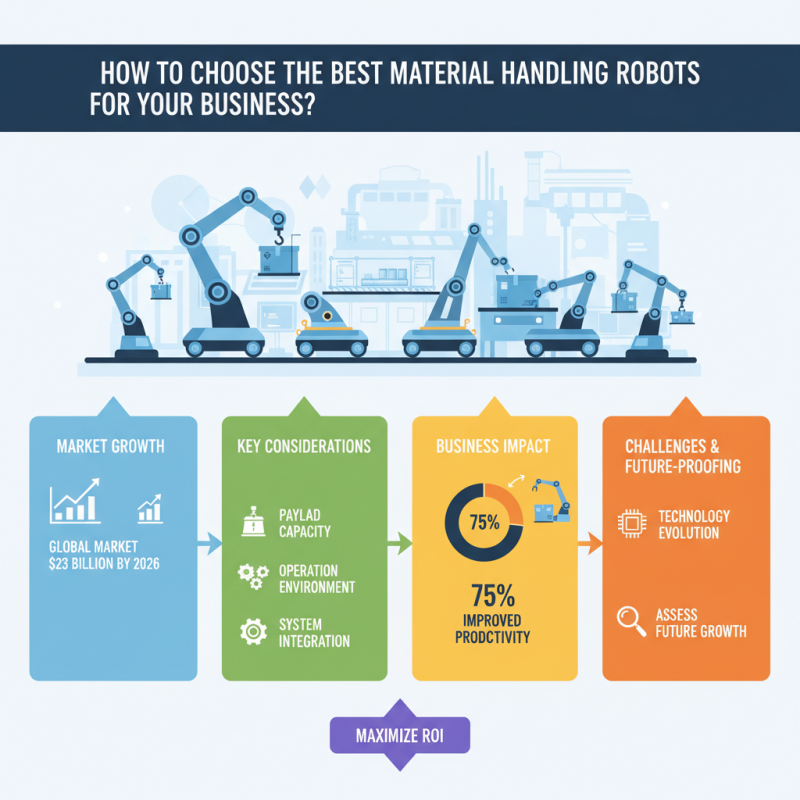
In today's fast-paced industrial landscape, choosing the right material handling robots is crucial for operational efficiency. According to a recent report by the International Federation of Robotics, the global market for these robots is projected to reach $23 billion by 2026. This growth highlights their increasing importance across various sectors. Businesses face tough decisions when selecting the best robots for their needs, as the options available are vast and varied.
To make an informed choice, companies must consider specific factors such as payload capacity, operation environment, and integration with existing systems. Data from a survey conducted by ABB Robotics reveals that 75% of businesses report improved productivity after implementing material handling robots. However, the decision-making process is often daunting. Many organizations struggle with identifying their unique requirements and defining clear objectives.
Moreover, the rapid evolution of technology means new models frequently hit the market. Some businesses may invest in high-end options without fully understanding their functions. A misguided investment can lead to frustration and unmet expectations. It's essential to assess not only current needs but also future growth potential to maximize return on investment in material handling robots.
Understanding Material Handling Robots: Types and Functions
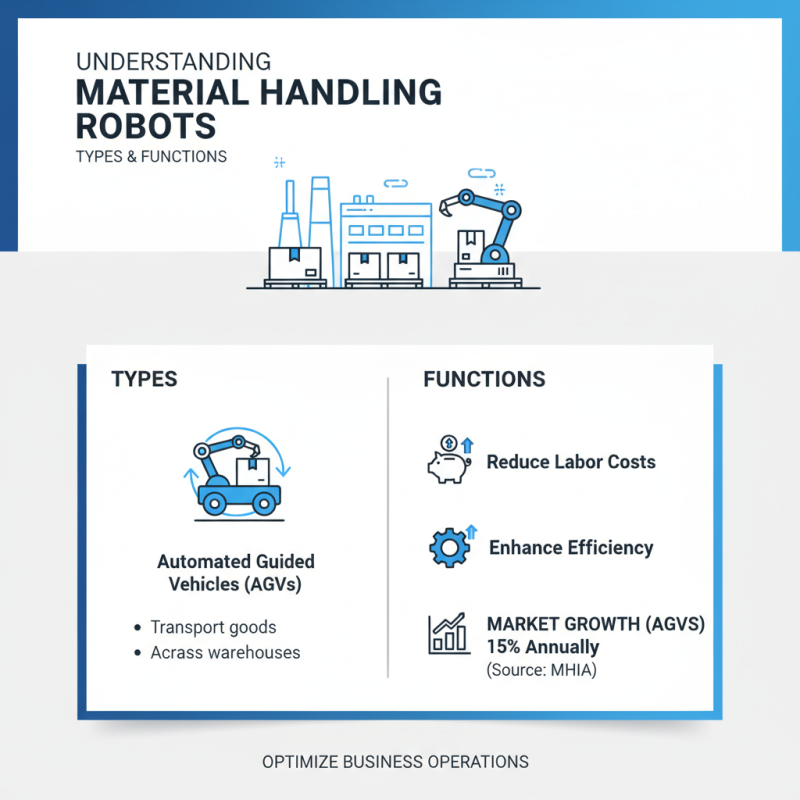
Understanding material handling robots is crucial for optimizing your business operations. These robots come in various types, each serving unique functions. Automated Guided Vehicles (AGVs) are popular for transporting goods across warehouses. They reduce labor costs and enhance efficiency. According to the Material Handling Industry of America (MHIA), the market for AGVs is expected to grow by 15% annually.
Another type is the Autonomous Mobile Robot (AMR). They are designed for dynamic environments, learning and adapting as they go. AMRs handle tasks like picking and sorting, which can dramatically improve productivity. Data from the Robotics Industry Association suggests that AMR adoption could increase by 40% by 2025, underlining their growing importance.
**Tips:** Focus on your specific needs. Consider the type of goods you handle. Assess whether static paths or dynamic movement suits your environment better. Robot capabilities should align with your workflow.
Evaluate the cost versus return. Sometimes the initial investment is high, but the long-term savings can be significant. However, performance may vary based on your warehouse's layout and complexity. Reflect on these factors to make a well-informed decision.
Assessing Your Business Needs for Material Handling Solutions
When assessing your business needs for material handling solutions, start by evaluating the specific tasks at hand. This could involve transporting materials, sorting, or packaging products. According to a report by the Association for Advancing Automation, businesses that employ automation in material handling can see productivity gains of 20 to 50%. Knowing your workflow is crucial to identifying the right robot type.
Consider the layout and size of your workspace. Will robots navigate through narrow aisles or handle heavy loads? Data from the Logistics Management suggests that 75% of warehouses will employ autonomous robots by 2025. This trend highlights the importance of aligning your operational needs with available technology.
It’s also essential to reflect on your workforce capabilities. Robots can augment human labor, but they won’t replace it entirely. A balance between automation and human skills is necessary. Drawing from industry insights, a Harvard Business Review study indicated that a mixed approach can improve efficiency while ensuring job safety and satisfaction. Understanding these elements will guide you in choosing the best material handling robots tailored to your business.
Evaluating the Features of Different Material Handling Robots
When selecting material handling robots, evaluating features is crucial. Key features often include payload capacity, mobility, and automation capabilities. Understanding these attributes helps align the robot's capabilities with your specific needs. For example, a robot designed for heavy loads will differ significantly from one intended for lighter tasks. Proper matching can improve efficiency.
Mobility is another critical factor. Some robots excel in confined spaces, while others are designed for larger areas. Consider the environment where the robot will work. Will it need to navigate tight corners or uneven surfaces? Knowing these details can affect your choice.
Automation capabilities vary widely among robots. Some offer advanced programming options and integration with existing systems. Others may require manual input. Reflect on your operations and how a robot can streamline processes. This assessment will highlight the gaps in your current setup and reveal areas for improvement. A thorough evaluation ensures the selected robot can adapt as your business evolves.
Cost Considerations When Selecting Material Handling Robots
When selecting material handling robots, cost considerations can greatly impact your decision. According to industry reports, businesses can save up to 30% in total operating costs by automating material handling processes. However, the initial investment can be substantial, ranging from $25,000 to over $100,000 for some systems. Companies must weigh not only the upfront costs but also the long-term benefits of efficiency and productivity.
Tip: Evaluate your budget carefully. Don’t forget to factor in maintenance and training costs. These can add up significantly after the purchase. Many companies overlook these ongoing expenses, leading to unexpected financial strain.
The type of robot you choose matters too. Autonomous mobile robots (AMRs) are typically more expensive upfront but can enhance flexibility in your operations. Conversely, traditional robotic arms may cost less but require fixed setups. Business needs vary, so align robot capabilities with specific tasks for maximum ROI.
Tip: Conduct a thorough needs assessment. This step often gets overlooked. Understanding your requirements will help avoid common pitfalls. Selecting the wrong robot can lead to inefficiencies and increase operational costs. Keep this in mind when planning your investment.
Integrating Material Handling Robots into Your Existing Workflow
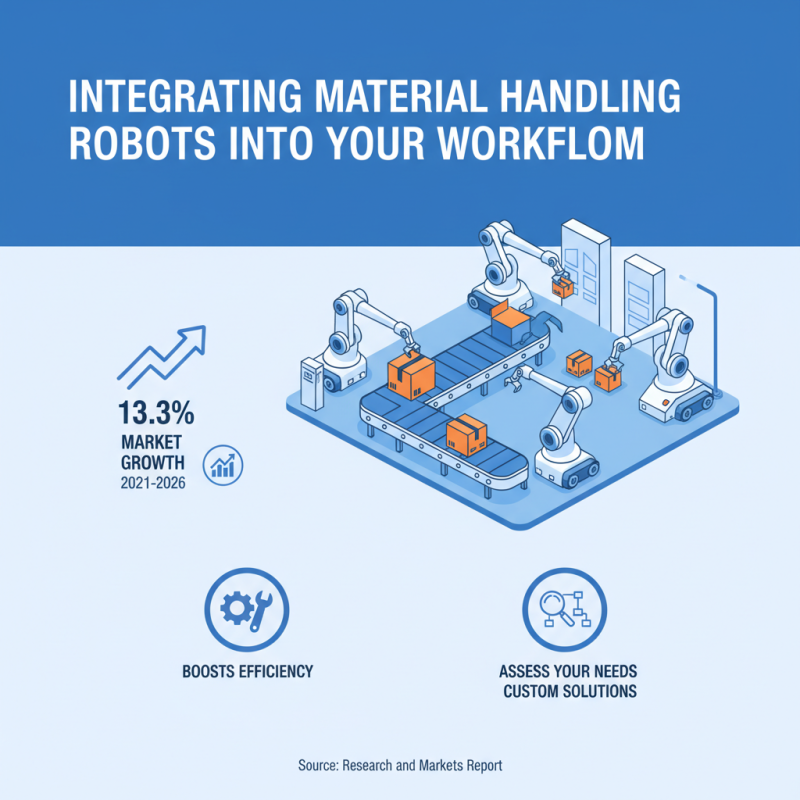
Integrating material handling robots into an existing workflow can significantly enhance efficiency. According to a report by Research and Markets, the material handling robotics market is projected to grow at a rate of about 13.3% from 2021 to 2026. Businesses must consider their specific needs when introducing these technologies.
To begin the integration, a thorough analysis of current processes is essential. Identify bottlenecks that robots can alleviate. Evaluating the physical layout of your warehouse or production line will also help. For example, tight spaces may require compact robots specifically designed for maneuverability.
Training staff to work alongside robots is critical. Workers need to understand new protocols and safety measures. Companies like the Association for Advancing Automation suggest ongoing education for teams to maximize robot efficiency. However, resistance to change can occur. Employees may feel threatened by automation. Encouraging collaboration between humans and robots fosters a smoother transition. Adopting a phased implementation approach allows time for adjustment, ensuring that all team members adapt effectively.