

• Gantry Robot Manufacturer & Articulated Arm Integrator

How to Choose Dog Bone Lifting Anchors in 2026?

Choosing dog-bone lifting anchors in 2026 starts with the lift, not the catalogue photo. The anchor must suit the precast element’s weight, shape, concrete strength, and planned lifting points. Sling angles and the element’s centre of gravity also affect the forces on each anchor. A rating alone is not enough. Small details matter.

When comparing products, listings may use the phrase “Dog Done Lifting Anchors,” so check the manufacturer’s drawings and specifications carefully. Confirm the permitted load, required embedment, edge distances, compatible lifting clutch, and installation position. A few millimetres can affect fit, while a misplaced anchor can create uneven loading. This guide explains what to check before choosing, from product documentation to site handling. It also highlights questions to raise with the supplier or a qualified lifting professional when the design is unclear. Concrete conditions and lifting methods vary, so no single anchor suits every job. Even a familiar setup deserves a fresh check. That can feel cautious, perhaps overly so, but assumptions are easy to miss when work is moving quickly. Use verified product data and project-specific engineering guidance to make a safe, practical selection.
How to Choose Dog Bone Lifting Anchors in 2026?

Define Dog-Bone Anchor Types, Components, and Rated Working Load Limits

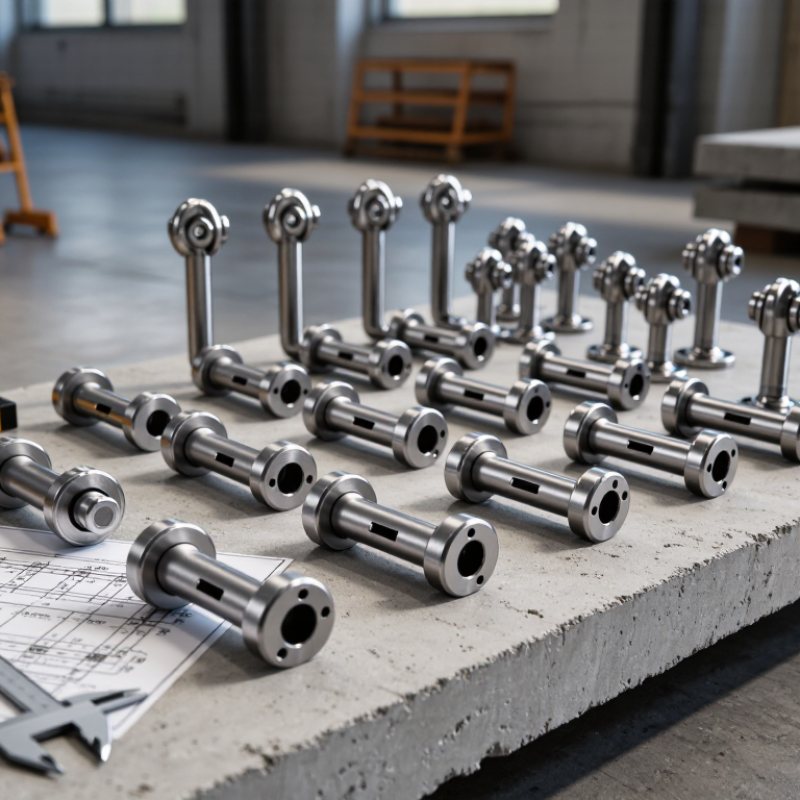
A dog-bone lifting anchor is a cast-in steel insert used to lift precast concrete units. Its enlarged head connects to a compatible lifting clutch, while its shank and anchorage end transfer force into the concrete. Designs vary: some have straight shanks for direct lifts, while others accommodate angled loading. Head shapes and anchorage details also differ. Names can mislead. Check the technical drawing, not appearance alone.

The main components are the lifting head, shank, and embedded anchorage; some systems also use a recess former to create space for the clutch. Confirm that the clutch matches the anchor’s head and size. A mismatch may prevent proper engagement. Also verify embedment depth, edge distance, concrete strength, and the direction of the planned lift. Small details matter.

The rated working load limit (WLL) is the permitted load under stated conditions, not the anchor’s breaking strength. It can depend on concrete strength, anchor position, sling angle, and load distribution across multiple anchors. A rating for vertical loading may not apply to an inclined pull. Compare the WLL with the full lifting setup and follow the anchor documentation and engineered lift plan. If a condition is unclear, pause and get it checked. Do not guess.

Check Concrete Strength, Embedment Depth, and Edge-Distance Data

When choosing Dog Bone Lifting Anchors in 2026, match the anchor data to the concrete actually being lifted. Check the specified concrete strength at lifting, not just the mix design’s target strength. Pour records or approved test results can help confirm it. If the strength is unknown, pause and ask the responsible engineer rather than guessing. Small differences matter.

Next, verify the required embedment depth in the anchor’s technical documentation. Measure effective embedment as specified; overall anchor length is not always the same thing. Check that the anchor is fully seated and that reinforcement or a void has not changed its position. A depth mark can help, but it cannot replace inspection before the pour.

Edge distance and anchor spacing need equal attention. Compare the actual layout with load data for the relevant concrete strength, anchor arrangement, and lifting direction. A close edge may reduce capacity, while several nearby anchors can affect how the load is shared. Record the measured distances on the lift plan, and confirm any angled or uneven lift with a qualified engineer. A tidy table can still miss a site variation. That deserves a second look.

How to Choose Dog Bone Lifting Anchors in 2026? — Check Concrete Strength, Embedment Depth, and Edge-Distance Data

Standard concrete strength classes provide context, but they do not establish an anchor’s safe lifting capacity.

The chart shows characteristic cylinder and cube compressive strengths for selected EN 206 concrete classes, in MPa. Before lifting, verify the concrete strength at the time of lifting and use the anchor’s approved design data to check embedment depth, edge distance, anchor spacing, load direction, and lifting angle. These requirements vary by anchor design and application; the chart is not a lifting-capacity table.

Apply VDI/BV-BS 6205 Design Criteria to Anchor Capacity Selection

How to Choose Dog Bone Lifting Anchors in 2026?

Selecting a dog bone lifting anchor by its catalog capacity alone can be misleading. VDI/BV-BS 6205 design criteria call for evaluating the complete lifting situation, not just the steel component. Start with the precast element’s weight, then include load distribution, sling angles, and acceleration during lifting. Small changes matter.

Check the anchor’s position against concrete edge distances, element thickness, and reinforcement layout. Concrete strength at the time of lifting is critical; the specified final strength may not yet be available. Consider the actual load direction, too. An anchor suited to a straight pull may not perform as intended under angled loading. Follow the applicable standard edition and the anchor’s verified technical data.

Capacity must reflect the weakest part of the load path, including the anchor, concrete, and lifting accessories. A practical review records assumptions, sling geometry, and the concrete condition at release. If the casting layout changes, recalculate rather than relying on the original selection. This step is sometimes missed.

Have a qualified engineer check unusual geometries, thin sections, or repeated-use arrangements; a tidy calculation cannot make uncertain site conditions disappear.

Calculate Sling-Angle Effects on Working Load and Lifting Capacity

How to Choose Dog Bone Lifting Anchors in 2026? Sling-angle calculations matter because a shallow sling can sharply increase the force on each anchor. For two equally loaded sling legs, estimate leg tension by dividing the lifted load by twice the sine of the sling angle measured from horizontal. At 60 degrees, each leg carries about 58% of the total load. At 30 degrees, each carries the full load. A small angle change can double the demand.

Check the anchor’s rated working load against calculated leg tension, not just the panel’s total weight. Confirm whether the rating assumes a particular lifting direction, concrete strength, embedment, and reinforcement arrangement. Uneven load sharing can raise one anchor’s force, especially when the panel tilts or slings differ in length. Real lifts are rarely perfect. Allow for applicable dynamic effects and follow the anchor supplier’s engineering data and the project lift plan. Measure sling angles at the actual connection points, then verify that the lifting clutch seats fully and the concrete around each anchor is sound. If the angle or load distribution is uncertain, pause and have a qualified lifting engineer review the setup. I would not rely on a quick field estimate alone.

How to Choose Dog Bone Lifting Anchors in 2026? - Calculate Sling-Angle Effects on Working Load and Lifting Capacity
Sling Angle from Horizontal sin(angle) Tension per Leg for a 1,000 kg Load Maximum Total Load with Two 1,000 kg WLL Legs Practical Interpretation
90° 1.000 500 kg per leg 2,000 kg Lowest leg tension in this two-leg model; confirm the anchor and lifting arrangement are designed for the actual load direction.
75° 0.966 518 kg per leg 1,932 kg A relatively steep sling angle keeps calculated leg tension close to the vertical case.
60° 0.866 577 kg per leg 1,732 kg The shallower angle raises leg tension; verify the rated capacity for the complete lifting system.
45° 0.707 707 kg per leg 1,414 kg Each leg carries more tension than at 60°; do not use the vertical rating without an angle adjustment.
30° 0.500 1,000 kg per leg 1,000 kg Leg tension doubles compared with a vertical leg carrying half the load; use only when permitted by the applicable equipment ratings and lift plan.
Calculation basis: Symmetrical two-leg sling, equal load sharing, static load, and sling angle measured from the horizontal. Tension per leg = total load ÷ (2 × sin(angle)). Maximum total load shown = 2 × assumed leg WLL × sin(angle). Values are illustrative calculations, not certified ratings for a dog bone lifting anchor, sling, or concrete component.
Before selecting an anchor: Check the anchor manufacturer’s declared WLL and permitted loading direction, plus concrete strength, anchor embedment, edge distances, reinforcement, component geometry, load balance, and applicable lifting regulations. Actual capacities may be lower and must be verified for the specific system and lift.

Verify Anchor Markings, Inspection Records, and Compatible Lifting Clutches

How to Choose Dog Bone Lifting Anchors in 2026?

Choosing a dog bone lifting anchor starts with its markings, not its shape. Check that the anchor carries readable identification and a stated working load limit. Match these details to the precast element’s approved lifting plan. If markings are missing, damaged, or hard to read, do not guess. Pause and seek guidance from the supplier or a qualified lifting professional. A familiar-looking anchor is not proof of capacity.

Inspection records help show whether an anchor has been checked and remains suitable for service. Review its inspection history, repair notes, and any records of unusual loading or damage. Look closely for cracks, deformation, corrosion, or worn bearing surfaces. Small defects can be easy to dismiss on a busy site. That is exactly when a second check matters. Keep records tied to the anchor’s identification, rather than relying on memory or a loose paper tag.

Tips: Confirm the lifting clutch is designed for the anchor type and load range. Check that it seats fully and engages as intended before lifting. Never force a clutch that feels loose or catches; stop and verify compatibility. Keep the anchor and clutch clean enough to inspect, and follow their respective instructions. A neat checklist helps, though it cannot replace sound judgment.