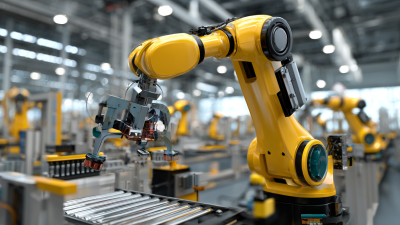
| 6-Axis Articulated Robot |
Six rotary joints; provides three-dimensional positioning plus orientation control around three axes. |
Approximately 3–300 kg, depending on robot size and configuration. |
Approximately 0.5–3.2 m reach; larger models can exceed this range. |
Commonly about ±0.02–0.10 mm, depending on model, payload, reach, and operating conditions. |
Welding, machine tending, assembly, painting, palletizing, material handling, dispensing, and complex multi-angle operations. |
Most versatile option; can approach a workpiece from many directions and handle complex tool orientations. |
Higher purchase and programming cost than simpler robot types; requires more floor space and safety planning. |
Check payload at the required wrist extension, reach, mounting position, controller language, safety certification, spare-part availability, and local service capability. |
| SCARA Robot |
Usually four axes; two rotary axes for horizontal movement, one vertical axis, and one rotary axis for tool orientation. |
Approximately 1–20 kg for common assembly and handling applications. |
Approximately 0.25–1.2 m radial reach. |
Commonly about ±0.01–0.03 mm in suitable applications. |
High-speed assembly, screwdriving, insertion, dispensing, packaging, sorting, and small-part transfer. |
Fast horizontal motion, strong vertical rigidity, compact footprint, and efficient repetitive assembly. |
Limited ability to work around obstacles or change tool angles in three dimensions; not ideal for complex surface-following tasks. |
Verify cycle-time calculations, vertical stroke, allowable wrist moment, cleanroom or environmental rating, electrical standards, and integration with vision or feeding systems. |
| Delta Robot |
Usually three or four parallel arms; produces fast X-Y-Z movement, with optional tool rotation. |
Approximately 0.5–8 kg for common high-speed picking applications. |
Typically a broad, shallow dome-shaped workspace; often around 0.4–1.6 m in diameter, depending on design. |
Commonly about ±0.05–0.20 mm, depending on speed, payload, and mechanical configuration. |
Pick-and-place, food handling, primary packaging, sorting, counting, and lightweight product transfer. |
Very high pick rates, low moving mass, and excellent performance for lightweight products on conveyors. |
Restricted payload and orientation range; performance depends strongly on conveyor tracking, product presentation, and workspace layout. |
Check rated picks per minute, payload including gripper, product spacing, conveyor synchronization, hygienic design, washdown requirements, and vision-system compatibility. |
| Cartesian Robot |
Three or more linear axes moving along straight X, Y, and Z coordinates; additional rotary axes may be added. |
Approximately 1–1,000 kg or more, depending on frame size, axis design, and application. |
Configured to the application; travel can range from hundreds of millimeters to several meters per axis. |
Commonly about ±0.02–0.10 mm, with higher precision possible in specialized designs. |
Machine loading, palletizing, 3D printing, dispensing, cutting, CNC handling, gantry transfer, and large-format movement. |
Straightforward programming, scalable travel, rigid structure, easy access, and efficient use for linear movements. |
Less flexible for multi-angle access; large systems may require substantial framework, guarding, and installation work. |
Confirm structural stiffness, axis travel, acceleration, floor loading, installation tolerances, cable routing, controller compatibility, and transportation dimensions. |