

Polyester is the world’s largest fiber category, but that headline alone cannot tell a mill which machine to buy. Textile Exchange’s Materials Market Report 2024 estimates global fiber production reached 124 million tonnes in 2023, with polyester accounting for 57%. This is useful market context, not a direct measure of POY demand or winding-machine sales. That distinction matters.
Choosing POY Spinning And Winding equipment means matching process performance to the yarn, feedstock, and production plan. Compare rated output with the denier range, filament count, and number of ends you actually intend to run. Check winding speed, package size, tension control, and doffing time against real operating conditions. A fast specification can look impressive on paper. It may be less useful when frequent product changes slow the line.
Ask suppliers for production data from comparable installations, including uptime, energy use per kilogram, and package consistency. Confirm what the quoted capacity assumes: polymer quality, operating hours, and maintenance intervals can change the result. Look closely at spare-part availability, operator training, and service response. Small details matter. The best choice is not always the machine with the highest speed. Some figures remain difficult to compare across vendors, so request measurement methods and test records before treating them as guarantees. A careful selection balances output, quality, flexibility, and lifecycle cost, then checks those priorities against the mill’s actual constraints.
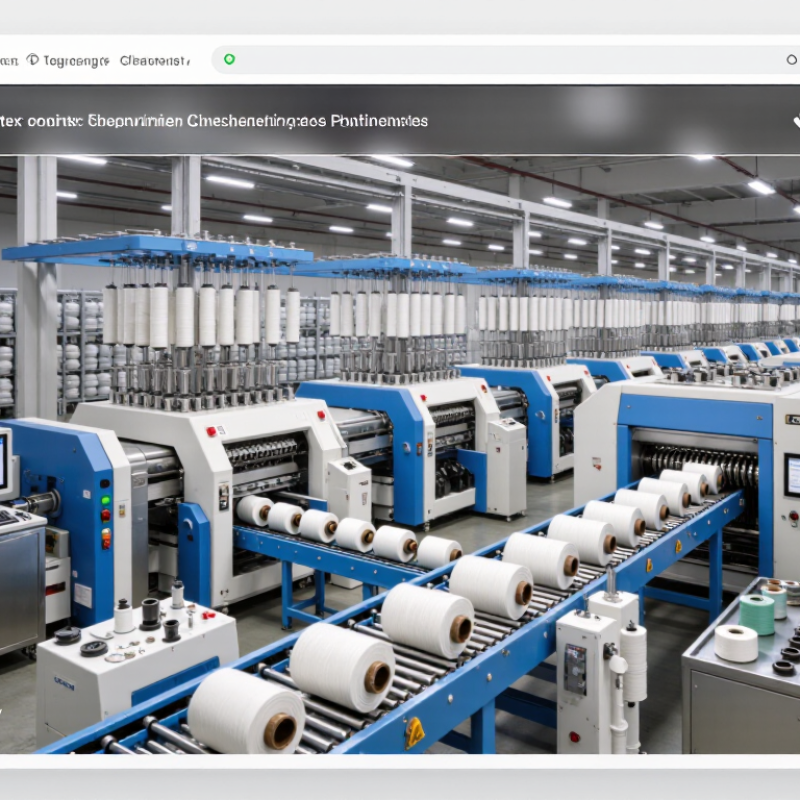
Before choosing POY spinning and winding machines, define the yarn your customers need. Record the polymer type, target denier, filament count, and intended fabric or process. These details affect spinning conditions and the winding setup. A machine configured for fine, high-filament yarn may not suit a heavier product at the same output. Be specific.
Estimate daily production, operating hours, and the number of yarn positions required. Then check whether the machine’s output, take-up speed, and package dimensions match your plan. Consider the downstream process too: package build and yarn tension can affect unwinding and later texturing. Small details matter. A specification sheet can still miss practical limits, so confirm test conditions and discuss changeovers with experienced operators.
Tips: Prepare a sample specification before requesting quotations. Include acceptable denier variation, package weight, and winding requirements. Ask how settings are adjusted for different products, and what routine checks help maintain stable tension. Do not guess. If demand forecasts or yarn specifications remain uncertain, leave room for a trial run; choosing solely by maximum speed can create costly mismatches.
Choosing a POY spinning and winding line means balancing speed with stable output. Compare rated spinning speed with the speed the line can sustain during a full shift. A higher setting may increase output, but it can also expose weak points in cooling, yarn tension, or winding. Watch for frequent yarn breaks, uneven packages, and changes in filament appearance. Small differences matter.
Capacity should reflect the yarn types and package sizes you actually produce, not only the maximum figure on a specification sheet. Ask how output changes when operators switch products or adjust denier. Then review process controls: temperature settings, quench airflow, godet speeds, tension monitoring, and winding parameters should be easy to check and adjust. Clear alarms and saved production recipes help teams respond consistently. Run a trial. Record breaks, package weight variation, and time spent correcting settings. A faster setting can look impressive on paper, yet prove awkward in daily production. I would also question any comparison that ignores changeovers; they can quietly reduce usable capacity.
| Comparison Dimension | Option A: Standard POY Setup | Option B: Higher-Speed POY Setup | What to Check Before Choosing |
|---|---|---|---|
| Typical take-up speed | Approximately 2,500–3,000 m/min | Approximately 3,000–3,500+ m/min, depending on polymer, yarn specification, and machine configuration | Confirm the stable production-speed range for the intended polymer and yarn count. Compare saleable output at the target quality, not just the maximum stated speed. |
| Illustrative output per position | For 150 denier at 3,000 m/min: about 72 kg per 24 hours at 100% running time | For 150 denier at 3,500 m/min: about 84 kg per 24 hours at 100% running time | These are theoretical figures for one yarn end per position. Actual production is lower when downtime, doffing, start-ups, and quality losses are included. |
| Capacity calculation | Theoretical output (kg/day per position) = denier × speed (m/min) × 1,440 ÷ 9,000,000 | Estimate total line capacity using the required denier, number of positions, operating hours, and realistic plant availability. Do not compare machines by speed alone. | |
| Winding and package formation | Designed to form packages at the selected production speed and winding conditions | Requires winding performance that remains stable at the higher line speed | Review package shape, winding tension, package density, traverse performance, doffing method, and package quality across the full production run. |
| Process control | Control typically covers key operating settings such as godet speed, quench conditions, finish application, and winding parameters | May include more extensive monitoring and alarms to help manage higher-speed operation | Check set-point accuracy, alarm history, data logging, recipe management, and whether critical process values can be monitored by position. |
| Yarn quality monitoring | Quality is evaluated through agreed yarn tests and production checks | Higher speed makes consistent process conditions and timely detection of variation especially important | Agree on test methods and acceptance limits for properties such as linear density, breaking force, elongation, interlace level, and package appearance. |
| Energy and operating costs | Use the expected production rate and utility demand to estimate cost per kilogram | Higher output may improve cost per kilogram only if quality, uptime, and utility consumption remain acceptable | Compare measured or guaranteed electricity and compressed-air consumption per kilogram at the same yarn specification and operating conditions. |
| Best-fit decision | Consider when the target output can be met with the standard speed range and the investment prioritizes flexibility or a lower operating speed | Consider when additional output is needed and the process, winding system, and downstream handling support the higher speed | Request a specification-based production trial or performance guarantee. Compare output, defect rate, package quality, changeover time, and service requirements together. |
Note: POY means partially oriented yarn. Speed ranges and calculated output are indicative, not universal machine specifications. Actual performance depends on the polymer, filament count, yarn denier, process settings, winding conditions, and plant operating time.
Winding quality affects more than how a POY package looks. It influences unwinding stability, yarn tension, and performance during downstream processing. Check package shape, edge build, and surface uniformity under consistent lighting. Look for soft spots, ridges, ribboning, or loose layers. Small defects can become troublesome later.
Measure package diameter, width, and weight against the requirements of the next process. Also consider tube dimensions, handling limits, and how packages fit storage or transport equipment. A dense package may hold more yarn, but excessive hardness can make unwinding less stable. There is no single ideal build for every application. The first setting is rarely the final one.
During trials, compare packages from different spinning positions and inspect them after winding and unwinding. Record tension readings, end breaks, and any visible sloughing. Change one setting at a time, such as winding tension or traverse parameters, so results remain useful. This takes patience. A neat package is not automatically a good one. Downstream trials may reveal problems that a quick visual check misses, so confirm performance with the actual yarn path and process conditions.
Match the POY spinning machine to the winding unit’s yarn range, package size, and operating speed. Confirm that both machines handle the same polymer, filament count, and target denier. A mismatch can cause unstable yarn tension, uneven packages, or frequent line stops. Check how controls communicate, too. Compatible settings make speed changes and quality checks easier to manage.
Tips: Ask for a trial using your intended material and yarn specification. Watch package formation and tension readings during the run. Keep the results for comparison.
Automation should fit the operators and the production plan, not just the equipment list. Automatic doffing can reduce manual handling, while sensors may flag tension changes before defects spread. Still, added controls need clear alarms and practical training. Maintenance access matters just as much. Inspect whether crews can reach filters, guides, and lubrication points without dismantling nearby equipment. Ask about routine service intervals and spare-part availability. Even a careful selection can miss a weakness that appears during a long production run. That is why trial data and operator feedback deserve real weight.
Compare key fit and operating considerations before selecting equipment.
The scores are an illustrative buyer’s assessment, not measured market data. Prioritize compatibility with polymer throughput, spinneret layout, godet speeds, and package dimensions; then compare winding control, automation, and access for routine maintenance. Confirm all operating ranges against your production requirements and supplier specifications.
When comparing POY spinning and winding machines, calculate total cost per kilogram of saleable yarn, not purchase price alone. Include power, compressed air, labor, maintenance, start-up waste, and planned downtime. The IEA’s Energy Efficiency 2023 report estimates that industry used 37% of global final energy in 2022. This is not a POY-line benchmark, but it makes energy consumption worth checking carefully. Request measured kWh per kilogram at your target speed and denier, then verify the test conditions.
Supplier support affects the numbers. Ask how quickly technicians can respond, which critical spares are stocked locally, and whether remote diagnostics are available. Request references from mills running similar polymer, throughput, and package sizes. Demand the logs. A neat demonstration is not the same as stable production across a full shift. I would also price training and commissioning separately; these costs are easy to underestimate.
Compliance should be documented before purchase. Check destination-market requirements for machine guarding, electrical safety, noise, and operator instructions. Ask for a risk assessment, test records, and manuals in the required language. The EU Machinery Regulation (EU) 2023/1230 applies from 20 January 2027, so buyers serving that market should confirm transition planning with qualified compliance staff. Keep the paperwork. If a supplier cannot explain how a safety feature is tested or maintained, treat that gap as a cost and a risk.


