
• Gantry Robot Manufacturer & Articulated Arm Integrator

7 Tips for Choosing the Best Pick and Place Robot

Choosing the right pick and place robot is rarely as simple as comparing speed, payload, and price. A fast arm may still fail when products arrive unevenly, surfaces reflect light, or grippers leave marks. In a real production cell, small details matter: a two-millimeter shift, a slippery pouch, or a crowded conveyor can reduce accuracy quickly. Robotics expert Rodney Brooks observes, “The future is already here—it’s just not evenly distributed.” That idea fits modern automation. Advanced robots exist, but the best solution depends on your factory’s actual conditions.

This guide presents seven practical tips for selecting a pick and place robot with greater confidence. It examines payload, reach, cycle time, repeatability, end-of-arm tooling, vision integration, safety, and total operating cost. It also considers installation support and maintenance, because downtime often costs more than the original purchase. Test the robot with your real products. Do not rely only on a supplier’s demonstration video. A carton may behave perfectly in a showroom and collapse on a humid factory floor.

The choice is not always obvious. Sometimes a slower robot produces better results. Sometimes a simple gripper outperforms an expensive vision system. That is worth questioning. Careful selection should connect engineering data with operator experience, production targets, and future product changes. The goal is not the most impressive machine. It is a reliable pick and place robot that works consistently, safely, and economically in your specific process.
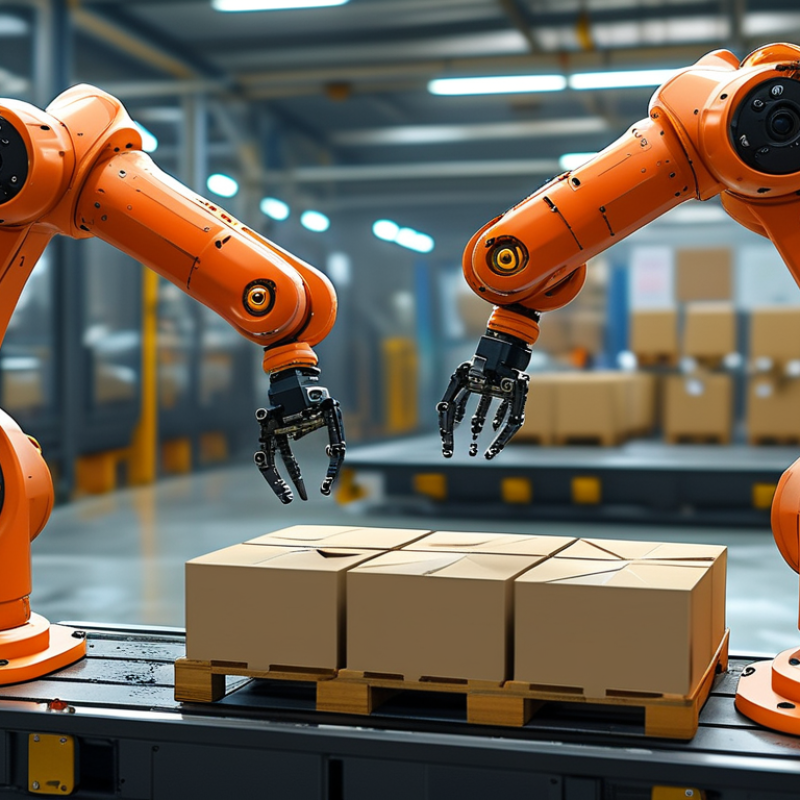
7 Tips for Choosing the Best Pick and Place Robot

Define the Production Task and Required Robot Functions

Start with the part. Before comparing pick and place robots, define exactly what the machine must handle. Record each item’s weight, dimensions, surface, temperature, and orientation. Measure the distance between pickup and drop-off points. Note the required cycle time, daily operating hours, and expected production changes.

A practical test uses real parts, not ideal samples. Watch how oily surfaces, flexible packaging, or small size differences affect gripping. The robot may need vacuum, parallel jaws, soft fingers, or a vision system. Its reach must cover the full workspace without forcing awkward movements. Payload calculations should include the gripper and any tooling. That detail is often underestimated.

Specify the functions clearly for the equipment supplier. These may include part detection, orientation, sorting, stacking, inspection, and automatic recipe changes. Check how operators will adjust settings and clear simple faults. A fast robot is not useful if changeovers take forty minutes. Safety functions, guarding, access control, and maintenance space also require early review. They should match the workplace risk assessment and applicable regulations.

Measure it twice. Production conditions can expose weaknesses that a short demonstration misses. Test the robot during peak speed, repeated shifts, and planned product variation. I have seen teams optimize cycle time first, then discover that the gripper damages packaging. That mistake is avoidable, but only when the production task is defined in practical detail.

Compare Payload, Reach, Speed, and Positioning Accuracy

Choosing the best pick and place robot starts with the product, not the catalog. The International Federation of Robotics reported 541,302 industrial robots installed worldwide in 2023. That scale shows strong adoption, but it does not guarantee a suitable match. Measure the heaviest product, gripper, and cable load together. Add a safety margin. Payload ratings can look generous until acceleration changes.

Tip 1: Compare payload at the required reach. A robot lifting 5 kilograms nearby may handle less at full extension.

Tip 2: Map the working envelope carefully. Reach must cover feeders, conveyors, inspection points, and the drop zone. A longer arm is not always better. It can increase vibration, footprint, and cycle time. I have seen layouts fail because reach was measured from the robot base, not the actual tool center point.

Speed needs context. Ask for cycle time under your real path, payload, and orientation. “Maximum speed” is a weak comparison. Positioning accuracy also needs careful reading. Repeatability describes returning to a taught point; absolute accuracy describes landing on the intended coordinate. ISO 9283 provides standardized methods for robot performance testing, but factory conditions still matter. Temperature, conveyor vibration, lighting, and product variation can shift results.

Tip 3: Request test data using your parts. A 0.1-millimeter specification may not survive a flexible package or a poorly secured fixture. This is where many evaluations become too optimistic. Reliability depends on measured performance, not impressive numbers.

Evaluate Gripper Options and Product Compatibility

Choosing a pick-and-place robot starts at the contact point: the gripper. A fast arm cannot rescue an unsuitable tool. Match jaw shape, stroke, gripping force, and payload to the actual product, not its catalogue average. Cylindrical parts may need parallel fingers; porous bags may need vacuum cups; delicate surfaces need controlled force. Test oily, dusty, warm, and slightly misaligned samples. Real products rarely behave perfectly.

IFR’s World Robotics 2024 reports 541,302 industrial robots installed worldwide in 2023. That scale increases the value of practical compatibility checks. Measure the product’s center of gravity, allowable contact pressure, and presentation tolerance. Then compare them with the gripper’s rated force, response time, and repeatability. A tool that lifts one item may slip during acceleration. Worse, it may mark the product without obvious damage.

The Association for Advancing Automation reported 31,159 robot orders in North America during 2023, showing a substantial automation base requiring careful application engineering. Check flange dimensions, utilities, sensors, and cable routing before procurement. Include conveyor speed and spacing in cycle tests. A spreadsheet can mislead. Run a representative pilot with rejects, surface variation, and cleaning conditions. Review results with operators, because they notice small failures engineers may miss. Leave adjustment range in the design; perfect assumptions rarely survive a full shift.

Check Integration, Programming, Safety, and Maintenance Needs

Choosing a pick and place robot requires more than comparing speed and payload. Integration decides whether the machine improves production or creates another bottleneck. The International Federation of Robotics reported 541,302 industrial robot installations worldwide in 2023. That scale shows strong adoption, but every cell still needs careful engineering.

Tip 1: Check integration first.

Confirm the robot’s reach, payload, gripper interface, conveyor timing, vision signals, and communication protocols. Measure the product, not just the catalogue sample. A two-millimeter position shift can cause repeated mis-picks. Include guarding, emergency stops, and access points in the layout. ISO 10218-1:2025 emphasizes risk reduction across the robot’s design and operation.

Tip 2: Test programming with real production data.

Operators should adjust recipes, recover faults, and change product formats without rewriting complex code. Use clear prompts and controlled access. Short training matters. A beautiful interface may still confuse a tired night-shift operator.

Tip 3: Plan maintenance before installation.

Record lubrication points, spare-part lead times, cleaning intervals, and backup procedures. Maintenance teams should inspect cables, grippers, sensors, and vacuum performance. IFR’s World Robotics data confirms expanding deployment, yet it does not guarantee local technical support. That is an easy detail to overlook.

A pilot run may expose awkward access, unstable parts, or excessive changeover time. Reconsider the design before scaling it.

Calculate Total Cost, Reliability, and Future Scalability

7 Tips for Choosing the Best Pick and Place Robot

Calculate Total Cost, Reliability, and Future Scalability

A low purchase price can hide expensive installation, tooling, programming, and safety integration. Calculate the total cost over five years, not only the equipment invoice. Include electricity, preventive maintenance, spare parts, operator training, and expected downtime. A simple spreadsheet often exposes overlooked expenses. Downtime hurts.

Measure the robot against your real production conditions. Record payload, product dimensions, cycle time, working reach, and shift patterns before speaking with suppliers. Ask for performance data from similar applications, not only laboratory demonstrations. Check how quickly technicians can replace cables, grippers, and critical sensors. Accessible components can reduce repair time during a night shift. Reliability is practical, not theoretical.

Future scalability deserves equal attention. Choose a controller that can support additional axes, vision systems, data collection, or a second production line. Confirm that the robot can communicate with your existing equipment through widely supported industrial protocols. Review software licensing and training costs carefully. Some systems appear flexible, but expansion later becomes surprisingly costly. That risk is easy to underestimate.

Request a realistic acceptance test using your products, packaging, and operating speed. Test repeated starts, product changes, and recovery after a fault. We once focused too heavily on maximum speed and underestimated changeover time. That mistake changed the final evaluation. Leave room for uncertainty, because actual factories rarely match the original model. A reliable robot should deliver consistent output, manageable ownership costs, and sensible growth options.

7 Tips for Choosing the Best Pick and Place Robot

A practical 100-point evaluation model covering total cost, reliability, productivity, and future scalability.

Total cost and reliability receive the highest weighting because they directly affect long-term operating expenses and production continuity. Throughput, payload, reach, safety, integration effort, and scalability should then be adjusted according to the application, product mix, and expected production growth.