How to Choose the Right Chemical IBC Tank?
Choosing the right Chemical IBC Tank is not simply a matter of comparing capacity or price. A tank that holds 1,000 liters may look suitable, yet its liner, valve, gasket, and frame must match the chemical inside. In practical purchasing work, small details often decide whether a container performs reliably. Fit matters.
Start with the chemical’s Safety Data Sheet, concentration, density, temperature range, and storage duration. These details help determine material compatibility, including whether high-density polyethylene, stainless steel, or another construction is appropriate. A supplier should provide technical data, traceability, and clear information about testing. Relevant transport and workplace requirements must also be checked for the destination market. Do not rely on a product photograph alone.
Consider the working environment. Will the tank sit outdoors under strong sunlight? Will forklifts move it across uneven concrete? Are the discharge valve, cap, and grounding arrangements practical for daily handling? A narrow outlet may slow production, while a fragile fitting can create avoidable maintenance problems. It is easy to overlook access space.
A sound evaluation also includes cleaning procedures, inspection intervals, replacement parts, and emergency containment. Review previous service records when available, and ask the manufacturer how failures are investigated. No selection method is perfect. Even experienced teams can miss a temperature change or an unusual mixture. That is why a documented compatibility review, supported by qualified technical advice, is more dependable than a quick purchase decision. The right Chemical IBC Tank protects the product, the operators, and the surrounding workplace.
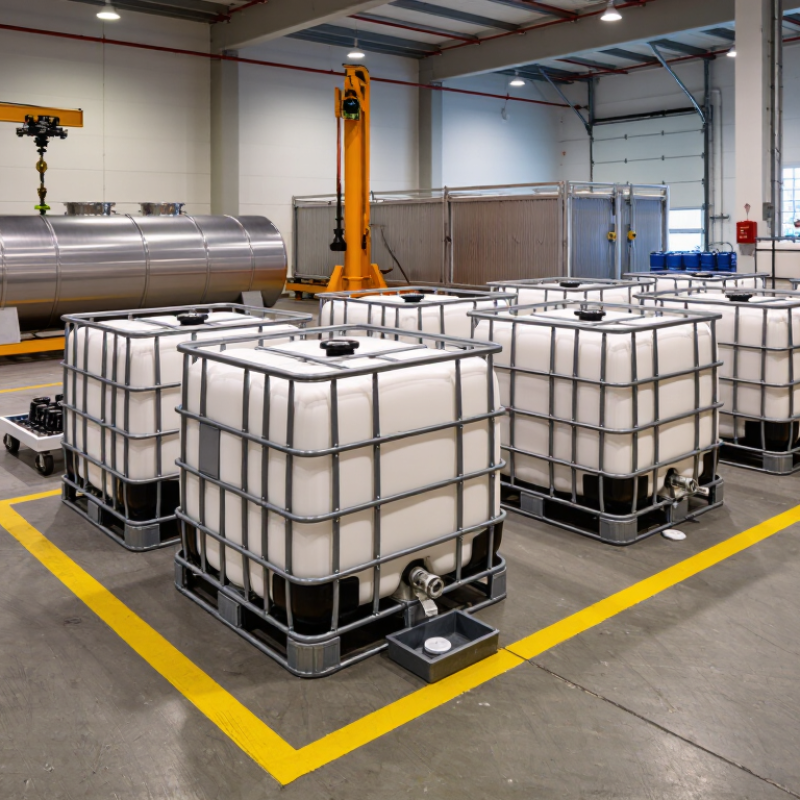
Understanding Chemical IBC Tank Types and Construction Materials
How to Choose the Right Chemical IBC Tank?
Understanding Chemical IBC Tank Types and Construction Materials
Choosing a chemical IBC tank begins with identifying the liquid, not its appearance. Check the safety data sheet for concentration, density, temperature, and storage conditions. A clear liquid may still attack common plastics or create vapor pressure.
Composite IBC tanks usually combine a high-density polyethylene inner bottle with a steel cage and pallet. They are practical for many mild chemicals, especially during transport and routine storage. However, plastic can soften, swell, permeate, or become brittle under harsh conditions. Stainless steel IBC tanks offer stronger resistance, better heat tolerance, and easier cleaning. They may suit aggressive chemicals, repeated use, or controlled processing environments. Still, steel is not automatically compatible with every substance.
Material selection matters.
Inspect the fittings too. Valve materials, gaskets, closures, and vent systems must match the liquid and operating temperature. A small gasket failure can cause a larger problem than a damaged tank wall. Consider UV exposure, forklift handling, grounding needs, and whether the tank will remain outdoors. Always confirm compatibility with technical documentation and a qualified supplier. Compatibility charts help, but they are not infallible. Concentration, contamination, and temperature can change the result. In practice, many selection mistakes happen because users check only the container material and overlook the components.
How to Choose the Right Chemical IBC Tank?
Understanding Chemical IBC Tank Types and Construction Materials
Material density helps explain the basic weight difference between common chemical IBC construction materials. Composite IBCs typically use an HDPE inner bottle with a metal cage, while stainless steel and carbon steel IBCs use metal vessel construction. The values shown are representative material densities: HDPE is approximately 0.95 g/cm³, carbon steel is approximately 7.85 g/cm³, and stainless steel is approximately 8.00 g/cm³. Always verify chemical compatibility, temperature limits, pressure ratings, and UN certification before selecting an IBC tank.
Matching Tank Compatibility with the Stored Chemical
How to Choose the Right Chemical IBC Tank?
Matching Tank Compatibility with the Stored Chemical
The safest choice begins with the chemical, not the tank’s shape or capacity. Identify the product’s concentration, temperature range, density, and storage duration. Then check the tank’s wetted materials, including the inner container, valve, gasket, and closure. A tank may resist a diluted solution but fail with a concentrated one. Small differences matter.
Tips: Request a current compatibility chart and safety data sheet from qualified suppliers. Confirm the exact chemical name, concentration, operating temperature, and cleaning agents. Inspect sample material when uncertainty remains. Look for swelling, softening, cracks, discoloration, or a sharp odor. Do not rely on appearance alone. Compatibility can change after repeated filling and emptying.
Experienced handling teams also review sunlight, outdoor exposure, stacking pressure, and transfer speed. Temperature can rise quickly inside a dark outdoor tank. That may reduce material strength or damage seals. A previous container is not proof of suitability. It may have worked, but unnoticed degradation could remain. Record inspection results and test a small, controlled setup before full-scale use. Recheck the decision when the formula, temperature, or handling process changes.
How to Choose the Right Chemical IBC Tank? — Matching Tank Compatibility with the Stored Chemical | Stored Chemical | Typical Concentration | HDPE Inner Bottle | PP Inner Bottle | 316L Stainless Steel | Compatibility and Selection Guidance |
| Hydrochloric Acid | Up to 37% | Recommended | Recommended | Avoid | HDPE and PP are commonly suitable. Chloride-containing acid can cause pitting and corrosion of stainless steel, especially at elevated temperature. |
| Sulfuric Acid | 10–50% | Conditional | Conditional | Conditional | Compatibility changes significantly with concentration and temperature. Do not assume dilute-acid performance applies to concentrated sulfuric acid. |
| Nitric Acid | Up to 30% | Conditional | Conditional | Conditional | Strong oxidizing acid. Verify concentration, temperature, permeation risk, fittings, gaskets and venting before selecting an IBC. |
| Sodium Hydroxide | Up to 50% | Recommended | Recommended | Conditional | HDPE and PP generally provide good resistance. Stainless-steel suitability depends on concentration, temperature and exposure time. |
| Sodium Hypochlorite | 5–15% | Recommended | Recommended | Avoid | Use compatible plastic components and suitable vents. Stainless steel may suffer from chloride-related corrosion; avoid contamination with acids. |
| Hydrogen Peroxide | Up to 35% | Recommended | Recommended | Conditional | Use clean, compatible equipment dedicated to oxidizers. Avoid catalytic contamination, unsuitable metals and non-approved seals. |
| Acetic Acid | Glacial to 30% | Conditional | Conditional | Recommended | Plastic compatibility depends on concentration and temperature. 316L stainless steel is often preferred for many service conditions, subject to verification. |
| Methanol | Commercial or pure grade | Recommended | Recommended | Recommended | Materials are generally compatible, but methanol is flammable. Confirm grounding, bonding, venting, electrical classification and applicable transport requirements. |
| Acetone | Commercial or pure grade | Avoid | Conditional | Recommended | Acetone can attack or permeate common polyethylene containers. Verify PP performance, valve materials and gasket compatibility before use. |
| Toluene | Commercial or pure grade | Avoid | Conditional | Recommended | Aromatic solvent with potential for polymer swelling and permeation. Metal construction is often preferred; check seals, liners and grounding requirements. |
| Ethyl Acetate | Commercial or pure grade | Avoid | Conditional | Recommended | May soften or permeate polyethylene. Confirm PP and elastomer compatibility, and address flammability, static electricity and vapor control. |
| Ethanol | Up to 100% | Recommended | Recommended | Recommended | Generally compatible with HDPE, PP and 316L stainless steel. For high-purity service, verify extractables, cleanliness and gasket materials. |
| Mineral Oil | Undiluted | Recommended | Recommended | Recommended | Generally compatible with these materials. Confirm performance if additives, elevated temperatures or long-term storage are involved. |
| Sodium Chloride Brine | Up to saturation | Recommended | Recommended | Conditional | HDPE and PP are typically suitable. Chloride-rich brine can increase pitting risk for stainless steel, particularly at high temperature or stagnant conditions. |
| Rating key: Recommended generally suitable for the stated conditions; Conditional requires detailed review or testing; Avoid not recommended without a specifically engineered solution. |
| Important selection note: This table is a preliminary material-screening guide, not a guarantee of service life. Final IBC selection must consider exact chemical formulation, concentration, temperature, storage duration, pressure or vacuum, filling and discharge conditions, permeation, UV exposure, valve and gasket materials, cleaning requirements, hazardous-goods regulations and the tank manufacturer’s current compatibility data. Always perform a documented compatibility review before filling the tank. |
Checking Safety Standards, Certifications, and Regulatory Requirements
How to Choose the Right Chemical IBC Tank?
Checking Safety Standards, Certifications, and Regulatory Requirements
A chemical IBC tank must match the substance, transport method, and storage environment. The liquid’s classification affects tank material, valve design, closure type, and filling limits. I check the Safety Data Sheet before comparing tank specifications. It identifies hazards, compatibility concerns, and required handling controls. For regulated transport, verify the correct UN packaging approval and marking. Check the details carefully.
A certification is not automatically proof of suitability. Ask for approval documents, test records, inspection dates, and traceable production information. The tank’s approval should cover the intended chemical and transport conditions. Regulations can differ between domestic storage, road transport, sea freight, and other routes. Cross-border shipments may require additional documentation or language requirements. Do not rely on a supplier’s brief statement.
Before purchase, inspect the tank body, pallet, seals, labels, and discharge valve. Look for cracks, distortion, staining, or damaged identification plates. Confirm that replacement parts retain the original safety performance. I also compare the operating temperature with the actual filling and cleaning process. A certificate may look convincing but still leave important questions unanswered. That gap matters.
Keep inspection reports, SDS files, certificates, and maintenance records together. These documents support traceability during audits or incident reviews. My checklist is useful, but it is not infallible. A qualified safety professional should review unusual chemicals or uncertain regulatory cases. Small assumptions can create large handling problems.