How to Choose the Right Fanuc Robot for Your Business Needs?
Choosing the right Fanuc robot for your business can significantly impact your operational efficiency. In 2022, the global robotics market was valued at approximately $39 billion and is projected to grow at a CAGR of 26.7% by 2030 (Source: Fortune Business Insights). This exponential growth highlights the increasing reliance on automation across various industries. However, selecting the appropriate Fanuc robot isn't straightforward.
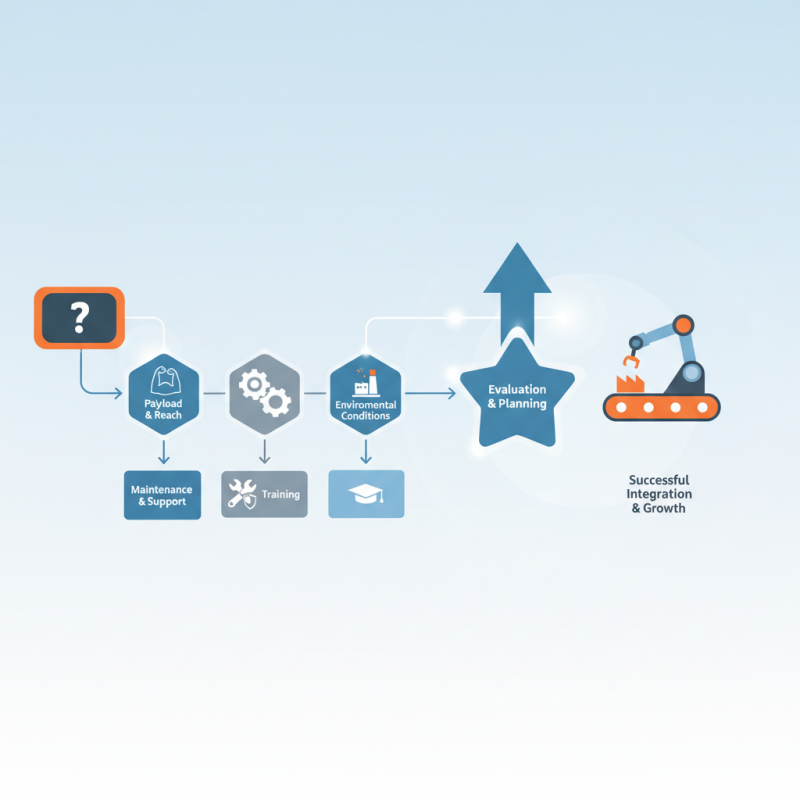
Each Fanuc robot model has unique specifications and capabilities. Assessing your specific requirements—such as payload, reach, and environmental conditions—is crucial. According to a recent report from MarketsandMarkets, 36% of companies faced challenges in integrating robotic systems into existing workflows. This suggests that a mismatch between robot capabilities and business needs can lead to inefficiencies. Investing time in understanding these factors is essential.
Consider factors like training and maintenance support, as they also play a vital role in the success of robotics integration. While Fanuc robots are known for their reliability, underestimating the importance of these elements could hinder performance. Therefore, careful evaluation and planning are necessary to ensure that your chosen Fanuc robot meets your operational goals effectively.
Identifying Your Business Requirements for Automation Solutions
Identifying your business requirements for automation is crucial. The automation landscape continues to evolve, and understanding your unique needs can guide your technology choices. According to a recent report by McKinsey, 70% of organizations are expected to adopt automation in some form by 2025. This statistic underscores the importance of tailoring automation solutions to individual business contexts.
Start by assessing your operational challenges. Are labor costs rising? Is there a need for increased precision in manufacturing? Gathering data on downtime, production bottlenecks, and workforce capabilities can reveal where automation will provide the most value. For example, studies suggest that 56% of businesses achieve significant productivity improvements by automating repetitive tasks. However, simply implementing robots does not guarantee success; it requires thoughtful integration and ongoing evaluation.
It's also vital to consider the scale of deployment. A smaller manufacturer may need a different solution than a large enterprise. Flexibility is key—statistics show that 45% of firms spend too much on automation due to misaligned expectations. Identifying metrics for success before choosing a robot can provide direction. Regularly reflecting on these goals can enhance decision-making and ensure the chosen solution aligns with evolving business strategies.
Robot Selection Criteria for Automation Solutions
This chart illustrates the key criteria businesses consider when selecting a Fanuc robot for their automation needs. The data is based on general industry trends observed in automation solutions.
Understanding the Types of Fanuc Robots Available
When choosing the right Fanuc robot, understanding the available types is essential. Different industries require diverse functionalities.
Articulated robots are common for tasks like welding, material handling, and assembly. Their flexibility makes them ideal for complex operations. According to industry research, articulated robots account for nearly 60% of the global industrial robot market by volume.
Delta robots, on the other hand, excel in high-speed applications such as packaging and pick-and-place tasks. They are designed for precision and speed, achieving cycle times under one second. They are crucial in industries where efficiency is paramount. Meanwhile, SCARA robots are favored for their ability to perform assembly tasks efficiently, combining horizontal movement with vertical lifting. Data shows that SCARA robots have been steadily gaining popularity due to their cost-effectiveness and reliability.
However, companies must carefully evaluate their specific production needs. Not every business requires a top-of-the-line robot. In fact, misjudging your requirements can lead to underperformance. As automation grows, working with a knowledgeable supplier can help navigate choices. Selecting the right type of robot can significantly impact productivity and ROI in the long run.
Evaluating the Technical Specifications of Fanuc Robots
Choosing the right robotic solution hinges on understanding technical specifications. Fanuc robots offer diverse options with varying payload capacities, reach, and precision. When assessing these attributes, consider your industry needs. For instance, heavier payloads might be crucial for automotive assembly lines, while precision is vital for electronics assembly.
Evaluating the degrees of freedom in a robot arm is essential. More joints allow for greater flexibility in movement. However, complexity can increase the likelihood of issues requiring maintenance. Also, consider the speed and cycle time of the robot. A fast robot may boost efficiency but could also impact product quality if not managed correctly.
Don't overlook the ease of programming and integration with existing systems. A user-friendly interface can greatly reduce the learning curve for your team. However, some robots may lack intuitive designs, pulling down productivity. Addressing these specifications thoughtfully can lead to better long-term investments. Each choice involves trade-offs that deserve careful consideration and reflection.
Assessing the Cost and Budget Considerations for Robotics
When considering the implementation of robotics, cost and budget are critical factors. According to a recent report by the International Federation of Robotics (IFR), companies can expect to invest between $25,000 to $150,000 per robot, depending on the complexity and capabilities required. This investment can yield substantial returns over time, improving efficiency by as much as 30% in some sectors.
Tip: Assess your specific needs before diving into costs. Determine what tasks the robot will handle and how it integrates with existing systems. Each business has unique requirements, which can significantly affect pricing.
It's essential to evaluate ongoing expenses too. Maintenance, training, and potential software updates can add 15% to 25% yearly to your initial investment. A 2022 study indicated that businesses often underestimate these costs, which can lead to budget overruns.
Tip: Establish a flexible budget. Preparing for unforeseen expenses can help maintain your financial health. Regular reviews of budget allocations ensure you stay on track as your robotic needs evolve.
How to Choose the Right Fanuc Robot for Your Business Needs?
| Robot Model |
Payload Capacity (kg) |
Max Reach (mm) |
Speed (m/s) |
Estimated Cost ($) |
| Robot A |
10 |
1500 |
1.5 |
25,000 |
| Robot B |
20 |
1800 |
1.2 |
35,000 |
| Robot C |
5 |
1200 |
2.0 |
15,000 |
Choosing Between Standard and Custom Robot Solutions
When selecting a Fanuc robot for your business, considering standard versus custom solutions is crucial. The International Federation of Robotics reports that the global stock of industrial robots reached 3 million units in 2020, indicating significant demand for both types. Standard robots are usually pre-configured for common tasks. They’re often more cost-efficient and quicker to deploy. However, they may not suit every specific application, leading to potential inefficiencies.
On the other hand, custom robots cater to specific needs. These solutions can adapt to unique operational requirements, enhancing productivity. A study from McKinsey & Company suggests that businesses investing in custom automation can increase their operational efficiency by up to 30%. However, implementation costs can be a concern. Custom robots often require higher initial investments and longer lead times, which can be a barrier for smaller firms.
Choosing the right solution involves weighing the immediate needs and long-term goals of your operation. Consider the trade-offs between initial costs and future scalability. It’s essential to assess whether a standard approach meets your needs or if a tailored solution is worth the investment. Reflecting on these factors will ensure your business remains competitive and responsive to market changes.