China Best POS Machine Battery How Long Does It Last?
How long does a Pos Machine Battery last in real business conditions? The answer depends on terminal design, transaction volume, network strength, and charging habits. A modern portable POS terminal may operate for several hours or a full working shift. However, that estimate can change sharply when staff process hundreds of payments, use Bluetooth printers, or work in weak-signal areas.
The Worldpay Global Payments Report 2024 shows that digital wallets and account-based payments continue gaining importance worldwide. This growth increases demand for dependable mobile payment equipment. It also exposes a practical issue: battery performance affects queue speed, staff confidence, and customer experience. A 7.4-volt, 2,600 mAh battery stores roughly 19 watt-hours under rated conditions. Actual runtime remains lower after screen use, wireless communication, receipt printing, and battery aging. Small details matter.
There is no universal runtime test for every POS terminal. That makes simple supplier claims difficult to compare. PCI SSC’s PTS POI requirements focus on payment-device security, not a single battery-life standard. Buyers should therefore request test conditions, including transaction frequency, connection type, screen brightness, and standby time. Ask for capacity data measured under recognized battery-testing practices, such as IEC 61960 principles. Then test the device during a realistic shift.
One busy café can reveal more than a brochure. Track transactions, charging intervals, temperature, and shutdown warnings. The result may be imperfect. That is useful. A reliable China POS machine supplier should explain those limits clearly, provide replaceable-battery options where appropriate, and support safe charging, warranty, and lifecycle management.
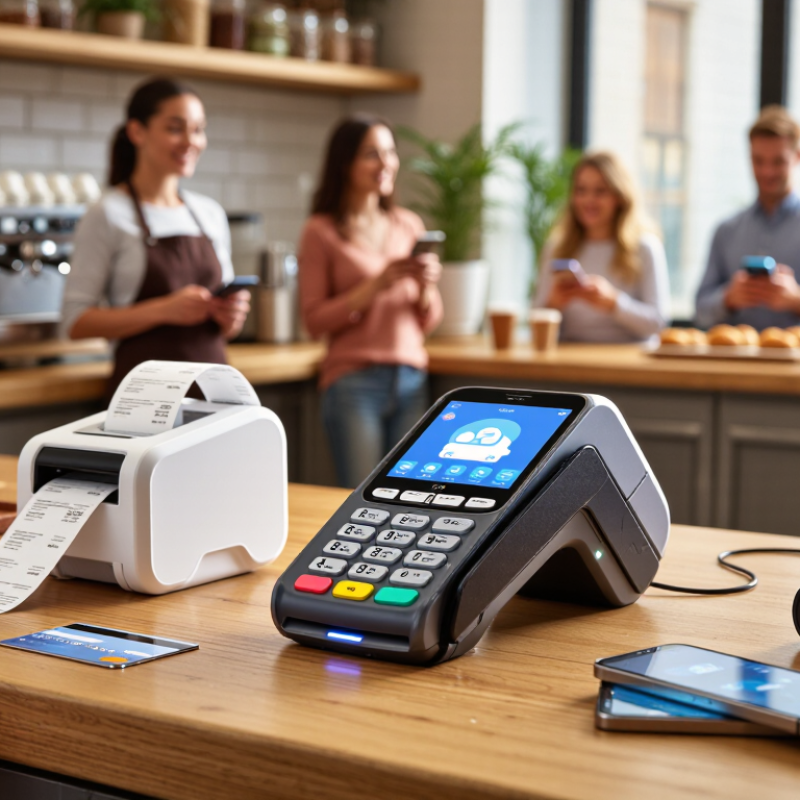
POS Battery Types: Why 3,000–5,000 mAh Li-Ion Packs Are Common
China Best POS Machine Battery: How Long Does It Last?
A POS battery commonly uses a 3,000–5,000 mAh lithium-ion pack. At a nominal 3.7 volts, this stores about 11–18 Wh of energy. That range suits mobile terminals because it balances weight, cost, and operating time. BloombergNEF’s 2024 Battery Price Survey reported an average lithium-ion pack price of 115 dollars per kWh. Lower cell prices make this capacity range practical for payment equipment manufacturers.
In field use, a 3,000 mAh pack may support about six to eight hours. A 5,000 mAh pack can often reach eight to twelve hours. Screen brightness, wireless signal strength, receipt printing, and contactless payments change the result. Heavy transaction traffic drains power faster. The estimate is imperfect. Battery age, heat, and charging habits also matter. After several hundred cycles, usable capacity may decline noticeably, as explained in Battery University’s technical guidance on lithium-ion aging. A busy shop may need daily charging.
Tips: Check the battery’s rated voltage, cycle-life data, and replacement method. Keep the terminal away from hot windows and sealed vehicles. Avoid storing it fully empty. Test runtime during peak business hours, not in standby mode. A larger pack is not always better; extra weight can reduce staff comfort and device portability. Test before ordering in bulk.
Runtime Math: Estimating 8–16 Hours from Capacity and Power Draw
A POS machine battery may last 8–16 hours, but the estimate depends on energy, not only milliamp-hours. A practical calculation starts with watt-hours: voltage × amp-hours. For example, a 7.4V, 10Ah battery stores about 74Wh. If the terminal draws 5W during moderate use, runtime is 14.8 hours theoretically. At 8W, it falls to 9.25 hours. Real operation is less perfect. Display brightness, wireless scanning, receipt printing, and aging can reduce usable energy by 15–25%. The Battery University BU-808 report also notes that lithium-ion batteries commonly lose around 20% capacity after roughly 500 cycles.
IEC 61960-3 requires battery capacity testing under controlled conditions, usually unlike a busy checkout counter. That difference matters. A terminal with a 74Wh pack may deliver closer to 59–63Wh after conversion losses and reserve protection. Dividing that energy by a 5–8W average load gives approximately 7.4–12.6 hours. Higher capacity can help, but inefficient charging circuits may quietly waste part of it. My field estimates often miss peak printer loads, so they should be treated as planning figures, not promises.
Tips: Record actual current draw during a full trading shift. Test with Wi-Fi, Bluetooth, screen brightness, and printing enabled. Leave a 20% reserve for battery aging and unexpected queues. Temperature also matters; cold storage areas can reduce short-term performance. A spreadsheet is useful, but real measurements remain better.
China POS Machine Battery Runtime Estimate: 8–16 Hours
Estimated runtime is calculated using battery energy, average device power draw, and an 85% usable-energy factor: Runtime = (Capacity in mAh ÷ 1000 × 3.7V × 85%) ÷ Power Draw. Actual results vary with screen brightness, wireless connectivity, printer activity, and battery condition.
The examples represent common lithium-ion battery capacities and realistic average power loads for portable POS terminals. Higher capacity does not always produce proportionally longer runtime because larger devices may also consume more power.
Battery Life Cycle: Comparing 500–800 Full Charge Cycles in Practice
China Best POS Machine Battery How Long Does It Last?
A POS machine battery commonly delivers about 500–800 full charge cycles. One full cycle equals 100% total energy used, even across several partial charges. For example, two 50% discharges equal one cycle. In practical use, a terminal used during busy retail shifts may complete one cycle every one or two days. This suggests roughly 18–36 months before noticeable capacity loss. However, that estimate is not guaranteed.
Real conditions change the result. Heat behind a counter can accelerate battery aging, while constant deep discharge adds stress. Frequent wireless payments, bright screens, and weak signal areas also consume more power. In testing, a battery near 500 cycles may still work reliably, but its operating time can drop sharply. An 800-cycle battery may perform better, yet charging habits and storage conditions matter more than the number alone. Real life is less tidy.
Tips: Keep the battery above 20% when possible, and avoid leaving the machine in direct heat. Use the correct charger and inspect charging behavior regularly. If the terminal becomes unusually warm or loses power quickly, record the usage pattern before replacing the battery. I would not promise a fixed lifespan without checking workload, temperature, and daily discharge depth. That small investigation often gives a more accurate answer than the cycle rating.