
Choosing the right asrs systems is a practical decision, not merely a technology upgrade. A warehouse may look spacious, yet poorly planned storage can create hidden congestion. Operators often lose time searching for fast-moving products, crossing aisles, or waiting for replenishment. The stakes are real. MHI’s 2024 Annual Industry Report found that 55% of supply chain professionals planned to increase technology investment. This signals growing confidence in automation, but investment alone does not guarantee operational success.
The best solution must match your inventory profile, order volume, building height, labor model, and future growth. A shuttle system may suit dense case storage, while vertical lift modules can support smaller, high-value items. Robotic solutions may improve flexibility when product demand changes frequently. Interact Analysis reports continued expansion in warehouse automation, driven by e-commerce, labor shortages, and service expectations. However, market growth should not pressure every business into the same design. A system that works beautifully in a chilled distribution center may perform poorly in a mixed-SKU facility.
Data exposes weak assumptions. Before selecting equipment, measure order lines per hour, peak-season demand, SKU dimensions, replenishment frequency, and travel distance. Include software integration, maintenance access, employee training, safety controls, and possible expansion. These details often determine the real return on investment. A perfect fit rarely exists. The stronger approach is to compare total operating value, not only purchase price. This guide explains how to evaluate asrs systems with evidence, practical warehouse experience, and a willingness to question attractive but unsuitable automation claims.
Choosing the best ASRS system starts with the load, not the machine. Product weight, dimensions, packaging, and handling stability determine the suitable ASRS type.
Unit-load systems suit pallets and heavy cartons stored at significant heights. Mini-load systems handle totes, trays, and smaller cartons with frequent access. Shuttle systems can support dense storage and flexible lane management. Vertical lift modules work well when floor space is limited and item security matters. Each option has different limits for load weight, compartment size, and retrieval speed.
Match system height to the building and inventory profile. A tall structure may increase capacity, but it can also raise installation and maintenance demands. Throughput requires careful measurement. Count inbound movements, outbound orders, peak-hour demand, and replenishment tasks. Average daily volume is not enough. Peak periods expose weak planning.
Accuracy depends on more than software. Barcode quality, sensor placement, item presentation, and operator procedures all affect results. In a working warehouse, damaged labels and uneven cartons create real problems. Design for them. Measure twice.
Experience shows that early throughput estimates are often too optimistic. Teams may overlook seasonal spikes or manual exception handling. A small pilot with actual products can reveal these gaps before full deployment. Review the data with warehouse operators, maintenance staff, and safety specialists. Their practical feedback may challenge the original design, but that is useful. A reliable ASRS balances capacity, speed, accuracy, accessibility, and long-term service requirements.
How to Choose the Best ASRS Systems for Your Business?
Size an ASRS around real order behavior, not average daily volume. Start with SKU velocity: classify items by picks per hour, order frequency, and replenishment needs. A slow-moving SKU may need storage density, while a fast-moving item needs rapid access. Review at least twelve months of transactions, including promotions and seasonal spikes. Peak orders matter more than comfortable averages.
MHI’s 2024 Annual Industry Report found that 55% of supply chain professionals planned to increase technology investment. This signals growing automation demand, but it does not justify oversizing every system. Calculate peak hourly orders, required buffer inventory, tote capacity, and inbound replenishment during the busiest shift. Then test several growth scenarios. A system running at full capacity looks efficient until one promotion creates a backlog. Industry benchmarks are useful, but your warehouse data remains more reliable.
Tips: Build a simple SKU velocity table. Mark each item as fast, medium, or slow. Add peak-day orders, not only annual averages. Ask an integrator to model 20% to 30% volume growth, then challenge the assumptions. Some forecasts will be wrong. That is normal. Leave physical space for expansion, but avoid paying for unused capacity today. The MHI report also identified workforce shortages as a continuing operational concern, so measure labor savings alongside throughput. A smaller ASRS with balanced utilization may outperform a larger system with poor slotting and weak replenishment discipline.
| ASRS System Type | Best-Fit SKU Profile | Typical Load Unit | Storage Density Planning Range | Recommended SKU Velocity | Peak Order Activity | Typical Throughput Planning Range | Primary Sizing Consideration | Operational Fit |
|---|---|---|---|---|---|---|---|---|
| Unit-Load ASRS Crane | Low-to-medium SKU count with large, heavy, or palletized inventory | Standard pallet or other unit load up to approximately 1,500 kg, subject to equipment design | 30–60 pallet positions per 1,000 sq. ft. | Usually fewer than 4 inventory turns per day per active SKU | Up to approximately 100 pallet movements per hour per aisle | 30–60 pallet movements/hour per crane and aisle, depending on travel distance and sequencing | Number of pallet positions, aisle height, fire protection, load dimensions, and required reserve capacity | High-density reserve storage |
| Mini-Load ASRS Crane | Small cartons, totes, bins, and medium SKU counts with repeated order-line activity | Carton, tote, or bin generally weighing up to 50–100 kg, subject to system specification | 100–250 tote or carton positions per 1,000 sq. ft. | Approximately 4–20 picks per SKU per day | Approximately 100–400 order lines per hour per aisle | 100–300 totes/hour per aisle in many planning layouts | Storage locations, dual-command cycle time, presentation stations, and replenishment frequency | Balanced storage and picking |
| Vertical Lift Module | High-value, slow-to-medium velocity items requiring controlled access and ergonomic presentation | Trays or shelves commonly holding approximately 50–500 kg per carrier, depending on design | Up to 60–90% floor-space reduction compared with conventional shelving for suitable inventories | Approximately 1–15 picks per SKU per day | Approximately 20–100 order lines per hour per module | 20–100 presentations/hour per module, depending on lift height and item location | Tray quantity, tray height mix, access frequency, ergonomic presentation height, and operator travel | Secure, space-constrained storage |
| Horizontal Carousels | Medium-to-high velocity piece-pick SKUs with relatively stable demand and compact item dimensions | Bins, shelves, or divided carriers generally holding small parts and cartons | 30–60% floor-space reduction compared with static shelving in suitable applications | Approximately 10–50 picks per SKU per day | Approximately 150–500 order lines per hour per operator station | 150–500 picks/hour per workstation, depending on batching and SKU mix | Number of carousels per station, batch size, workstation balance, and replenishment capacity | High-velocity piece picking |
| Vertical Buffer Module | Small, lightweight goods with high SKU variety and frequent goods-to-person picking | Small totes, bins, trays, and cartons generally below 50 kg per carrier | 50–80% floor-space reduction compared with conventional shelving, depending on item dimensions | Approximately 10–100 picks per SKU per day | Approximately 100–600 order lines per hour per station | 100–600 presentations/hour per station, depending on buffering and item distribution | Carrier count, buffer depth, station count, item dimensions, and peak replenishment workload | Fast, high-variety fulfillment |
| Shuttle-Based ASRS | Medium-to-high SKU counts requiring dense carton, tote, or case storage across multiple levels | Tote, carton, tray, or case generally weighing up to approximately 50–100 kg | 150–400 tote or carton positions per 1,000 sq. ft. | Approximately 5–40 picks per SKU per day | Approximately 300–1,200 tote or carton movements per hour per aisle, depending on shuttle count | 300–1,000 movements/hour for a multi-shuttle aisle configuration | Shuttle quantity, lift capacity, rack levels, aisle replenishment, and peak order-line simultaneity | Scalable omnichannel storage |
| Pallet Shuttle ASRS | High-volume pallet storage with many pallets per SKU and limited case-level picking | Standard pallet, commonly 1,000–1,500 kg subject to rack and shuttle rating | Up to 2–4 times the pallet density of conventional selective pallet racking in suitable layouts | Usually fewer than 2 pallet picks per SKU per day | Approximately 30–150 pallet movements per hour per aisle | 20–80 pallet movements/hour per aisle, depending on shuttle quantity and travel distance | Lane depth, FIFO or LIFO policy, pallet compatibility, temperature requirements, and replenishment profile | Dense reserve inventory |
| Business Profile | Active SKUs | Peak Orders per Hour | Average Lines per Order | Peak Order Lines per Hour | Peak Inventory Positions | Suggested ASRS Direction | Planning Capacity |
|---|---|---|---|---|---|---|---|
| Slow-Moving Industrial Parts | 8,000 | 20 | 3.0 | 60 | 18,000 bins or trays | Vertical lift modules or mini-load ASRS | At least 90 lines/hour to provide a 50% peak-capacity buffer |
| Regional E-Commerce Fulfillment | 25,000 | 180 | 2.5 | 450 | 60,000 totes or cartons | Shuttle-based ASRS or vertical buffer modules | At least 675 lines/hour to provide a 50% peak-capacity buffer |
| High-Volume Consumer Goods | 4,000 | 120 | 4.0 | 480 | 12,000 pallet positions | Unit-load ASRS for reserve storage with a separate case-picking zone | At least 720 pallet or case movements/hour across the complete process |
| Omnichannel Spare Parts | 40,000 | 90 | 2.0 | 180 | 80,000 totes, bins, or trays | Hybrid mini-load and vertical buffer configuration | At least 270 lines/hour with dedicated replenishment capacity |
Choosing the best ASRS system starts with measurable operating data, not impressive automation claims. Record labor hours, storage locations, order lines, errors, and energy use for several weeks. A warehouse processing 900 order lines daily may save labor through fewer walking hours, but staffing will not disappear overnight. Training, maintenance, and software support still require skilled employees.
Space savings should be calculated in usable cubic meters, not floor area alone. Compare current pallet positions with the proposed system’s clear height, aisle width, fire separation, and access zones. Accuracy deserves equal attention. Track picking errors, inventory adjustments, and cycle-count results before installation. Even a small error reduction can protect customer relationships and lower replacement costs. Use actual utility rates when estimating energy consumption. Lifts, conveyors, cooling systems, and standby modes can produce very different monthly bills.
Payback period should include installation, integration, building changes, service contracts, training, and downtime during commissioning. A simple formula is total investment divided by annual net savings. The model will be imperfect. That is normal. Test conservative, expected, and high-demand scenarios rather than relying on one forecast. A five-year projection may look attractive until seasonal volume, equipment downtime, or labor turnover changes. Request site-specific performance evidence and examine how measurements were collected. Then compare ROI across labor, space, accuracy, energy, and payback using the same assumptions.
How to Choose the Best ASRS Systems for Your Business?
An ASRS should exchange accurate signals with your WMS and WCS. The WMS manages inventory, orders, and location records. The WCS translates those orders into equipment movements. Confirm message formats, response times, exception handling, and recovery procedures before selecting equipment. A practical test should simulate damaged labels, blocked aisles, network delays, and inventory mismatches. These details reveal weaknesses that a smooth demonstration can hide.
Safety requires more than an emergency-stop button. If the ASRS includes industrial robots, review ANSI/RIA R15.06 requirements with a qualified safety professional. The assessment should address robot reach, guarding, access doors, interlocks, presence sensing, and maintenance modes. Check whether restart controls prevent unexpected motion. Operators also need clear procedures for clearing jams and entering restricted areas. Verify the applicable standard edition and local requirements before installation.
During commissioning, record every safety function and test its response under realistic conditions. Ask who owns software changes, risk reviews, and annual inspections. Integration may appear successful while manual recovery remains confusing. That is a serious gap. We have seen projects focus heavily on throughput and overlook technician access during faults. A safer selection includes training space, readable diagnostics, lockout procedures, and documented validation evidence. These practical checks support reliable operation long after the acceptance test.
How to Choose the Best ASRS Systems for Your Business?
Pilot the system before signing a full-scale contract. A polished demonstration is not enough. Test your actual SKU profiles, carton dimensions, order waves, replenishment rules, and peak-hour demand. Ask the vendor to process historical orders under controlled conditions. Record completed lines per hour, storage density, retrieval time, exception rate, and system uptime.
Use your own data.
MHI’s 2024 Annual Industry Report found that 55% of supply chain leaders planned to increase technology investment. That investment deserves measurable proof. Compare vendor-tested throughput with your pilot results, using identical order mixes and labor assumptions. WERC’s 2024 DC Measures report places median order-picking accuracy near 99.5%, so a fast system with frequent errors may create hidden costs. Track accuracy, not speed alone.
Leave room for uncomfortable findings. Your busiest day may expose slower replenishment or awkward manual interventions. Our pilot reviews often reveal that advertised peak throughput depends on ideal inventory placement. That detail matters. It should be documented. Require raw transaction logs, test conditions, staffing levels, and recovery procedures. Repeat the trial after software changes or layout adjustments. A small pilot cannot represent every future scenario, but it can expose weak assumptions before they become expensive commitments.
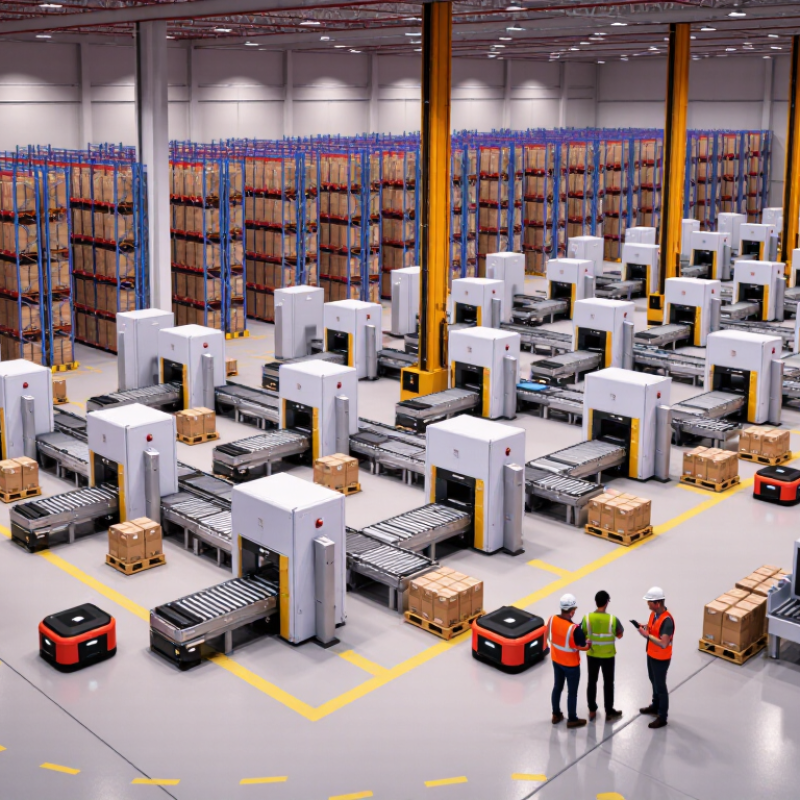
Pilot the system and validate actual throughput against vendor-tested data before making a final investment decision.
The comparison uses common ASRS evaluation metrics: sustained picks per hour under different order profiles. A pilot should measure throughput during realistic operating conditions, including replenishment, travel, order variability, operator interaction, and peak-period workload.