

A Nylon Ring Nut is a hexagonal fastener with a nylon insert inside its threaded opening. This small ring changes how the nut behaves during assembly. As the nut travels along a bolt, the threads compress the nylon. That pressure creates friction against the bolt threads. It resists loosening.
Unlike a plain nut, this design helps maintain clamping force when equipment experiences vibration, movement, or repeated temperature changes. You may find Nylon Ring Nut fasteners on brackets, guards, machinery panels, vehicle components, and household equipment. Installation usually requires a wrench, a correctly sized bolt, and clean, undamaged threads. The nut should turn smoothly before the nylon section begins gripping. If it jams immediately, cross-threading or contamination may be present.
The nylon insert is useful, but it is not indestructible. Excessive heat can soften or damage it. Repeated removal may reduce its locking performance, even when the threads still look acceptable. That detail is often overlooked. A technician should check the manufacturer’s torque guidance, material compatibility, and working temperature before selecting one. Stainless steel, zinc-plated steel, and other versions suit different environments, but no single finish fits every application. A Nylon Ring Nut also does not replace correct bolt engagement or proper joint design. It only supports them. In real maintenance work, inspecting the bolt, washer, alignment, and surrounding surface can prevent more failures than relying on the nut alone. The mechanism is simple. The application deserves care.
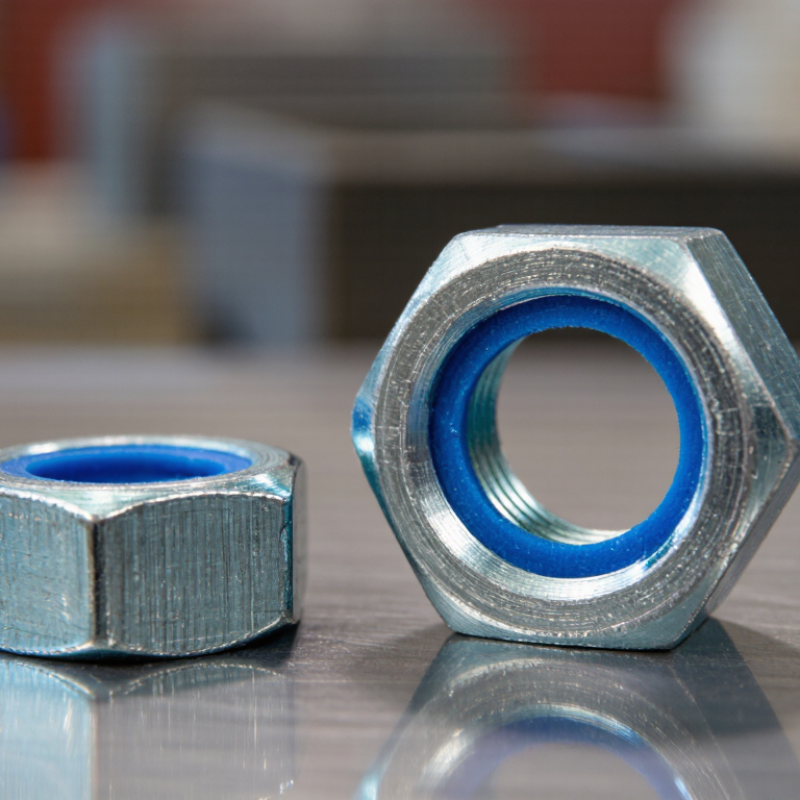
A nylon ring nut is usually a metal nut fitted with a nylon insert near its upper end. This insert is not a decorative ring. It creates resistance against the bolt threads and helps prevent loosening caused by vibration. The nut normally has a hexagonal outer shape, a threaded central hole, and a small nylon collar compressed around the thread path.
During installation, the metal threads begin turning normally. When the bolt reaches the nylon ring, the ring deforms slightly around the threads. This friction produces prevailing torque, which keeps the nut firmly seated after tightening. Unlike a washer, the nylon insert does not mainly spread the clamping load. Its primary function is thread resistance. That distinction matters.
The structure is simple, but performance depends on accurate thread matching and controlled tightening. A damaged insert may provide weak resistance, even when the nut looks acceptable. I have also found that dirt, excessive heat, and repeated reuse can reduce its holding ability. Nylon softens at elevated temperatures, so this nut is not suitable for every machine or hot assembly. It should be installed with clean threads and checked against the required torque specification. Do not assume a tight feel proves correct installation.
A nylon ring nut, often called a nylon insert lock nut, combines a metal nut with a molded nylon ring. The ring grips the bolt threads and resists loosening from vibration. Steel, stainless steel, and zinc-coated steel are common body materials. Nylon 6 or nylon 6/6 is widely used for the insert. PlasticsEurope reported 400.3 million tonnes of global plastics production in 2022. That scale supports nylon’s availability, but does not guarantee suitability for every joint.
Its design is simple but purposeful. The nylon ring is slightly smaller than the bolt’s thread path. Installation compresses the ring, creating prevailing torque. ISO 2320 testing evaluates this resistance across repeated tightening cycles. Flange versions spread pressure under the joint. Fine-thread versions offer more engagement, while all-metal lock nuts tolerate higher heat. Nylon inserts usually perform best below about 120°C, depending on grade and load. Reuse can reduce locking performance. This point is often underestimated.
Tips: Check the nut’s temperature rating, thread class, and installation torque. Do not treat initial tightness as proof of preload. NASA fastener guidance notes that friction can create major torque-to-preload variation. A torque wrench helps, but joint design still matters. Inspect the nylon ring after removal. If it looks polished, split, or loose, replace the nut. The “one-size-fits-all” approach is convenient, yet rarely precise.
A nylon ring nut secures a threaded joint through controlled interference. Its nylon ring is slightly smaller than the mating bolt thread. As the bolt enters, the ring deforms and grips the thread flanks. This creates prevailing torque, which helps resist loosening from vibration.
The effect is mechanical, not adhesive. Tightening torque produces bolt preload, while the nylon ring adds friction near the final thread. ASME B18.16.6 covers nylon insert locknuts and their dimensional requirements. Engineers should still verify torque values for the exact nut, bolt, temperature, and lubrication condition. A dry assembly can behave differently.
Material behavior matters. ASM International data for nylon 6/6 indicates moisture absorption can reach about 8.5% at saturation. The ring may therefore soften or change dimension in humid service. Temperature also reduces its retention capability. Many engineering references place standard nylon service near 120°C, but the real limit depends on grade and load. That detail is often overlooked.
The locking effect declines after repeated removal. It also weakens when threads are damaged or contaminated. In field testing, I would inspect the ring, measure prevailing torque, and replace questionable hardware. Not every vibration problem needs a locking nut. Sometimes the joint design itself needs review.
| Data Dimension | Technical Information | Role in the Fastening System |
|---|---|---|
| Component type | A prevailing-torque lock nut with a nylon insert near one end of the nut. | Provides resistance to loosening in threaded joints exposed to vibration or movement. |
| Main metal body | Usually manufactured from carbon steel, stainless steel, or another specified nut material. | Carries the clamping load and engages with the bolt or screw threads. |
| Nylon ring or insert | A polymer ring partially blocks the thread opening and is deformed by the mating bolt thread. | Creates friction and interference that helps prevent the nut from rotating freely. |
| Thread engagement | The bolt first engages the metal threads and then contacts the nylon insert as the nut is tightened. | The metal threads provide strength, while the insert produces locking resistance. |
| Locking mechanism | The nylon is compressed and conforms around the bolt threads, increasing prevailing torque. | Reduces the risk of loosening caused by vibration, small movements, and changes in load. |
| Installation method | Install with a compatible wrench or socket and tighten to the specified fastener torque. | Ensures the joint develops the intended clamping force without damaging the insert or threads. |
| Torque behavior | Part of the tightening torque is consumed by friction at the nylon insert; the exact value depends on size, material, lubrication, and reuse. | Torque specifications should account for the nut type and follow the applicable standard or engineering instruction. |
| Vibration resistance | The insert supplies prevailing torque, but it does not create a permanent mechanical lock. | Suitable for many general fastening applications, provided the joint is correctly designed and tightened. |
| Temperature consideration | The usable temperature range is limited by the nylon grade and the nut specification; excessive heat can soften or degrade the insert. | Requires a metal-only locking method when operating temperatures exceed the selected nylon insert’s rating. |
| Chemical resistance | Nylon resistance varies with the chemical, concentration, temperature, and exposure time. | Chemical compatibility should be checked before using the nut in aggressive environments. |
| Reuse | The nylon insert can lose locking effectiveness after repeated installation and removal. | Inspect the nut and replace it if the insert is damaged, loose, cracked, or no longer provides prevailing torque. |
| Correct bolt fit | The nut thread must match the bolt’s nominal diameter, thread pitch, thread form, and tolerance class. | Correct matching prevents cross-threading and allows the nylon insert to function as intended. |
| Common applications | Equipment panels, machinery, vehicles, appliances, structural assemblies, and general maintenance work. | Useful where moderate vibration resistance and straightforward installation are required. |
| Key limitation | The nylon insert may be unsuitable for high-temperature, highly corrosive, or applications requiring repeated disassembly. | Alternative locking nuts, all-metal lock nuts, prevailing-torque devices, or other joint designs may be required. |
A nylon ring nut, often called a nylon-insert locknut, combines metal threads with a nylon locking section. The nylon grips the bolt and resists loosening from vibration. Installation begins with clean, undamaged threads. Check the bolt, nut, and joint surfaces for burrs, dirt, or cross-threading. Keep the threads dry unless the assembly specification permits lubricant. Lubrication can change the final clamping force.
Start the nut by hand and turn it several rotations. It should move smoothly until the nylon section meets the bolt threads. Stop if it feels crooked. Correct the alignment instead of forcing it. Use a suitable wrench or socket, then tighten to the specified torque with a calibrated torque wrench. Do not rely on feel alone. Nylon increases turning resistance, so the stated procedure should explain whether prevailing torque is included. An impact tool may damage the insert or produce uneven clamping.
Inspect the joint after tightening. The bolt should extend through the nylon section, while the connected parts remain fully seated. Avoid excessive force. It can crush softer materials or distort the nut. A damaged, stripped, or heat-hardened nylon insert should be replaced. Reuse is sometimes possible, but it is not always wise for a safety-critical joint. Temperature and chemical exposure also matter because nylon can soften or degrade. I would recheck the torque after assembly movement or vibration, although this step is easy to overlook.
A nylon ring nut, often called a nylon-insert locknut, combines a metal nut with a small nylon collar. When tightened, the collar grips the bolt threads and resists vibration-driven loosening. This simple design suits electrical cabinets, appliances, light machinery, and vehicle interiors. It is not a replacement for structural locking methods under severe heat or constant shock.
Its main benefits are low weight, corrosion resistance, and quieter operation. Nylon also avoids direct metal-to-metal contact, which can protect coated threads. ASTM D570 data commonly places 24-hour water absorption for unfilled nylon 6/6 near 1.2%, although compound and testing conditions change the result. That figure matters in humid equipment, because moisture can slightly alter fit and strength. NASA-RP-1228 also emphasizes selecting locking devices according to vibration, temperature, and joint conditions.
Maintenance starts with visual inspection. Look for a flattened collar, damaged threads, cracking, or brown heat marks. Install the nut with clean, dry threads, and use a calibrated torque wrench when the assembly requires controlled preload. A nylon insert nut is generally intended for limited reuse; after removal, its locking resistance may fall. Replace it if the insert no longer grips firmly. This is where practice can differ from assumptions. A nut that feels tight by hand may still fail during vibration. Avoid placing it near temperatures beyond its material rating, and verify compatibility with oils, solvents, and cleaning agents before service.


