How to Optimize ASRS Systems for Maximum Efficiency and Reliability?
In the rapidly evolving world of logistics, optimizing ASRS systems has become crucial. According to Dr. Sarah Jones, an expert in automation technologies, "Effective ASRS systems can dramatically enhance operational efficiency." To achieve this, organizations must fine-tune their systems to reduce downtime and improve reliability.
Many facilities rely heavily on ASRS systems to manage inventory and streamline operations. Yet, some still face challenges with efficiency. Common issues include poor integration with existing processes and lack of real-time data analytics. These obstacles can hinder performance. Addressing these points is essential for unlocking the true potential of ASRS systems.
Engaging with the latest technology trends can lead to significant advancements. Offering targeted training for staff can improve system handling and maintenance. Regular audits of the ASRS setup often reveal areas for improvement. Reflection on these aspects is necessary to ensure that the systems perform at peak levels. Overall, dedicated efforts toward optimization can result in more reliable operations and a competitive edge in the industry.
Understanding ASRS Systems and Their Importance in Warehousing
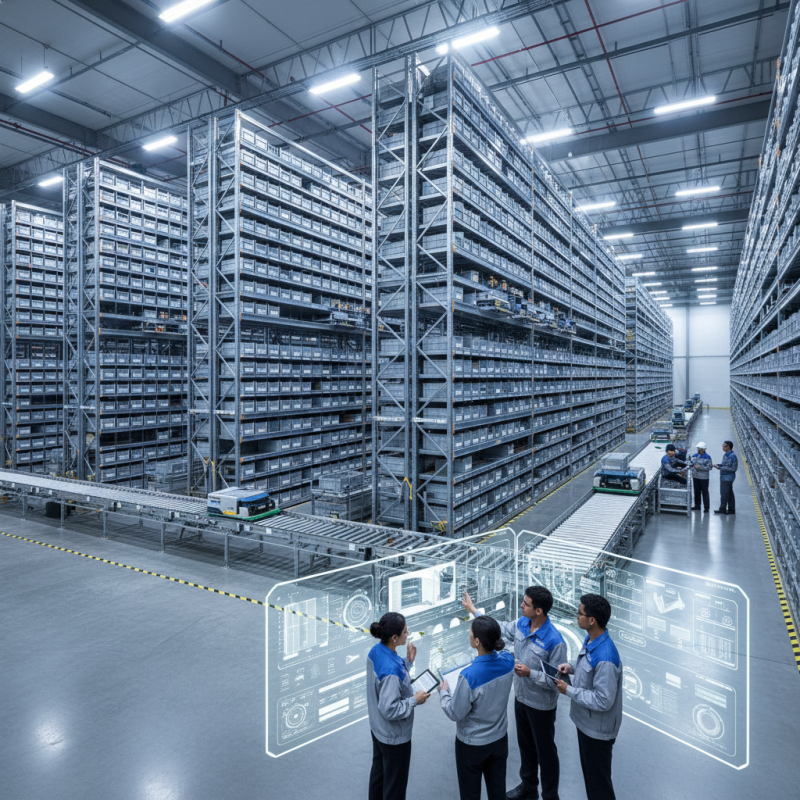
Automated Storage and Retrieval Systems (ASRS) play a critical role in modern warehousing. They enhance efficiency by automating the storage and retrieval processes. According to a recent industry report, ASRS can improve storage density by up to 60%. This allows warehouses to maximize their space and reduce operational costs. Efficient ASRS systems also minimize human error, increasing reliability and accuracy in inventory management.
To optimize ASRS systems, consider the layout of your warehouse. Ensure that your ASRS is strategically placed to minimize travel time. This can lead to faster retrieval times and a more streamlined operation. Regular maintenance is also crucial. Neglecting to service the ASRS can lead to breakdowns, impacting overall efficiency.
Tip: Analyze your current workflows. Identify bottlenecks and areas for improvement. Small changes can lead to significant gains.
Another point to think about is integration. ASRS systems should be compatible with your existing Warehouse Management Systems (WMS). A lack of integration can lead to inefficiencies and data discrepancies. An end-to-end solution may not always be the best fit.
Tip: Invest in staff training. Well-trained employees can identify inefficiencies faster. They can also contribute to a culture of continuous improvement within the warehouse.
Warehouse ASRS System Efficiency and Reliability
Key Factors Influencing the Efficiency of ASRS Systems
Automated Storage and Retrieval Systems (ASRS) are revolutionizing warehouse operations. However, optimizing these systems requires attention to key factors. Studies show that up to 40% of operational costs in warehouses can be reduced with efficient ASRS. This highlights the necessity for managers to focus on efficiency metrics.
Space utilization is crucial. Many ASRS facilities do not maximize vertical space, wasting potential storage. A 2022 report indicated that poor layout can hinder access speed, slowing down operations. Additionally, the choice of equipment impacts reliability. Utilizing high-quality components can minimize breakdowns, yet some facilities opt for cheaper alternatives, ignoring long-term implications.
Another pivotal factor is employee training. Research reveals that untrained staff can lead to errors, increasing downtime. In many cases, organizations underestimate the need for regular training sessions. Also, data transparency is often lacking, making it difficult to analyze bottlenecks accurately. Without proper insights, improvements remain elusive.
Strategies for Enhancing the Reliability of ASRS Operations
Optimizing the reliability of Automated Storage and Retrieval Systems (ASRS) is crucial. Studies suggest that reliability can enhance operational efficiency by up to 30%. Many companies fail to conduct regular maintenance checks. This oversight can lead to unexpected downtimes, impacting productivity.
Implementing predictive maintenance can counteract this issue. Utilizing advanced analytics helps predict failures before they occur. For instance, incorporating IoT sensors enables real-time monitoring of system performance. Data shows that facilities using such technology can reduce equipment failure rates by nearly 25%. Engaging employees in routine checks makes a difference too. A trained workforce proves more effective in managing ASRS reliability.
Training programs should focus on common pitfalls that lead to system failures. Simple actions, like ensuring the correct stacking of items, can prevent jams. Poor inventory practices often result in misplacement or damage, undermining ASRS efficiency. Revisiting operational protocols can reveal areas ripe for improvement. Frequent audits and adjustments are often neglected, yet they can dramatically boost reliability.
How to Optimize ASRS Systems for Maximum Efficiency and Reliability
| Optimization Strategy |
Description |
Expected Impact (%) |
Implementation Time |
| Regular Maintenance |
Scheduled inspections and maintenance of equipment to prevent failures. |
20% |
Ongoing |
| Real-time Monitoring |
Utilizing IoT sensors to track system performance and detect issues in real-time. |
25% |
1-3 Months |
| System Upgrades |
Upgrading software and hardware for improved performance and reliability. |
30% |
6 Months |
| Staff Training |
Training employees on best practices for operating ASRS efficiently. |
15% |
2 Months |
| Data Analysis |
Analyzing operational data to identify trends and areas for improvement. |
18% |
3-4 Months |
Integrating Technology for Improved ASRS Performance
Integrating advanced technology into Automated Storage and Retrieval Systems (ASRS) can significantly improve performance.
Sensors and IoT devices allow real-time monitoring. This ensures that systems can detect issues before they escalate.
For example, if an error is detected, the system can adjust operations autonomously. This minimizes downtime and enhances reliability.
Implementing data analytics further optimizes ASRS operations.
Analyzing usage patterns helps identify areas for improvement. You might uncover workflows that are inefficient.
Small changes can lead to better efficiency and lower operational costs.
However, it's crucial to continually reassess these technologies. Over-reliance on automation can introduce vulnerabilities.
Human oversight remains essential for proactive problem-solving.
Staff training also plays a critical role. Well-informed employees can use technology more effectively.
But there may be gaps in understanding the latest systems. Regular training sessions can bridge this divide.
Embracing new tools while fostering a culture of learning encourages long-term success in ASRS environments.
Regular Maintenance Practices for Optimal ASRS Functionality
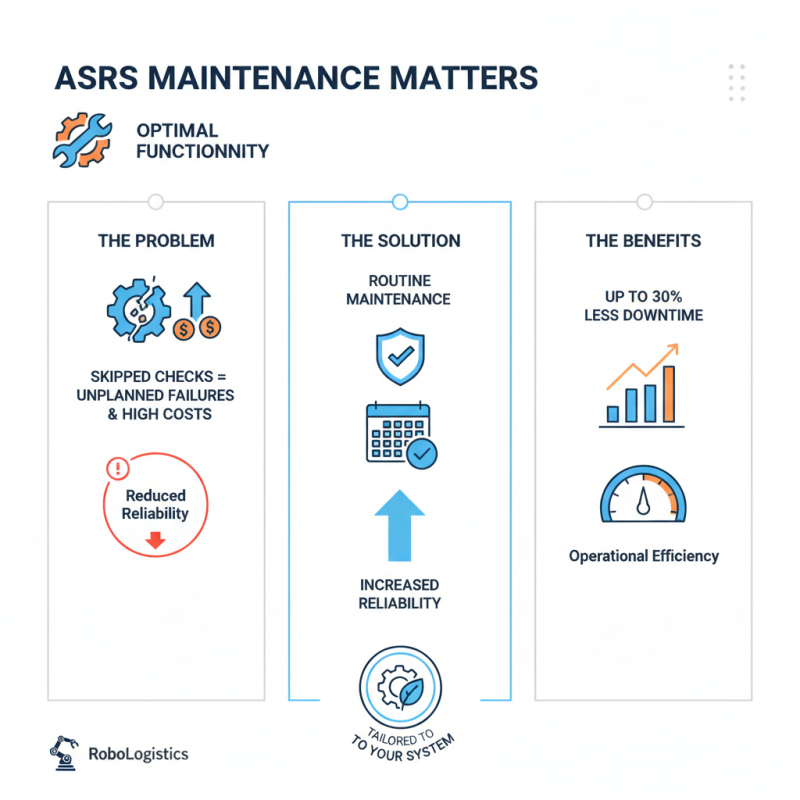
Regular maintenance is crucial for the optimal functionality of Automated Storage and Retrieval Systems (ASRS). Studies show that routine checks can reduce system downtime by up to 30%. Skipping these practices can lead to unexpected failures, which are costly. A well-maintained ASRS increases reliability and rate of operation. It's essential to adhere to a maintenance schedule tailored to your specific system.
Tips: Schedule maintenance checks every month. This keeps components functioning well. Regularly lubricate moving parts. Dust can accumulate and cause friction. Without proper care, the entire system may slow down, affecting productivity.
Data from industry reports indicate that a consistent maintenance regimen can enhance system performance by nearly 15%. Inspecting electrical components is vital, as faults can arise in unpredictable ways. Operating under these conditions may lead to significant setbacks. Remember, neglecting maintenance can result in repair costs that exceed initial investments. Prioritize upkeep; your ASRS is worth it.