

• Gantry Robot Manufacturer & Articulated Arm Integrator

7 Tips to Choose the Best Heavy Lift Multirotor?

Choosing a Heavy Lift Multirotor is not simply a matter of selecting the largest frame. It is a decision about payload, endurance, safety, maintenance, and operational evidence. A drone carrying a thermal camera is not solving the same problem as one lifting a 30-kilogram sensor package.

Industry reports show why this decision deserves careful analysis. Drone Industry Insights’ Drone Market Report 2024 identifies inspection, surveying, mapping, and logistics as important commercial drone applications. These missions demand dependable aircraft, not impressive specifications alone. The FAA’s Aerospace Forecast also indicates continued growth in commercial drone activity in the United States. More operations mean stronger expectations for training, documentation, and risk management. EASA’s Drone Strategy 2.0 similarly emphasizes safe integration, operational capability, and responsible scaling across Europe.

The practical questions are very specific. Can the aircraft lift its stated payload after wind, battery aging, and reserve energy are considered? Does the propulsion system remain stable when one motor or battery module fails? Can a technician replace an arm beside a muddy worksite? Small details matter.

No checklist is perfect. Manufacturer figures may come from controlled conditions. Real missions are less polite. This guide presents seven evaluation tips for comparing a Heavy Lift Multirotor, while recognizing that local rules, terrain, weather, and operator skill can change the final choice. A reliable aircraft should perform consistently, not only look powerful on paper.
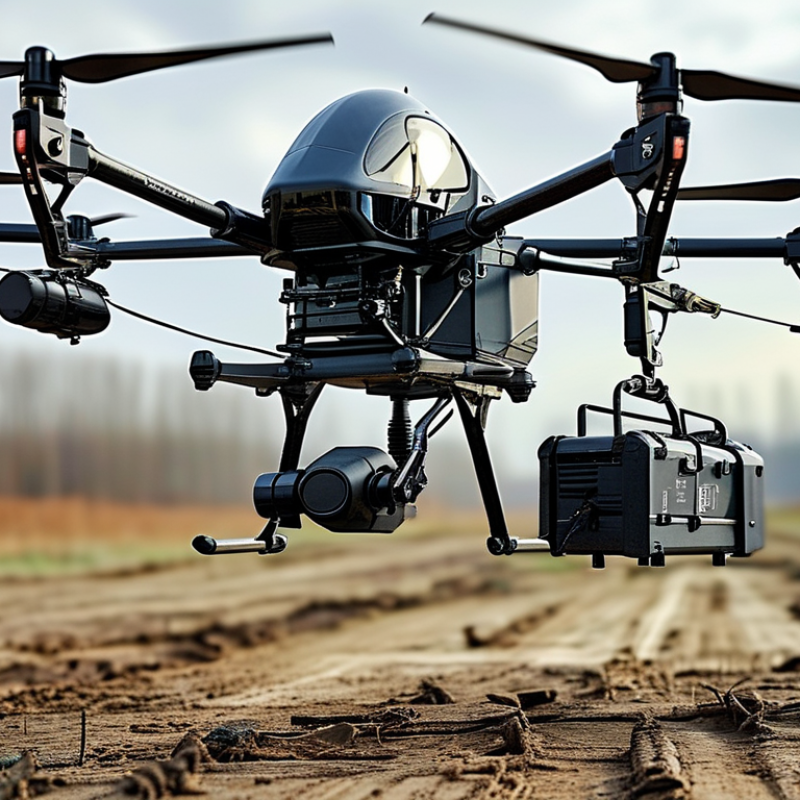
7 Tips to Choose the Best Heavy Lift Multirotor?

What Defines a Heavy-Lift Multirotor and Its Primary Applications

What Defines a Heavy-Lift Multirotor and Its Primary Applications

A heavy-lift multirotor carries substantial equipment, cargo, or tools while maintaining controlled flight. There is no universal payload threshold. In operational discussions, 10 to 25 kilograms often marks the heavy-lift class. Payload is only part of the definition. Motors, propellers, batteries, frame strength, redundancy, and wind tolerance matter equally. A larger payload can quickly reduce endurance.

Experienced crews test the aircraft with the real load, not an empty mounting box. They check takeoff distance, hover power, battery temperature, landing stability, and reserve energy. The published maximum may look impressive. It may also be unrealistic in hot weather or strong wind. This is where selection becomes difficult. I would not trust a payload figure without reviewing the flight conditions behind it.

Heavy-lift multirotors serve construction, industrial inspection, agriculture, emergency logistics, and infrastructure maintenance. They can lift sensors, lifting lines, spray systems, or compact delivery containers. The AUVSI Economic Report projected more than 100,000 new U.S. drone-related jobs and over 82 billion dollars in economic impact by 2025. That figure covers the wider drone sector, not heavy-lift aircraft alone. Still, it shows growing demand for capable commercial systems. Drone Industry Insights also identifies logistics, inspection, and mapping as major commercial drone applications. These missions require more than lifting power. Operators need accurate positioning, reliable telemetry, safe battery handling, and documented maintenance. Payload capacity alone is never enough.

Heavy-Lift Multirotor Applications by Typical Payload Requirement

Heavy-lift multirotors are generally selected when a mission requires more payload capacity than conventional camera drones can provide. The figures below represent common operational payload targets; actual requirements vary with flight time, battery capacity, altitude, weather, and aircraft configuration.

When choosing a heavy-lift multirotor, compare payload capacity together with endurance, motor redundancy, stability, safety features, and the equipment required for the mission.

How to Match Payload Capacity With Mission Requirements

Tip 1: Define the mission payload precisely. Include the camera, battery pack, mount, cables, and protective case. Grand View Research estimated the commercial drone market at USD 30.6 billion in 2022, with strong growth through 2030. That growth increases equipment choices, but not every heavy-lift aircraft suits every task.

Tip 2: Match payload to real flight conditions, not brochure limits. A multirotor rated for 20 kilograms may carry less in wind, heat, or high altitude. Keep a practical reserve of 20–30 percent for stability and battery aging. Payload changes endurance sharply. A ten-minute flight may become six. Test it.

Tip 3: Build a mission-weight table before requesting quotations. Record takeoff weight, usable payload, flight time, wind tolerance, and landing space. The EASA Drone Strategy 2.0 stresses risk-based operations and operational planning. That principle applies here. A heavier aircraft can reduce trips, yet increase transport effort, noise, and pilot workload.

My field mistake was trusting maximum payload figures without checking center of gravity. The aircraft lifted safely, but control inputs became noticeably slower. Measure the balance point with the complete payload installed. Then repeat the test with partially depleted batteries. Real conditions are untidy. Your payload requirement should describe the job, not an optimistic product specification.

Which Flight Time and Power Factors Should You Compare

Choosing a heavy lift multirotor starts with the mission, not the advertised maximum payload. A machine carrying 15 kilograms may hover for only 12 minutes under real conditions. Compare flight time at your intended takeoff weight, not an empty-airframe figure. Include batteries, sensors, landing gear, and safety reserves.

Ask whether the quoted duration means hovering, cruising, or repeated climbing. Hovering usually demands steady power, while forward flight can reduce consumption. Wind changes the result quickly. A 20-kilometer-per-hour crosswind may force constant correction and shorten the working window. I once underestimated this effect during a field test. The battery gauge fell faster than expected.

Compare usable battery energy, not only amp-hour ratings. Multiply voltage by capacity, then allow room for reserve and aging. Battery temperature matters. Cold cells can deliver less power during early flight. Examine motor efficiency, propeller size, electronic speed controller limits, and total disk area. Larger propellers may improve lift efficiency, but they can reduce transport convenience.

Check peak power during takeoff, not just continuous power during hover. A system that barely lifts its load is a poor choice. Test it outdoors with the real payload, realistic wind, and a timed landing reserve. Record current, temperature, payload weight, and actual minutes flown. Results may be less impressive, but they are more useful.

How to Evaluate Stability, Control Systems, and Safety Features

Choosing a heavy lift multirotor requires more than checking payload capacity. Stability should remain predictable when the aircraft carries uneven weight. Examine the frame, motor layout, propeller clearance, and landing gear. A low center of gravity usually improves handling. Small details matter. Test it loaded.

Control systems deserve practical testing, not just impressive specifications. Look for responsive flight controls, clear telemetry, adjustable gain settings, and reliable position feedback. The system should warn operators about low battery, signal loss, excessive vibration, and motor faults. Manual override can be valuable when automated positioning behaves unexpectedly. Keep controls simple. A crowded interface increases mistakes.

Safety features should work under pressure. Check whether the aircraft can limit power safely, record flight data, and identify failing components before takeoff. Battery monitoring should show voltage, temperature, and remaining capacity rather than a single percentage. Redundant sensors can reduce risk, but redundancy is not magic. I once trusted a stable test flight too quickly and overlooked a loose payload mount. The aircraft flew well, yet the attachment shifted during braking. That error changed my inspection routine. Now I verify fasteners, balance, weather conditions, and emergency landing space before every flight. No test is perfect. Repeated checks, conservative payload limits, and trained operators provide stronger protection than one successful demonstration.

How to Select Reliable Materials, Maintenance, and Support Options

A heavy-lift multirotor is only as dependable as its materials, maintenance plan, and support network. PwC’s Clarity from Above report estimated that drone solutions could affect over $127 billion in business services. That scale demands more than impressive payload figures. Field experience shows that frame stiffness, corrosion resistance, and thermal management often matter more than marketing claims. Payload numbers can mislead.

Tip: Inspect the structure closely. Choose aerospace-grade composites or treated alloys, sealed connectors, and vibration-resistant fasteners. Check the stated operating temperature and ingress protection rating. A single loose connector can interrupt a costly mission. I once trusted a payload chart too quickly. That was a mistake.

Tip: Demand a practical maintenance program. The FAA’s 2024 Aerospace Forecast describes continued growth in commercial unmanned aircraft activity, increasing pressure on fleet availability. Ask for battery-cycle records, motor inspection intervals, firmware procedures, and replacement-part lead times. Maintenance should be documented after every heavy-load flight. Keep spare propellers, arms, connectors, and batteries nearby. Small omissions become expensive downtime.

Tip: Measure support before purchase. Request training, diagnostic access, repair turnaround targets, and written service-level commitments. A reliable supplier should explain who handles failures and how quickly critical parts ship. Support quality is difficult to judge during a sales call. Speak with experienced operators if possible. Even strong systems have weak days, so choose a partner that communicates clearly during them.