


Top 10 Automatic Diverter Manufacturers for Global Buyers
Choosing an Automatic Diverter manufacturer affects line speed, product protection, maintenance, and long-term operating costs. Global buyers compare suppliers across food processing, logistics, packaging, pharmaceuticals, and other controlled production environments. A reliable diverter should move products accurately while handling repeated cycles, dust, vibration, and changing throughput. Small design details matter. Consider sensor response, stainless-steel frames, and gates that close without jolting fragile packages. This guide introduces ten manufacturers that attract international attention for different reasons.
The evaluation considers engineering capability, product range, customization, material quality, testing practices, technical support, delivery experience, and documentation. Certifications may support a purchasing decision, but they do not replace application testing. Buyers should confirm dimensions, cycle rates, air requirements, control compatibility, cleaning procedures, and spare-part availability before signing a contract. A polished website is not proof of dependable field performance. Site visits, sample trials, and reference checks can reveal more.
This selection is a practical starting point, not a universal verdict. Each manufacturer may suit a different operating reality, from a compact conveyor to a high-volume distribution line. Regional service coverage, import arrangements, installation skills, and response times can change the real value of an otherwise capable machine. Some information may change over time, and public claims deserve verification. That is worth remembering. Use this overview to form better questions, compare evidence, and select an Automatic Diverter with measurable fit, credible support, and safe, compliant operation.
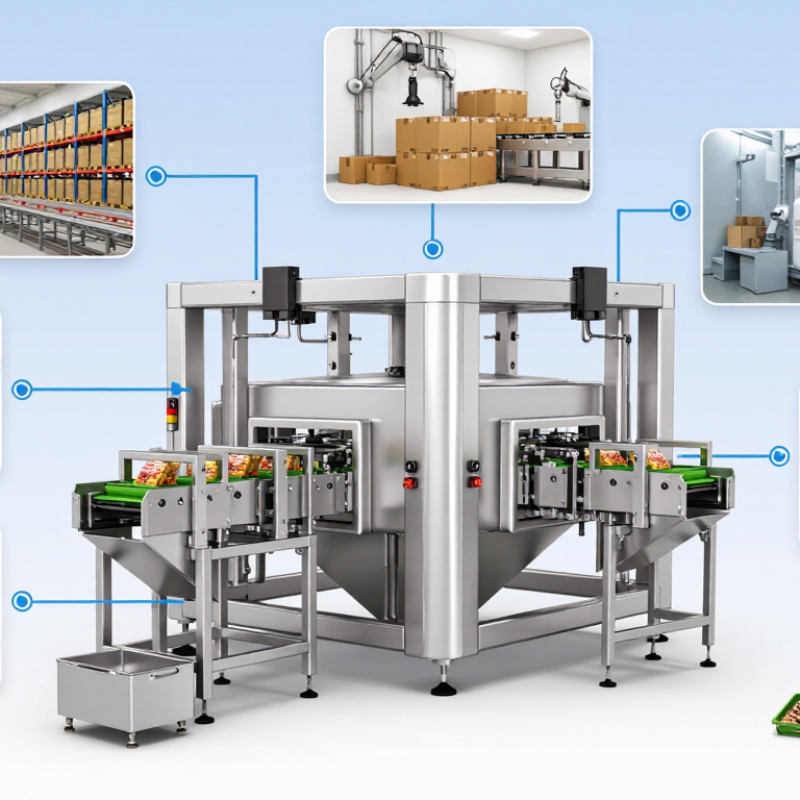
Define Automatic Diverters by Mechanism, Load, Speed, and Sortation Role
For global buyers, an automatic diverter is not simply a powered gate. It redirects cartons, totes, or parcels from a main conveyor to selected lanes. The mechanism determines how gently and accurately that movement happens. Pop-up wheels lift products sideways. Sliding shoes push them across the belt. Swing arms change the path at a fixed point. Narrow-belt designs transfer loads with controlled pressure. Each option suits a different package surface, center of gravity, and lane layout. A glossy carton may slide easily, while a soft bag can buckle. That detail is often missed.
Load capacity starts with dimensions, weight, base stiffness, and spacing. A diverter rated for 50 kilograms may still fail with an unstable, tall box. Speed also needs practical testing. High throughput means little if parcels collide downstream. Buyers should compare cycles per minute, belt velocity, acceleration, and required gap. A 1,200-unit-per-hour line may need gentle handling more than maximum speed. Noise, maintenance access, sensors, and emergency stops affect real productivity. Specifications alone can mislead.
The sortation role gives the equipment its operational meaning. Induction diverters feed parallel lines. Recirculation units return unread items for another scan. Merge or reject devices separate exceptions without stopping the main flow. In warehouse trials, operators should test skewed cartons, mixed sizes, dusty surfaces, and short gaps. We have seen a theoretically correct selection struggle when the sensor sat too far from the transfer point. That is a design lesson, not a purchasing failure. Ask for verified test data, installation tolerances, controls compatibility, and service response times before comparing manufacturers.
| Profile | Primary Mechanism | Typical Load Range | Typical Conveyor Speed | Sortation Role | Product Flow | Best-Fit Applications | Key Selection Considerations |
|---|---|---|---|---|---|---|---|
| 01 | Pop-Up Roller Diverter | Up to 45 kg / 100 lb per carton | Up to 90 m/min / 300 ft/min | 90° transfer | Uses powered rollers that rise above the conveying surface and push or carry cartons onto a side lane. | Carton handling, case picking, distribution centers, and palletized-unit transfers. | Requires a reasonably rigid load base and sufficient carton spacing for reliable lift-and-transfer cycles. |
| 02 | Sliding-Shoe Diverter | Up to 113 kg / 250 lb per item | Up to 152 m/min / 500 ft/min | High-speed line sortation | Multiple sliding shoes travel diagonally across the conveyor to guide products to the selected discharge lane. | Parcels, cartons, totes, and high-throughput outbound distribution systems. | Needs controlled product spacing, a stable conveyor bed, and adequate side-lane alignment. |
| 03 | Belt-Diverter / Right-Angle Transfer | Up to 68 kg / 150 lb per item | Up to 61 m/min / 200 ft/min | Right-angle transfer | Pop-up belts lift between the main conveyor rollers and move the product laterally onto an adjacent conveyor. | Boxes, totes, trays, and products requiring controlled 90° transfer. | Useful where gentle handling and positive belt contact are more important than maximum throughput. |
| 04 | Pivot-Wheel Diverter | Up to 45 kg / 100 lb per item | Up to 91 m/min / 300 ft/min | Multi-lane diverting | Angled wheels pivot or rotate to redirect the product toward one or more side destinations. | Small cartons, totes, polybags with rigid bases, and compact parcel lines. | Works best with consistent package bottoms and controlled product presentation. |
| 05 | Pop-Up Chain Transfer | Up to 453 kg / 1,000 lb per load | Up to 30 m/min / 100 ft/min | Heavy-load transfer | Chains rise between roller conveyor sections and transfer heavy units laterally or at right angles. | Pallets, drums, industrial containers, cases, and heavy manufacturing loads. | Requires robust guarding, accurate pallet positioning, and structural support for high impact loads. |
| 06 | Pusher Diverter | Up to 227 kg / 500 lb per item | Typically up to 30 m/min / 100 ft/min | Low-to-medium-speed diverting | A pneumatic, electric, or servo-driven paddle pushes the product across the conveyor into a discharge lane. | Heavy cartons, uniform cases, packaging lines, and applications with defined product gaps. | Needs reliable product stops or sensors to prevent side impact, jams, and product damage. |
| 07 | Swing-Arm Diverter | Up to 45 kg / 100 lb per item | Up to 61 m/min / 200 ft/min | Lane selection | A pivoting arm changes the product path by contacting the side or front edge of the load. | Carton routing, case packing, order consolidation, and moderate-volume sortation. | Appropriate for products with predictable geometry; clearance is needed for the arm’s swing envelope. |
| 08 | Plow or Fixed-Diverter Gate | Up to 34 kg / 75 lb per item | Up to 46 m/min / 150 ft/min | Simple lane diverting | A fixed or actuated guide surface changes the travel direction without lifting the product. | Uniform cartons, trays, empty containers, and cost-sensitive conveyor systems. | Best for durable products with low-to-moderate speed requirements and consistent approach alignment. |
| 09 | Narrow-Belt Transfer Module | Up to 68 kg / 150 lb per item | Up to 76 m/min / 250 ft/min | Zero- or low-pressure transfer | Several narrow belts rise through the conveyor bed to move products laterally while preserving orientation. | Totes, cartons, bins, and products requiring low-contact accumulation and controlled transfer. | Check belt spacing, product footprint, belt wear, and the required lift height before specifying. |
| 10 | Robotic or Servo-Driven Diverter Cell | Typically up to 25 kg / 55 lb per item | Application-dependent; commonly 20–60 picks/min | Flexible mixed-item sortation | A robot, servo mechanism, or vision-guided actuator identifies and redirects products to assigned destinations. | Mixed-SKU parcels, irregular products, e-commerce fulfillment, and frequent changeovers. | Requires integration of vision, tracking, safety controls, gripper selection, and software-based routing logic. |
| Values shown are representative engineering ranges, not guaranteed specifications. Final selection should be validated against product dimensions, center of gravity, coefficient of friction, throughput, accumulation method, lane geometry, controls architecture, and applicable regional safety standards. | |||||||