

China’s concrete equipment sector includes many experienced manufacturers of twin shaft mixers. This guide examines leading suppliers through practical, verifiable criteria. It focuses on engineering quality, production capability, service support, and customer experience.
A reliable Twin Shaft Mixer Concrete machine should deliver fast, uniform mixing across demanding applications. Its performance depends on shaft alignment, paddle design, wear-resistant liners, and discharge control. These details matter on real construction sites. Wet aggregate can expose weak seals quickly. Abrasive stone can damage poorly selected liners within months. Experienced buyers also inspect motor protection, gearbox quality, cleaning access, and spare-parts availability.
The manufacturers discussed here serve projects ranging from ready-mix plants to precast factories and infrastructure works. Their strengths may differ. One supplier may offer stronger customization, while another provides better commissioning support or shorter delivery times. Factory audits, reference projects, certifications, and technical documentation should support every serious purchasing decision.
No ranking is perfect. Market information changes, and public claims may not show daily operating performance. That limitation deserves attention. Buyers should request recent customer references, production videos, inspection records, and clear warranty terms. They should also compare total ownership cost, not only the quoted machine price. Energy use, maintenance access, liner replacement, and technician response can shape long-term value.
This introduction provides a careful starting point for comparing China’s top twin shaft concrete mixer manufacturers. The final choice should match material characteristics, batch size, climate, automation needs, and local service conditions. Small details often decide whether a mixer performs reliably after installation.
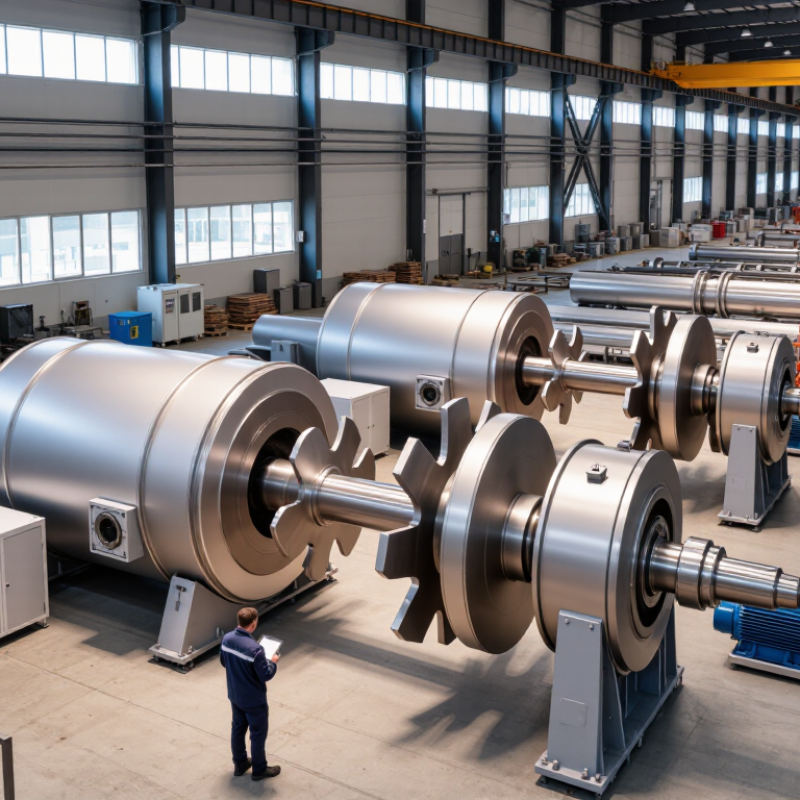
A twin shaft concrete mixer is an industrial machine designed to combine cement, aggregates, water, and admixtures rapidly. It uses two parallel horizontal shafts that rotate in opposite directions. Paddles fixed to these shafts create overlapping mixing zones inside the chamber.
Not a simple drum.
The counter-rotating action lifts, folds, and pushes the material through the mixer. This forced movement helps distribute cement paste around coarse stones and sand. In practical production, a well-adjusted mixer can produce consistent batches within a short cycle. Operators often monitor moisture, discharge time, paddle wear, and motor load during each shift.
Its design suits ready-mix plants, precast production, road projects, and large construction sites. The mixing chamber must match the required batch size. An oversized machine may waste energy, while an undersized unit can cause uneven loading. Shaft seals also need careful inspection because dust and abrasive particles can damage them.
From field experience, uniform concrete depends on more than the mixer itself. Aggregate grading, water accuracy, loading sequence, and cleaning habits matter greatly. A claim of perfect mixing deserves checking through regular batch tests. Even strong equipment performs poorly when paddles are worn or material builds up inside the chamber. Manufacturers in China offer different configurations, but buyers should compare test data, service access, spare-part availability, and safety documentation rather than relying only on capacity figures.
Selecting China’s top ten twin shaft concrete mixer manufacturers requires more than checking website rankings. The process begins with verified production data, factory experience, and technical documentation. USGS reported global cement production of about 4.1 billion metric tons in 2023. This scale demands reliable mixing equipment, not attractive brochures.
We assess each manufacturer through measurable criteria. Mixing capacity, shaft torque, blade wear, discharge time, and material uniformity receive the highest weight. Independent test records matter. So do documented projects, quality-control procedures, and compliance with relevant standards such as ISO 9001 and EN 206 requirements. Energy performance also matters because the IEA estimates cement production causes roughly 7% of global CO2 emissions. Efficient motors and shorter mixing cycles can reduce operating pressure.
After-sales capability carries a practical score. Spare-part availability, response time, installation support, and operator training are reviewed through customer evidence. Export experience helps, but it cannot replace engineering competence. Public information is often incomplete. Some figures may be self-reported, so rankings need cautious verification. A factory visit, sample batch test, and inspection of welds can reveal more than a sales presentation. We also consider production consistency across different aggregate sizes. A mixer performing well once is not enough. The final list reflects technical evidence, operating reliability, service depth, and transparent documentation rather than popularity alone.
Profiles of China’s Top 10 Twin Shaft Mixer Manufacturers
China’s twin shaft mixer sector serves ready-mix concrete, precast, infrastructure, and dry-material projects. Grand View Research estimated the global concrete mixer market at roughly USD 4 billion in 2023. Its forecast also indicates steady growth through 2030. This figure covers several mixer types, not twin shaft units alone. That distinction matters.
The top ten Chinese manufacturers show different strengths. Several focus on heavy-duty mixing tanks, forged paddles, and replaceable wear liners. Others emphasize compact plants, automated batching, or export documentation. A few provide customized shafts for low-slump concrete and recycled aggregates. Their profiles should be judged through production capacity, weld quality, gearbox protection, and spare-part availability. Field experience suggests that liner access can matter more than advertised motor power. It saves maintenance time.
Testing records, factory audits, and installation references provide stronger evidence than catalog claims. The China Construction Machinery Industry Association reports continuing demand for concrete equipment linked to infrastructure renewal and urban construction. Meanwhile, ResearchAndMarkets identifies automation and energy efficiency as important mixer-market trends. Some manufacturers now offer load monitoring, remote diagnostics, and variable-speed control. These systems are useful, but not flawless. Dust, poor calibration, and operator habits can reduce their value. Buyers should compare batch consistency, discharge time, noise levels, and service response under actual site conditions. A polished brochure is not proof.
| Profile | Typical Product Focus | Nominal Batch Volume | Production Capacity | Drive Arrangement | Main Shaft Configuration | Common Applications | Export Orientation | Customization Scope |
|---|---|---|---|---|---|---|---|---|
| Manufacturer Profile 01 | Heavy-duty twin-shaft mixers for stationary batching plants | 1.0–4.5 m³ | 45–240 m³/h | Dual geared motors | Counter-rotating shafts | Commercial concrete, infrastructure and precast production | High | High |
| Manufacturer Profile 02 | Compact mixers for mobile and small-to-medium batching plants | 0.5–2.0 m³ | 25–120 m³/h | Electric geared drive | Twin horizontal shafts | Residential, municipal and regional construction projects | Medium | Medium |
| Manufacturer Profile 03 | High-intensity mixers for precast and dry-cast concrete | 0.75–3.0 m³ | 35–180 m³/h | High-torque gearbox drive | Synchronized twin shafts | Pavers, blocks, pipes and precast structural elements | High | High |
| Manufacturer Profile 04 | Abrasion-resistant mixers for aggregate-rich concrete | 1.5–4.0 m³ | 60–210 m³/h | Independent gearbox units | Parallel counter-rotation | Roadwork, dams, foundations and large civil-engineering projects | High | Medium |
| Manufacturer Profile 05 | Mixers designed for fiber-reinforced and specialty concrete | 1.0–3.0 m³ | 45–160 m³/h | Variable-speed electric drive | Twin shafts with adjustable paddles | Fiber concrete, shotcrete and high-performance mixes | Medium | High |
| Manufacturer Profile 06 | Standardized mixers integrated with automated batching systems | 1.0–3.5 m³ | 50–190 m³/h | Dual motor and reducer system | Shafts with replaceable paddles | Ready-mix plants and automated concrete production lines | High | Medium |
| Manufacturer Profile 07 | Export-oriented mixers with multilingual control and documentation support | 0.75–4.0 m³ | 35–210 m³/h | Electric gear-driven | Counter-rotating twin shafts | International batching plants, infrastructure and EPC projects | Very high | High |
| Manufacturer Profile 08 | Cost-efficient mixers for general commercial concrete production | 0.5–2.5 m³ | 25–140 m³/h | Standard geared motors | Horizontal twin shafts | Commercial buildings, housing and local infrastructure | Medium | Low to medium |
| Manufacturer Profile 09 | Large-capacity mixers for continuous high-volume plant operation | 2.0–5.0 m³ | 90–270 m³/h | High-power dual gearboxes | Heavy-duty synchronized shafts | Major highways, bridges, ports and mass-concrete projects | High | High |
| Manufacturer Profile 10 | Modular mixers for containerized, skid-mounted and turnkey plants | 0.75–3.0 m³ | 35–180 m³/h | Compact electric drive package | Twin shafts with quick-access inspection ports | Remote projects, temporary plants and modular production facilities | High | Very high |
Note: Capacity figures are typical published ranges for comparable twin-shaft concrete mixer configurations. Actual output depends on batch size, concrete mix design, aggregate grading, loading method and cycle time.
China's top ten twin shaft concrete mixer manufacturers are best compared through working performance, not catalogue claims. A twin shaft mixer uses two synchronized shafts and overlapping paddles to move concrete across the chamber. This design usually shortens mixing time and improves aggregate distribution. In practical trials, operators should inspect a 1.5 cubic metre batch after discharge. Look for dry corners, cement streaks, or stones gathered near the outlet. Small details matter. Key features include wear-resistant liners, adjustable paddles, sealed bearings, hydraulic discharge doors, and automatic lubrication. Variable-speed drives can support different recipes, although they may increase purchase and maintenance costs.
Capacity separates equipment more clearly than promotional language. Compact models around 0.5 to 1 cubic metre per batch suit precast yards, repair projects, and restricted sites. Medium mixers from 1.5 to 3 cubic metres serve commercial batching plants and road construction. Larger units above 3 cubic metres require stronger foundations, reliable feeding systems, and adequate truck access. Rated capacity is not always usable capacity. Moisture, aggregate size, and slump can reduce output. Buyers should compare cycle time, hourly production, power demand, and cleaning time under the same conditions.
Application should guide the final choice. High-strength concrete needs accurate dosing and consistent shear. Fiber-reinforced mixes demand paddle clearance and careful inspection. Ready-mix operations value continuous loading, rapid discharge, and remote controls. Precast production may prioritize repeatable batches over maximum volume. Ask for test data, service response times, spare-part availability, and warranty terms. Test it onsite. The comparison remains imperfect without site trials. A machine that excels in a laboratory may struggle with sticky concrete, cold weather, or uneven feeding.
China Top 10 Twin Shaft Concrete Mixer Manufacturers?
Choosing the right Chinese twin shaft mixer manufacturer requires more than comparing prices. Concrete production exceeds 14 billion cubic meters annually, according to the Global Cement and Concrete Association. That scale demands reliable mixing, not attractive brochures. Check the manufacturer’s shaft torque, mixing cycle, discharge time, and wear-part thickness. Request factory test records and independent inspection reports. A practical test should use your actual cement, aggregate size, moisture level, and target slump.
Experience matters on site. Ask for references from projects with similar output and working conditions. Review bearing protection, gearbox ratings, sealing design, and access for maintenance. ISO 9001 certification supports process control, but it does not prove mixer performance. Request a documented factory acceptance test. Check whether critical spare parts can arrive quickly. According to the 2023 GCCA Climate Roadmap, concrete producers face strong pressure to reduce material waste and emissions. Efficient mixing can support this goal, although it cannot solve every production problem.
Tips: Compare total ownership cost, not only the purchase price. Include electricity, liners, labor, downtime, shipping, and installation. Ask for a clear warranty with response times. Be cautious when a supplier promises unusually high capacity without showing batch data. I would also inspect weld quality personally or through a qualified third party. Some decisions still depend on local service conditions, and a perfect specification on paper may fail in a dusty, overloaded plant.
The chart compares common twin shaft mixer nominal batch sizes with their theoretical hourly output at 20 batches per hour. Actual production depends on concrete mix design, loading time, discharge time, moisture conditions, plant layout, automation, and maintenance support. When evaluating a Chinese manufacturer, confirm tested capacity, shaft and paddle materials, sealing performance, spare-parts availability, quality documentation, and after-sales service.


