Who Are the Top Blown Film Machine Manufacturers in China?
China’s blown-film machinery market deserves close attention, but manufacturer rankings need careful reading. Suppliers differ in output stability, layer capability, automation, service support, and the materials their lines can process. A polished catalogue cannot prove performance on your resin mix. Ask for a live trial.
The OECD’s Global Plastics Outlook reports that global plastics production reached 460 million tonnes in 2019, with packaging representing a major share of plastics use. Grand View Research’s analysis of the global blown films market also tracks packaging as a key application. These reports describe demand for plastic products, not sales of Blown Film Machine equipment. That distinction matters: market growth alone does not establish which Chinese manufacturer offers the best line for a specific converter.
Extrusion specialist Dr. Chris Rauwendaal’s published engineering work provides a useful lens: process control is central to consistent extrusion performance. This is a paraphrase, not a verbatim quotation. Buyers should test that principle against measurable evidence, including gauge variation, output at target thickness, energy use, changeover time, and after-sales response. Watch the melt leave the die. Check the film across its width. Then ask who will troubleshoot the line six months later.
This guide compares leading Chinese manufacturers by technical capability, documented experience, export support, and application fit. “Top” is not universal. A high-output line may suit one plant and disappoint another. The evidence is imperfect, and supplier claims still need verification.
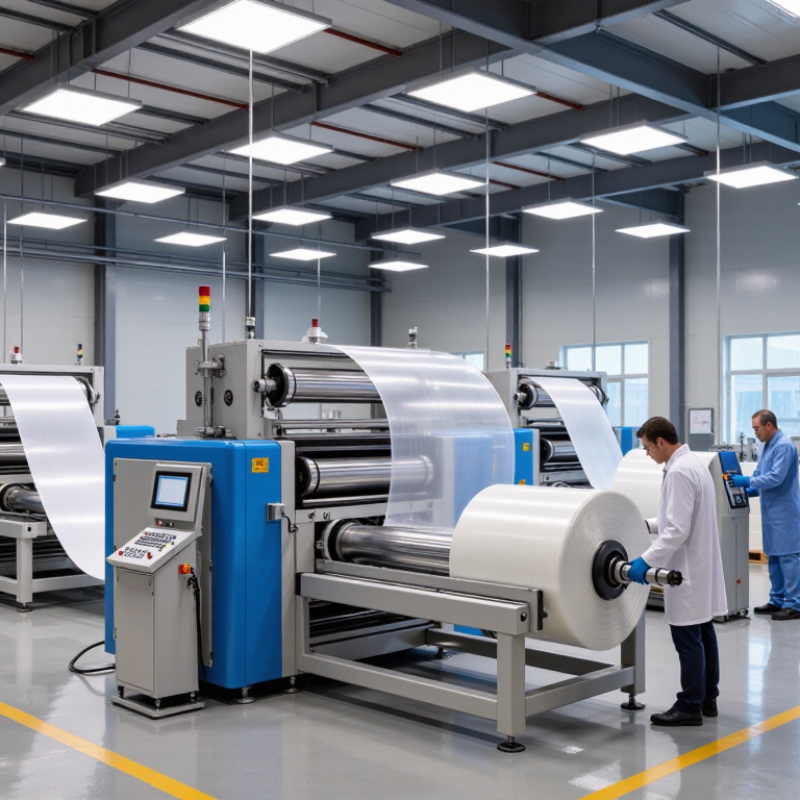
Overview of China’s Blown Film Machine Industry
China’s blown film machine industry serves packaging, agriculture, and other converting markets. Its scale is difficult to measure directly because public statistics rarely separate blown film equipment from wider plastics machinery. The National Bureau of Statistics reported 74.885 million tonnes of plastic product output in 2023, down 3.0% year on year. This is useful context, not a direct measure of machine demand. The gap matters.
Demand also reflects the wider packaging sector. The China Packaging Federation reported 2023 packaging-industry revenue of about RMB 1.154 trillion. For film producers, practical buying priorities include stable bubble formation, consistent thickness across the web, manageable energy use, and fast changeovers. Operators can see quality problems in a thin gauge band or uneven winding before they appear in annual data. A larger output figure alone tells little about equipment performance. In practice, factory conditions vary, and published industry numbers cannot capture every line’s downtime or scrap rate. That limitation deserves attention when comparing China’s machinery market.
Criteria for Identifying Leading Manufacturers
A credible assessment starts with the machine, not the showroom. Check whether the manufacturer can document output at a stated film width, resin type, and thickness. Ask for a trial run, then inspect sample rolls for gauge variation, bubble stability, and edge quality. Small details matter. A neat brochure cannot show how quickly operators can change a die or clear a web break.
Production context helps explain why these checks matter. PlasticsEurope’s Plastics – the Fast Facts 2023 reported global plastics production of 400.3 million tonnes in 2022. That broad figure is not a blown-film machine sales measure, but it shows the scale of the processing industry. Compare manufacturers using verifiable data: energy use per kilogram, scrap rate, changeover time, and uptime records from comparable installations. Request service response times, spare-parts availability, and references you can contact. The best reference is a running line, not a staged demonstration. No scorecard is perfect. Even detailed figures may miss the realities of a humid workshop, variable feedstock, or a tired night shift. Look for transparent test conditions and engineers willing to discuss limitations, not only peak output.
Profiles of Notable Chinese Blown Film Machine Manufacturers
Chinese blown film machine manufacturers vary in their strengths. Some focus on compact lines for small converters, while others build wider systems for higher output. Their profiles are best judged by engineering details, not broad claims. Ask how the screw design, die head, and cooling ring suit your resin and film thickness. Small details matter.
A capable supplier should explain output ranges, changeover steps, and what affects film stability. Request a trial using material similar to yours. Watch the bubble carefully: does it stay steady, and are thickness readings consistent across the roll? Ask to inspect the control cabinet, service access, and spare-parts list. These checks offer practical evidence, though one test cannot predict every production condition. A tidy demo may not reflect a busy shift.
Tips: Compare written specifications line by line. Confirm installation and operator training are included. Keep one question open: what happens when the machine needs adjustment after delivery? A clear answer is useful. A vague one deserves follow-up.
Comparison of Products, Technologies, and Production Capabilities
Comparing China’s blown film machine manufacturers starts with the film each line must produce. Single-layer systems suit straightforward packaging, while three- and five-layer coextrusion lines can combine stiffness, sealability, and barrier performance. Ask for tested output at a stated film width and thickness; kilograms per hour alone can mislead. Resin blends and cooling conditions change the result.
Technology separates capable suppliers from catalogue claims. Check automatic thickness control, air-ring design, winding accuracy, and whether operators can change recipes without lengthy setup. OECD’s Global Plastics Outlook reports that plastic production rose from 234 million tonnes in 2000 to 460 million tonnes in 2019. That scale makes efficient material use important, but a machine’s scrap rate should be verified on a comparable trial, not assumed from its controls. Small differences matter.
Production capability includes more than factory size. Review machining and assembly resources, component traceability, commissioning support, and documented acceptance tests. Request sample rolls with recorded gauge variation and output data. A polished brochure can still omit the operating conditions. That matters. Public information rarely makes suppliers’ capacities directly comparable, so buyers should check installed-line references and spare-parts response times before judging a quoted specification.
Blown Film Machine Comparison: Common Co-extrusion Layer Configurations
Layer count is a technical capability used to compare blown film lines. More layers allow more material layers in a film structure, but do not by themselves indicate higher output or better performance.
Factors to Consider When Selecting a Manufacturer
A reliable blown film machine manufacturer should prove process stability, not just quote maximum output. Inspect the die, air ring, haul-off, and winder closely. Ask for film samples at your target width and thickness, then check gauge variation and roll edges. Small defects matter.
The OECD’s Global Plastics Outlook reports that global plastics production rose from 234 million tonnes in 2000 to 460 million tonnes in 2019. PlasticsEurope’s Plastics—The Fast Facts 2023 reports 400.3 million tonnes of production in 2022. These figures show the scale of the sector, but they do not prove any supplier can meet your process needs. Request a documented trial using your resin and operating conditions. Test it under load. Review energy use, scrap rates, changeover time, and operator access. Ask how quickly technicians can respond, and which wear parts are stocked locally. A polished demonstration may hide awkward cleaning or slow troubleshooting. Visit an operating factory if possible, and speak with the people who run the line each day. Their feedback can be imperfect, but useful.