

• Gantry Robot Manufacturer & Articulated Arm Integrator

China Top Cylinder Seal Kits Suppliers for Global Buyers

Reliable Cylinder Seal Kits matter wherever hydraulic cylinders must hold pressure, move smoothly, and resist contamination. A leaking seal can leave oil around a loader rod, slow a press, or interrupt a repair schedule. The parts are small. The consequences are not. Buyers therefore need more than a low unit price: they need clear dimensions, material specifications, operating-temperature limits, and traceable quality information.

Industry reports provide useful context. Grand View Research’s Hydraulic Seals Market analysis examines demand across applications and regions, while MarketsandMarkets’ Hydraulic Equipment Market report tracks growth in the wider equipment sector. These reports indicate why dependable sealing components remain relevant as hydraulic machinery serves construction, agriculture, manufacturing, and other industries. Their market estimates use different definitions, however, so figures should not be compared casually. That detail is easy to miss.

For global buyers assessing China-based suppliers, practical checks matter more than broad claims. Ask whether kits match the cylinder’s drawing, fluid, pressure, and service conditions. Confirm material options, inspection procedures, packaging, and support for replacement-part identification. A nitrile seal may suit one application; another may require a different compound. Supplier websites rarely tell the whole story. Requesting samples and technical documents can expose gaps before a shipment reaches the workshop. No checklist guarantees a perfect fit, but careful verification reduces avoidable delays and helps buyers compare suppliers on evidence, not promises.
China Top Cylinder Seal Kits Suppliers for Global Buyers

Hydraulic Cylinder Seal Kits: Components and ISO 3601 O-Ring Dimensions

China Top Cylinder Seal Kits Suppliers for Global Buyers

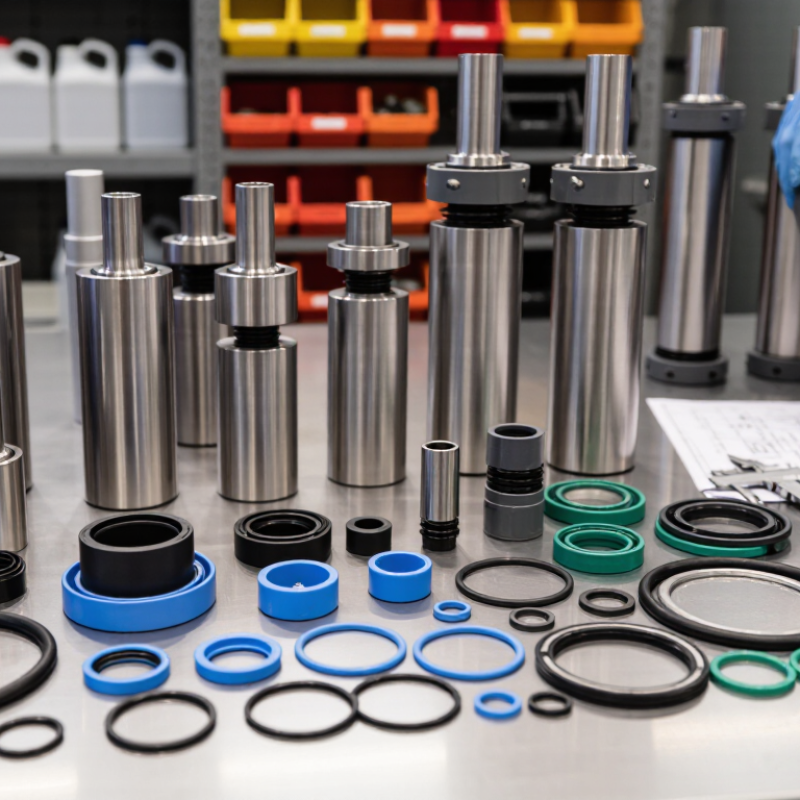
A hydraulic cylinder seal kit may include rod seals, piston seals, wipers, guide rings, O-rings, and backup rings. Each part serves a different purpose: rod seals limit leakage, while wipers keep dust and grit out. Small details matter. A kit should match the cylinder’s bore, rod diameter, groove dimensions, operating pressure, and fluid. Choosing by appearance alone can cause early leakage or difficult installation.

For O-rings, use the applicable ISO 3601 dimensions and tolerances when checking nominal inside diameter and cross-section. The standard covers O-ring requirements, not every component in a complete seal kit. Confirm the correct standard part and tolerance class against the equipment drawing. Then check compound compatibility and temperature range; matching dimensions do not guarantee a suitable material. A digital caliper helps with a quick inspection, but worn or compressed seals may give misleading readings. That detail is easy to overlook.

Tips: Compare each new seal with the drawing and old part before assembly. Keep parts clean, and avoid stretching O-rings over sharp edges. If dimensions seem close but not exact, pause and verify the groove. Guessing can be costly.

Match Rod, Piston, and Wiper Seals to ISO 6022’s 25 MPa Rating

When sourcing cylinder seal kits for ISO 6022 equipment, treat 25 MPa as the cylinder’s pressure class, not a guarantee that every seal kit suits every application. ISO 6022 defines mounting dimensions for single-rod cylinders in this class; seal materials and service limits still need separate verification. Check the cylinder drawing, rod diameter, bore, groove dimensions, and operating fluid before ordering. Small differences matter. A rod seal that looks correct on a parts list may leak if its profile or interference fit is wrong.

Match each seal to its job. The rod seal controls fluid loss along the moving rod, while the piston seal separates pressure between chambers. The wiper keeps dust and dried residue out. Review pressure peaks, temperature, fluid compatibility, and cycle speed for all three. A kit supplier should provide material data, dimensional details, and traceable inspection records, not just a broad “25 MPa compatible” claim. Ask how tolerances were checked, especially when replacing older seals. Field conditions are rarely tidy; a scratched rod or worn groove can defeat a well-matched kit. I would check those parts before blaming the seal.

Compare NBR, PU, and PTFE by Fluid Compatibility and Temperature Range

When comparing cylinder seal kits, match the seal material to both the working fluid and operating temperature. NBR is commonly selected for mineral hydraulic oils and many petroleum-based fluids. Typical service temperatures are about -30°C to 100°C, depending on the compound. It is often a practical, economical choice. But ozone, weathering, and some synthetic fluids can shorten its life.

PU, or polyurethane, suits many hydraulic applications where abrasion and pressure resistance matter. It can handle repeated contact with a cylinder bore, though compatibility varies with fluid chemistry and heat. Many grades operate around -30°C to 80°C, with some formulations allowing higher temperatures. Check the supplier’s data sheet against the actual oil, not just its general category. Small details matter.

PTFE offers broad chemical resistance and can work across a wide temperature span, often roughly -200°C to 260°C. Those figures are not guarantees for every seal design. PTFE has limited elasticity and may need an energizer or supporting seal to maintain contact. For a buyer comparing suppliers, request compound-specific compatibility data and confirm the cylinder’s pressure, speed, and temperature range. A clean-looking specification can still leave gaps; actual fluid samples and operating cycles are worth reviewing.

Verify Kit Dimensions, Material Grades, and Quality Test Records

China Top Cylinder Seal Kits Suppliers for Global Buyers

Before approving a cylinder seal kit, compare its dimensions with the equipment drawing or a verified sample. Check inner diameter, outer diameter, cross-section, and any backup-ring dimensions. A seal that looks close may still twist or leak after installation. Small errors matter. Confirm measurement units and tolerances in writing, especially when drawings use different standards.

Material grades should match the working fluid, temperature range, pressure, and operating speed. Ask for the compound designation and relevant material data, not just a generic label such as “rubber.” For quality checks, request dimensional inspection results and test records tied to the specific production batch. Records must match. Check the test method, acceptance criteria, date, and sample quantity. A neat spreadsheet can still leave gaps, so clarify anything that does not identify the kit or lot.

Tips: Keep one approved sample and a dimension checklist for incoming orders. Compare batch records with the delivered packaging before installation. If a supplier cannot explain a test result clearly, pause and ask for clarification. My own checklists have missed small details before. Review them again.

Assess Chinese Suppliers by Traceability, Customization, and Export Quality Systems

China Top Cylinder Seal Kits Suppliers for Global Buyers

Traceability is more than a batch number printed on a bag. Ask suppliers to link each kit to material lots, inspection records, and a dated certificate of analysis. Check that the records match the seals delivered, including dimensions and material grades. The World Bank’s 2023 Logistics Performance Index assesses 139 economies across six trade and logistics dimensions. It helps buyers compare shipping conditions, but it does not verify product quality. Keep those checks separate.

Customization should start with operating details: cylinder model, pressure, fluid, temperature range, and dust exposure. Request a drawing with tolerances before approving samples. For O-rings, ISO 3601 provides dimensional and tolerance requirements; it does not certify an entire kit. Ask for test methods and results for the other components, too. A certificate alone proves little. I have seen paperwork look complete while leaving the material grade unclear. Small detail. Big risk.

Tips: Send a marked-up drawing and one worn seal when possible. Confirm lot traceability, inspection criteria, and export packaging in writing. Check whether labels remain readable after moisture exposure.

China Top Cylinder Seal Kits Suppliers for Global Buyers – Assess Chinese Suppliers by Traceability, Customization, and Export Quality Systems
Buyer Assessment Matrix — verify each item directly with the supplier; this table contains no supplier-specific ratings or claims.
Assessment Area What to Check Evidence to Request Buyer Verification Benchmark Assessment
Quality management Whether the supplier operates a documented quality management system and controls nonconforming product. Current quality-system certificate, issuing body and scope; sample inspection records; corrective-action procedure. Confirm certificate validity and that its scope covers the relevant manufacturing or trading activities. ISO 9001 is a quality-management-system standard, not a product-performance certification. Verify with supplier
Batch traceability Ability to trace kit components back to material and production records. Sample label, lot or batch record, material certificate where applicable, and a demonstration of the supplier’s trace-back process. Agree in writing which identifiers must appear on packaging and records, such as part number, quantity, production lot, and material batch where available. Verify with supplier
Kit completeness and identification Whether every kit is assembled to the specified cylinder model or buyer-approved bill of materials. Kit contents list, component drawings or specifications, packaging sample, and a sample picking or packing checklist. Match every component and quantity against the approved bill of materials; define how substitutions and revision changes require buyer approval. Verify with supplier
Customization capability Support for custom dimensions, profiles, materials, kit contents, marking, and packaging. Technical questionnaire, drawing-review process, material options, sample approval workflow, and change-control procedure. Provide application conditions and controlled drawings. Approve samples and specifications before production; document tolerances, revisions, and any permitted alternatives. Verify with supplier
Material specification Whether seal materials are identified by a defined specification suitable for the application. Material datasheets or certificates, compound identification, and compatibility information for the intended fluid, temperature, pressure, and operating conditions. Assess the complete operating environment rather than selecting material by generic labels alone. Confirm chemical compatibility and operating limits with the supplier and, where needed, independent technical advice. Verify with supplier
Dimensional standards Whether applicable dimensions and tolerances are defined for the seal type and installation location. Dimensioned drawings, inspection results, and the stated standard or buyer specification used for each component. ISO 3601 covers O-rings; ISO 6194-1 covers dimensions and tolerances for rotary shaft lip-type seals. Confirm that a referenced standard applies to the actual component and design. Verify with supplier
Inspection and testing Controls for incoming materials, in-process checks, final inspection, and product testing. Inspection plan, sample measurement report, calibration records for relevant instruments, and test reports tied to the supplied lot where applicable. Agree inspection characteristics, sampling method, acceptance criteria, and test conditions before ordering. Request reports that identify the product, specification, and tested lot. Verify with supplier
Change control How changes to material, manufacturing location, tooling, process, or component source are communicated. Documented change-notification procedure and an example of a controlled product revision record. Specify which changes require advance written notice and buyer approval; keep approved drawings and specifications revision-controlled. Verify with supplier
Packaging and storage Protection against contamination, mixing, damage, and loss of identification during storage and transport. Packaging specification, storage guidance, label sample, and any product-specific shelf-life or storage data. Set packaging and storage requirements for the actual materials and destination. Do not assume a universal shelf life; use the supplier’s documented product-specific guidance. Verify with supplier
Export documentation Readiness to prepare shipment documents and provide information needed for the buyer’s import process. Redacted sample commercial invoice and packing list; confirmation of ability to provide a certificate of origin when required. Confirm document details, product descriptions, quantities, and shipping terms before dispatch. Import requirements and origin-document needs depend on the destination and transaction. Verify with supplier
Wood packaging compliance Whether regulated wood packaging used for international shipments meets applicable requirements. Packaging declaration or other shipment evidence, where applicable. ISPM 15 establishes measures for wood packaging material in international trade. Check applicability to the shipment and destination; it does not apply to every packaging material. Verify with supplier
Order and delivery control How the supplier confirms order specifications, production milestones, packing details, and dispatch status. Order confirmation template, production or dispatch update process, and agreed lead-time and shipment terms. Record the approved specification, quantity, delivery schedule, packaging, inspection requirements, and agreed Incoterms® 2020 rule in the purchase documentation. Verify with supplier