

China is a major source of hand tools, including Combination Wrench products for workshops, factories, and vehicle maintenance. Yet “top manufacturer” can mean different things to different buyers. One company may offer broad customization, while another focuses on consistent sizing or export support. The name on a catalog page tells only part of the story.
This guide examines how to compare Chinese manufacturers using practical evidence: product range, steel and heat-treatment details, dimensional tolerances, surface finish, inspection processes, and responsiveness to sample requests. A wrench should fit cleanly on a fastener, feel balanced in the hand, and withstand repeated use without obvious wear. These details matter more than polished marketing language. Ask for specifications and test samples where possible. Check whether stated quality systems and certifications can be verified, rather than relying on logos alone.
Price matters, of course. So do lead times, packaging, and communication when requirements change. Still, no shortlist is perfect; supplier capabilities can shift, and a strong factory for one order may not suit another. The manufacturers discussed here are best treated as candidates to assess, not automatic endorsements. Careful comparison takes time. That is a little inconvenient, but it can prevent mismatched tools, delayed shipments, and avoidable quality disputes.
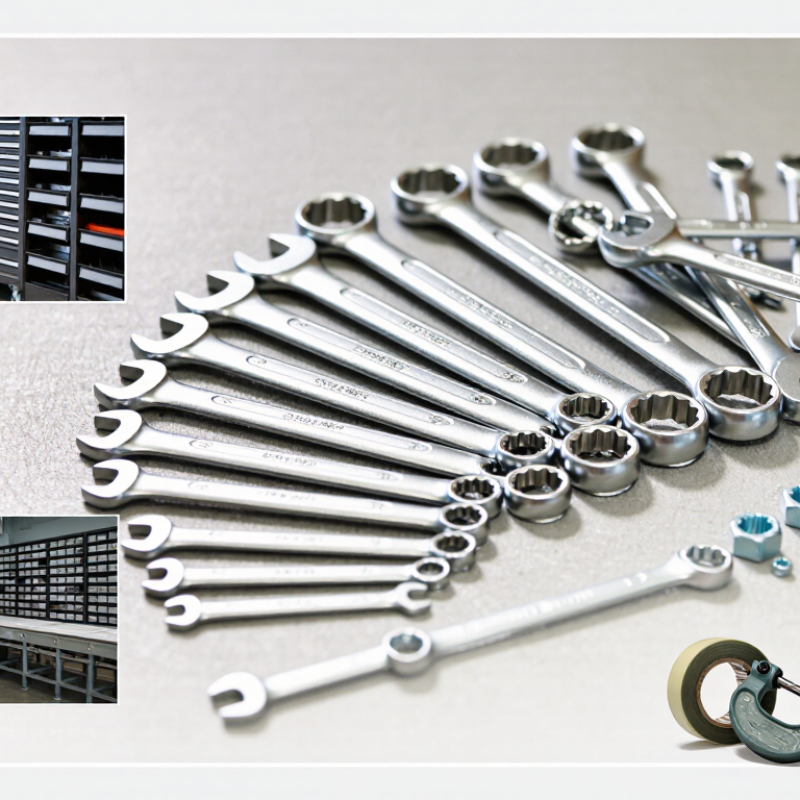
A combination wrench has an open jaw at one end and a closed ring at the other. Both ends are usually made for the same fastener size. The open end slides onto a nut or bolt quickly, which helps when space is limited. The ring end surrounds the fastener and typically offers a firmer grip. Small tool, precise fit.
In practical use, choose a wrench that sits fully on the flats of the fastener. A loose fit can round the corners, especially if the wrench slips under pressure. Pull smoothly rather than jerking, and keep your hand clear of nearby edges. The open end is handy for quick turns; the ring end is often better for applying steady force. If the fastener needs a specified tightening force, use a torque wrench to check it. A combination wrench is useful, but it does not measure torque. Even experienced users can misjudge how tight a fastener feels, so checking the fit and the task requirements matters.
China’s leading combination wrench manufacturers are identified through evidence, not polished catalogs alone. Buyers should examine material specifications, heat-treatment controls, and dimensional consistency across production batches. A wrench should fit a fastener cleanly, without rocking or visible jaw gaps. Ask how hardness and torque performance are checked, and request recent inspection records. One sample is not enough.
Reliable suppliers can explain where steel comes from, how tools are finished, and how defects are handled. Factory audits or documented quality systems add useful context, but neither replaces product testing. Compare several sizes from the same range, then inspect markings, surface finish, and fit under repeatable conditions. No single test tells the whole story. Even experienced buyers can miss small inconsistencies when they review only samples. That is worth admitting.
Tips: Request a batch-level inspection report and test multiple production pieces. Confirm dimensions against your own requirements, not just a sales sheet. Ask what happens when a tool fails inspection. Clear answers matter. A cautious, evidence-based comparison is more useful than choosing by price or presentation alone.
This evidence-based scorecard helps buyers compare manufacturers without implying a company ranking. The weightings are a suggested evaluation model, not an industry standard. Score each criterion from 0 to 5, then calculate: criterion score = rating ÷ 5 × weight.
| Evaluation Dimension | Weight | What to Verify | Evidence to Request | Rating (0–5) | Weighted Score |
|---|---|---|---|---|---|
| Product conformity and range | 20% | Whether the manufacturer offers the required metric or inch sizes, head styles, and product specifications, and can consistently meet the buyer’s stated requirements. | Current product catalogue, controlled drawings, specification sheets, and sample inspection results. | — | — |
| Material and heat-treatment control | 15% | Whether material grades, heat-treatment steps, and hardness requirements are defined and controlled for the products being quoted. | Material certificates where applicable, process-control records, and test reports linked to the relevant product or batch. | — | — |
| Product testing and inspection | 15% | Whether inspection covers relevant dimensions, fit, surface condition, and mechanical performance against agreed specifications. | Inspection plans, sample reports, equipment calibration records, and test-method details. Check that any external laboratory accreditation covers the relevant testing scope. | — | — |
| Quality management | 15% | Whether documented processes cover purchasing, production, inspection, nonconforming products, and corrective actions. | Quality-management certificate, if claimed, with its validity, issuing body, site, and scope checked. ISO 9001:2015 is a quality-management-system standard; certification alone does not prove product performance. | — | — |
| Batch traceability | 10% | Whether finished products can be linked to production lots and relevant inspection records. | Sample batch records, product or packaging identification, and a demonstration of how a lot is traced through production and inspection. | — | — |
| Production capacity and delivery reliability | 10% | Whether the factory can support the requested order volume, product mix, and delivery schedule. | Documented capacity information, production planning examples, lead-time commitments, and delivery-performance records where available. | — | — |
| Export documentation and market requirements | 10% | Whether the supplier can provide accurate commercial and shipping documents and meet the destination market’s applicable requirements. | Redacted examples of export documents and product-specific compliance documents required for the buyer’s destination market. | — | — |
| Communication and after-sales support | 5% | Whether technical questions, quality claims, and order changes receive clear and timely responses. | Written response to a technical inquiry, complaint-handling process, and agreed warranty or replacement terms. | — | — |
| Total | 100% | Compare completed scores alongside product samples, documented requirements, and independent checks where appropriate. | — / 100 | ||
Chinese combination-wrench production includes manufacturers in established metalworking regions such as Zhejiang, Jiangsu, and Shandong. Some specialize in forging; others focus on finishing, packaging, or contract production. UNIDO’s International Yearbook of Industrial Statistics 2024 estimates that China generated about 31% of global manufacturing value added in 2022. That figure shows broad industrial capacity, not wrench output. For product-specific trade context, UN Comtrade’s 2023 data for HS 820411 cover non-adjustable hand-operated spanners, a category that includes many combination wrenches.
When assessing Chinese producers, ask for details on steel grade, forging method, heat treatment, and inspection records. A sample should have clearly marked sizes, smooth jaw edges, and a finish without pits or peeling. Request hardness and dimensional test results, then compare them against your purchase specification. DIN 3113 can serve as a useful reference for combination-wrench requirements, but confirm which edition and tests a supplier actually follows. Small details matter. Supplier webpages may look polished; factory capability still needs verification.
Tips: Ask for a production sample and a recent inspection report. Check the same size across several pieces, especially the open jaw and ring end. Keep one sample as your approval reference.
Chinese combination wrench manufacturers can use different routes to achieve similar dimensions. Some forge the wrench from alloy steel, then trim, heat-treat, and finish the jaws. Others add tighter machining steps around the open end and ring. The difference shows under load. A poorly controlled heat-treatment cycle can leave a wrench too soft or brittle. Hardness checks help, but they do not replace torque testing. Small details matter.
Quality systems also vary. ISO 9001 certification can indicate documented production controls, but it does not prove every wrench meets a buyer’s specification. Ask for inspection records covering jaw opening, ring fit, surface finish, hardness, and torque performance. Check the stated test method and sampling rate, too. A polished finish is easy to see; internal consistency is not. That varies. For export orders, confirm which dimensional standard applies, such as the relevant ISO or DIN specification, and compare the actual tolerance limits. Some suppliers may provide detailed reports only for sampled batches, which leaves a gap. It is worth asking how rejected tools are tracked and whether production changes trigger fresh testing.
ISO 7738 specifies combination-wrench lengths and head thicknesses, while ISO 1711-1 covers technical requirements including hardness and proof-torque testing. The chart compares the standards’ areas of coverage, not manufacturer performance.
Scope indicator: 1 = covered as a key requirement; 0 = not the standard’s primary focus. Actual manufacturing methods and quality results vary by factory and product; this chart is not a factory audit.
Choosing a Chinese combination-wrench manufacturer starts with the steel, not the catalogue. Ask for material specifications, heat-treatment records, and test results tied to the production batch. For a 17 mm wrench, inspect the jaw opening, ring fit, and finish under bright light. Small details matter. Request samples from routine production, not a specially prepared batch, and check dimensions with calibrated gauges. A polished sample alone proves little.
Quality systems and delivery capacity also deserve scrutiny. The ISO Survey 2022 recorded more than 390,000 valid ISO 9001 certificates in China, but certification does not guarantee a wrench meets your requirements. Ask how the factory controls forging, hardness, torque testing, and rejected parts. The World Bank’s 2023 Logistics Performance Index gave China a score of 3.7 out of 5, ranking it 19th overall. That offers useful context, not a promise of on-time delivery. Verify actual lead times, packaging, and inspection records with a trial order. I would also ask to review a real corrective-action report; it can reveal more than a spotless presentation, though not every factory will share one.


