

• Gantry Robot Manufacturer & Articulated Arm Integrator

Top 10 Diaphragm Slitting Machine Manufacturers Worldwide

Choosing a Diaphragm Slitting Machine is not just a matter of comparing advertised speeds. In battery production, a narrow cut, clean edges, and steady material handling can affect downstream assembly. Even a small alignment shift may cause wrinkles or uneven slit widths. Small details matter.

This guide introduces ten manufacturers serving markets worldwide. It considers practical factors such as machine configuration, cutting methods, tension control, automation options, and support availability. These details help buyers assess whether a system suits their material, production volume, and factory workflow. Specifications are useful, but they do not tell the whole story. A machine that performs well with one diaphragm material may need different settings for another.

The overview is intended as a starting point, not a universal ranking. Manufacturer information and product offerings can change, while public data may not show long-term operating results. That deserves a closer look. Buyers should confirm current specifications, request material trials where possible, and discuss maintenance requirements with suppliers. Careful comparison can reveal differences that product brochures often leave unclear. Each shortlisted machine should be assessed against real production needs, not just headline figures.
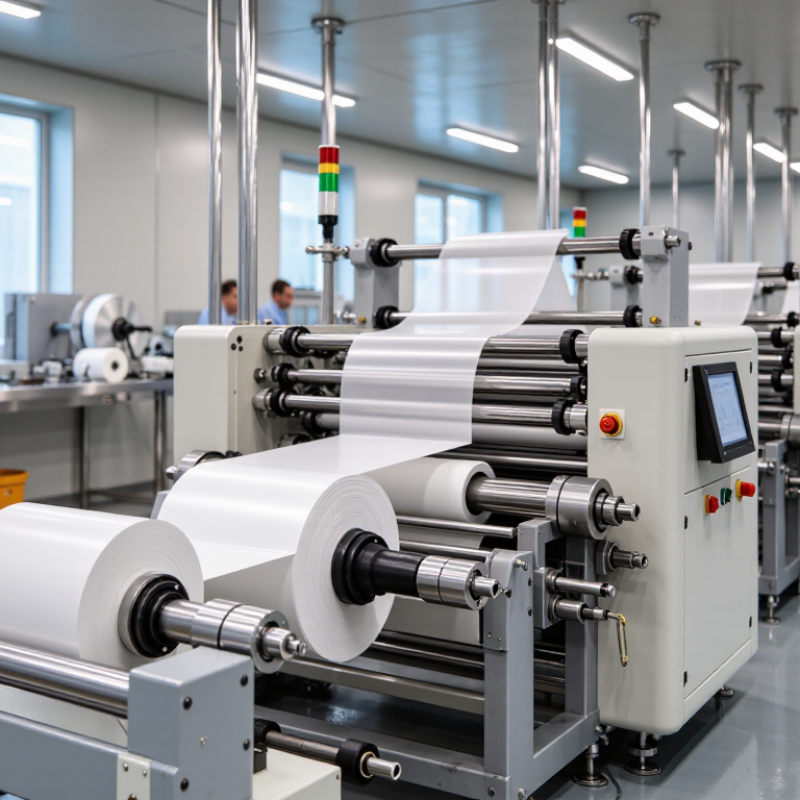
Top 10 Diaphragm Slitting Machine Manufacturers Worldwide

What Diaphragm Slitting Machines Are and How They Work

A diaphragm slitting machine turns a wide, delicate battery-separator web into narrower rolls for cell production. The film is often microporous polymer. Wrinkles, contamination, or rough edges can complicate later handling. The International Energy Agency’s Global EV Outlook 2024 reports nearly 14 million electric cars sold worldwide in 2023, around 18% of total car sales. This signals expanding battery demand, but EV sales alone do not predict slitting-machine orders.

The web unwinds under controlled tension and passes through rotary or razor knives, which divide it into specified widths. Rewind shafts then form separate rolls, while operators monitor alignment, tension, and edge quality. Small details matter. A minor tension mismatch can create loose rolls or telescoping edges. An accurate width reading does not guarantee a defect-free roll; inspection and careful setup still matter.

Tips: Match the knife arrangement to the film and target width. Check blade condition, tension, and roll edges during setup, not only at the end. Record adjustments between runs. It takes time, but a rushed changeover can hide the cause of defects.

How Global Manufacturers Are Evaluated and Ranked

How Global Manufacturers Are Evaluated and Ranked

A credible ranking should compare verified performance, not polished brochures. The global packaging machinery market was valued at about USD 45.2 billion in 2022, with Grand View Research projecting 5.3% annual growth from 2023 to 2030. That broad market figure signals demand, but it does not measure slitting-machine quality. Evaluators should examine cut-width accuracy, line speed under real materials, changeover time, safety features, service coverage, and documented installation history. A clean test cut matters. So does stable tension across a long production run.

Evidence should be weighted by reliability. Independent certifications, customer references, and factory acceptance-test records carry more weight than unverified claims. Ranking teams can request repeatable trials using comparable film or paper grades, then record edge quality, waste, downtime, and operator adjustments. ISO 9001 certification can indicate a quality-management system, but it does not guarantee machine performance. This distinction is easy to miss. Public data is uneven, and some suppliers disclose far more than others; a ranking should flag gaps rather than quietly treat missing evidence as poor performance.

Tips: Ask for measured slitting tolerances, not just maximum speed. Request a sample run with your material, and check whether results remain consistent after a roll change. Compare service response times in writing. A fast machine may still be the wrong choice if its setup is difficult or local technical support is limited.

Top 10 Diaphragm Slitting Machine Manufacturers Worldwide - How Global Manufacturers Are Evaluated and Ranked

This table presents a practical evaluation framework, not a verified ranking of specific manufacturers. The criteria reflect common considerations when selecting slitting equipment; the suggested weights are an editorial scoring model and should be adjusted to the buyer’s application.

Rank Evaluation Dimension Suggested Weight Evidence to Review Indicators of Strong Performance
1 Slitting quality and dimensional control 18% Cut-edge samples, width tolerances, burr or debris measurements, and repeatability test results. Consistent slit width and clean edges across the specified material, thickness, and operating conditions.
2 Application and material compatibility 15% Documented trials using the buyer’s diaphragm material, coating, thickness, width, and required slit pattern. Successful, repeatable trials on the actual production material rather than only on a nominally similar substrate.
3 Machine configuration and process capability 12% Technical specifications for web width, material range, speed, blade system, tension control, and changeover options. The proposed configuration meets the required operating window and provides documented options for the intended process.
4 Automation and control system 10% Control-system documentation, recipe management, sensor functions, alarms, traceability, and interface specifications. Controls are appropriate to the process, clearly documented, and compatible with the buyer’s operating and data requirements.
5 Safety and regulatory documentation 10% Risk assessment, guarding details, emergency-stop design, operating instructions, and applicable conformity documents. Safety features and documentation are clearly specified for the destination market and intended installation.
6 Service, training, and spare-parts support 10% Service coverage, response procedures, training scope, spare-parts lists, and parts lead-time commitments. Support responsibilities, escalation routes, training, and critical spare-parts arrangements are defined in writing.
7 Reliability and maintainability 8% Maintenance schedule, wear-part guidance, service access, and verifiable operating references for comparable applications. Routine maintenance tasks, wear parts, and access requirements are identified and manageable for the buyer’s facility.
8 Installation and commissioning capability 7% Site requirements, installation plan, acceptance-test procedure, commissioning scope, and operator handover documents. Responsibilities, prerequisites, acceptance criteria, and commissioning deliverables are agreed before shipment.
9 Total cost of ownership 6% Comparable quotations covering equipment, tooling, installation, training, utilities, consumables, and service. Costs and exclusions are transparent, enabling comparison over the planned operating period rather than by purchase price alone.
10 Delivery, communication, and project transparency 4% Project schedule, technical clarification records, document control, and written updates on milestones and changes. Project scope, schedule assumptions, open technical questions, and change-control steps are communicated clearly.
Total Suggested Weight 100% Score each criterion using documented evidence and application-specific requirements.

Suggested scoring method: rate each criterion from 1 to 5, multiply the rating by its weight, and compare the weighted totals. Confirm technical claims through a material trial, written specifications, and agreed acceptance tests before purchase.

Profiles of Ten Leading Diaphragm Slitting Machine Manufacturers

A useful comparison of ten leading diaphragm-slitting machine manufacturers should focus on engineering strengths, not unsupported rankings. The IEA’s Global EV Outlook 2024 reports nearly 14 million electric-car sales in 2023, about 18% of global car sales. That growth raises demand for precise battery-separator processing, though it does not prove demand for any single machine design.

The profiles below describe capabilities buyers can assess. Profile one specializes in narrow-web slitting; profile two emphasizes high-speed turret rewinding; profile three offers integrated inspection cameras; profile four focuses on low-tension handling for thin films.

Rankings are not standardized. Small details matter.

Profile five builds modular lines that simplify changeovers; profile six prioritizes cleanroom-compatible construction; profile seven emphasizes blade positioning and repeatable width control. Profile eight supports custom layouts for existing factories; profile nine integrates web-guiding systems to reduce edge drift; profile ten focuses on service access and operator training.

These are comparison profiles, not verified company identities. Buyers should test actual separator material, inspect edge quality under magnification, and confirm scrap rates across several roll widths. A polished brochure is not enough. Ask for documented trials, tolerances, and maintenance intervals. Some suppliers publish limited performance data, making independent comparison difficult.

That gap deserves scrutiny.

Key Technologies and Applications in Diaphragm Slitting

Diaphragm slitting turns wide separator film into narrow rolls for battery-cell production. The process depends on stable web tension, accurate guiding, and clean blade engagement. Operators watch the film edge closely: small burrs, wrinkles, or telescoping rolls can disrupt downstream winding. Airborne particles matter, too. A clean-looking roll is not always a reliable one.

The International Energy Agency’s Global EV Outlook 2024 reported that electric-vehicle battery demand exceeded 750 GWh in 2023, about 40% higher than in 2022. That growth increases pressure for repeatable separator converting, though slitting quality is only one part of cell performance. Useful controls include tension monitoring, edge-position sensors, and routine blade inspection. Still, a neat edge alone cannot prove the whole process is sound.

Tips: Check sample rolls under consistent lighting, and inspect both edges for feathering or dust. Record blade changes alongside tension settings. Small process drifts are easy to miss.

How to Compare Manufacturers by Performance and Support

Comparing diaphragm slitting machine manufacturers starts with a repeatable trial, not a headline speed. Run the same film, laminate, or coated sheet on each machine. Record line speed, web tension stability, edge quality, and startup scrap. Inspect cut edges under magnification; small burrs can become winding defects downstream. Ask for results across several roll widths, not just one prepared sample.

Performance also depends on changeovers and controls. Time a blade change and width adjustment with your operators, then check whether settings return reliably. Review guarding, sensor placement, and the machine’s response to a broken web. A fast machine needing frequent manual correction may deliver less usable output. I would not treat a polished showroom demonstration as proof. Production conditions are less forgiving.

Test support before purchase. Request a spare-parts list, expected dispatch times, installation details, and an operator training plan. Ask who handles troubleshooting across shifts and whether remote diagnostics are available. Contact users with similar materials and shift patterns. Their feedback may be uneven, and that is useful: ask what failed, how long recovery took, and whether the fix lasted. Response time matters.