Top Multifilament Fishing Net Suppliers Worldwide
MULTIFILAMENT FISHING NETS are built from several yarn filaments twisted or braided into durable netting. Their performance depends on more than fiber choice. Mesh size, knot strength, twine diameter, and finishing all affect handling and service life. Buyers feel those differences when wet netting comes off a deck, not just when reading a catalogue.
The scale of global fisheries gives this supplier market real importance. FAO’s The State of World Fisheries and Aquaculture 2024 reports 223.2 million tonnes of total fisheries and aquaculture production in 2022, including aquatic animals and algae. That figure describes food production, not net sales or demand. Still, it shows the vast operating context in which fishing gear is selected. Fishing-gear specialist John W. Valdemarsen’s technical work points to a useful principle: gear design should match the fishing method and operating conditions. For buyers, that means asking suppliers about mesh consistency, breaking strength, material traceability, repair support, and performance in the intended environment.
Price matters. So does proof. A polished product sheet cannot replace clear test methods or reliable sample checks. Small differences in mesh opening can change how a net fishes and handles. Supplier claims should therefore be compared carefully, especially when specifications use different testing standards. A gap remains: publicly available, comparable performance data across suppliers can be difficult to find. This guide examines leading worldwide suppliers through product range, manufacturing capability, quality evidence, and customer support—while treating unsupported claims with caution.
What Multifilament Fishing Nets Are and How They Are Used
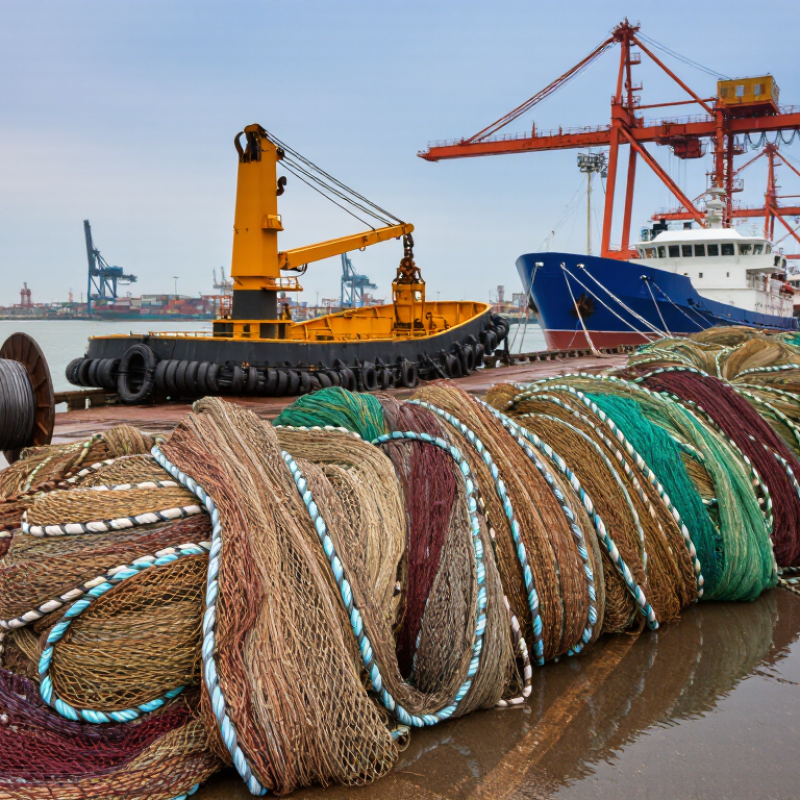
A multifilament fishing net is woven or knotted from yarn made of many fine filaments twisted together. Unlike a single, smooth strand, this yarn has a softer feel and a slightly textured surface. The finished net can bend and fold easily, which helps when crews handle, store, or mend it. It is used in fishing gear and some aquaculture applications, with mesh size and twine thickness chosen for the target catch and working conditions. Small details matter.
Tips: Check mesh size, knot quality, and twine diameter before choosing a net. Rinse away salt and debris after use, then dry it out of direct sunlight. Inspect worn sections often; a small snag can spread.
Multifilament nets are useful where flexibility and manageable handling are priorities. Their construction can also make repairs practical, depending on the net’s design and the damage. Still, softness alone does not guarantee greater strength or longer service life. Abrasion, prolonged sunlight, heavy loads, and poor storage can all shorten a net’s useful period. Match the net to the job, and check its condition regularly. In practice, the right choice is sometimes a compromise between handling, durability, and cost.
How the Global Supplier Market Is Organized
The global supplier market is organized in layers, not as a simple list of net makers. Polymer and yarn producers supply multifilament twine; netting mills turn it into mesh; regional converters add panels, ropes, floats, and finished assemblies. Importers and specialist distributors then match those products to vessel operators, aquaculture farms, and gear dealers. Some firms cover several stages. The map is not perfectly clean.
Demand follows a broad production base. FAO’s The State of World Fisheries and Aquaculture 2024 reports 223.2 million tonnes of fisheries and aquaculture production in 2022, including aquatic animals and algae. That figure is not a fishing-net sales estimate. It does show why suppliers serve distinct needs, from durable capture-fishing gear to lightweight farm enclosures. Buyers typically compare mesh size, twine diameter, knot construction, coating, and documented breaking strength. A neat specification sheet helps. Field performance still matters more.
Supplier geography reflects manufacturing skills and customer proximity. Large mills can offer consistent mesh and repeat orders, while smaller converters may adapt panels quickly or handle unusual dimensions. Quality checks should cover mesh opening, seam strength, UV resistance, and batch traceability. Ask for test methods, not just a strength number. FAO production statistics help explain the market’s scale, but they do not reveal supplier capacity or product quality. That distinction is easy to overlook.
Top Multifilament Fishing Net Suppliers Worldwide — How the Global Supplier Market Is Organized
Regional shares of global aquaculture animal production, 2022
Aquaculture production provides context for where demand for fishing nets may be concentrated; it is not a measure of fishing-net supplier market share. Asia accounted for the vast majority of global aquaculture animal production in 2022. Source: FAO, The State of World Fisheries and Aquaculture 2024.
Leading Multifilament Fishing Net Suppliers by Region
Asia-Pacific is a major sourcing region for multifilament fishing nets, with suppliers serving commercial fleets, aquaculture operations, and equipment distributors. Buyers can compare nylon or polyester yarns, mesh sizes, knot styles, and made-to-order panel dimensions. Ask for a sample and confirm measurements before placing a large order. Small differences matter.
European suppliers often emphasize technical documentation, consistent finishing, and traceable material specifications. These details can help buyers compare breaking-strength data and coating options across products. North American suppliers may offer practical advantages for regional customers, such as shorter delivery routes, local stock, or custom fabrication. Availability varies, though, and a nearby supplier is not automatically the best fit.
Regional strengths are useful clues, not guarantees. Request current test records for mesh dimensions and tensile performance, and check how the net handles abrasion and prolonged sun exposure. If possible, inspect a sample wet and dry; handling can feel different. A supplier’s answers about production tolerances, repair materials, and lead times also reveal how well its offer matches real working conditions. Even careful comparisons leave some uncertainty, so record agreed specifications in writing.
How Suppliers Differ in Materials, Products, and Manufacturing
Multifilament net suppliers differ less by catalog claims than by yarn control, mesh construction, and traceability. Polyamide often provides elasticity and abrasion resistance; polyester tends to hold its shape and absorb less water. Polypropylene is lightweight, but heat sensitivity may limit some uses. These are tendencies, not guarantees. Ask for denier, filament count, knot type, mesh opening, coating, and UV-stabilization records—not just a material name. Small details matter.
Manufacturing depth varies. Some suppliers purchase finished yarn and assemble nets; others manage twisting, heat-setting, finishing, and inspection. FAO’s The State of World Fisheries and Aquaculture 2024 reports global fisheries and aquaculture production of 223.2 million tonnes in 2022. Capture fisheries supplied 92.3 million tonnes of aquatic animals. For buyers, that scale makes consistent mesh dimensions and batch records practical concerns, not paperwork. Request test pieces and compare wet weight, mesh size, seam strength, and repairability. One weakness: a laboratory sample may not represent a full production batch. Independent checks help, but add time and cost.
Key Factors for Evaluating a Fishing Net Supplier
Choosing among top multifilament fishing net suppliers worldwide means looking beyond a polished catalog. Ask what yarn material and mesh size suit your target catch, fishing depth, and water conditions. A supplier should explain how it checks mesh dimensions, knot strength, and twine consistency across production batches. Small details matter. Request a sample, then inspect the knots and measure several mesh openings yourself. One sample cannot prove every batch will match, but it gives you useful questions to ask.
Tips: Request written specifications for twine diameter, mesh size, color, and treatment. Ask how the supplier tests UV exposure and abrasion, especially if nets will face strong sun or rough handling. Check production capacity and realistic lead times. Ask for evidence, not promises.
Reliable communication matters as much as technical quality. A capable supplier should answer specific questions clearly and explain what it can verify. Ask how defects are recorded and how replacements or repairs are handled. If specifications change, get the revised details in writing. A low price may look appealing, yet inconsistent mesh or weak knots can create extra work later. No checklist removes every risk; even careful buyers can miss something. That is why practical sampling and ongoing inspection remain worthwhile.