

Choosing a Turbo Intercooler is not just a question of size or price. It is a thermal-management decision that affects intake-air temperature, pressure drop, fitment, and durability. The U.S. Environmental Protection Agency’s Automotive Trends Report tracks powertrain technologies, including turbocharged engines, across the vehicle market. That broader picture matters: buyers are comparing parts for very different engines, driving conditions, and packaging limits. A component that works well on a daily-driven diesel may not suit a compact gasoline engine or a track-focused build.
The basic job is simple. Cool the compressed air before it enters the engine. The choice is not. Air-to-air units rely on vehicle airflow; air-to-water designs use a separate coolant circuit. Bar-and-plate and tube-and-fin cores bring different trade-offs in weight, heat capacity, and pressure loss. SAE International technical literature on charge-air cooling offers useful engineering context, but published test results do not automatically predict performance in every vehicle. Installation, airflow, ambient temperature, and engine calibration all matter.
That is where buyers can get misled. A large core may look impressive, yet poor ducting can leave it underperforming. We compare ten common Turbo Intercooler types by design, typical strengths, limitations, and fitment considerations. The aim is practical guidance, not a universal winner. Check the data. Then check your setup. Some choices remain a compromise, and that deserves an honest look.
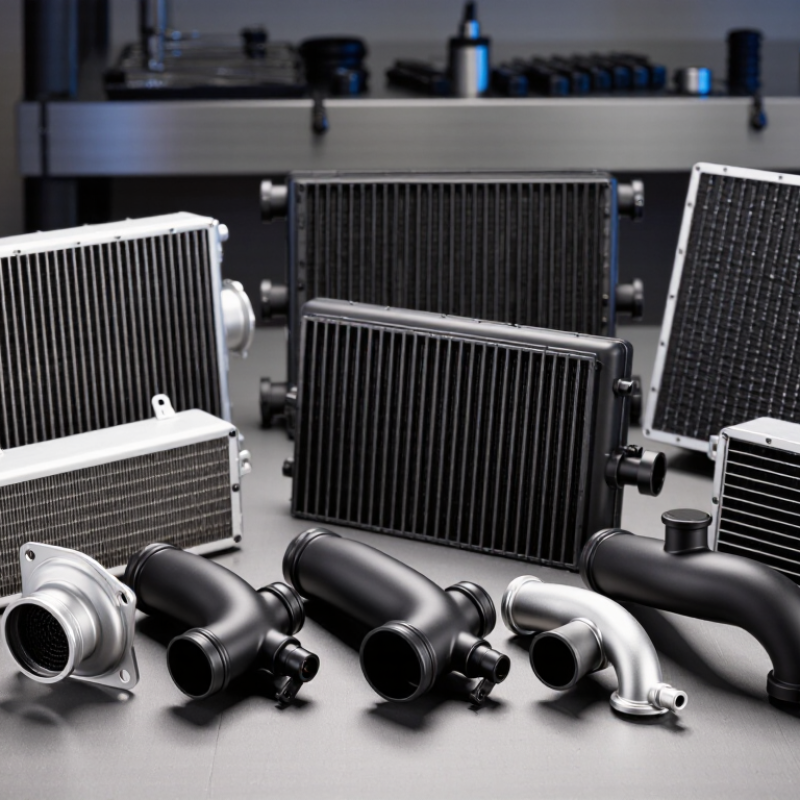
Turbocharging packs more oxygen into an engine, but compressing air also raises its temperature. Hotter air is less dense. An intercooler sits between the compressor and engine, removing some of that heat before the air enters the cylinders. It works as a compact heat exchanger.
Heated air travels through small tubes, while attached fins increase the surface area available for cooling. As air passes over the fins, heat transfers from the charge air into the surrounding airflow. Simple, but not effortless. Air-to-air designs use outside air directly; air-to-water systems move heat into coolant, which releases it through a separate radiator. Both approaches have trade-offs.
At low road speeds, an air-to-air core may receive less fresh airflow, and repeated acceleration can cause heat soak. An air-to-water system behaves differently, but adds a pump, hoses, and coolant that need inspection. Core size alone tells little. Fin design, pressure drop, duct sealing, and installation space also affect performance.
A loose shroud can let cooling air bypass the core. Temperature readings taken before and after the intercooler under repeatable conditions are more useful than one casual reading. Colder air is not the only goal; excessive restriction can also limit airflow to the engine. That trade-off deserves a second look.
Top 10 Turbo Intercooler Types for Buyers?
Core Designs and Airflow Configurations
Tube-and-fin and bar-and-plate are two common core constructions. Tube-and-fin cores use lightweight passages with fins between them, while bar-and-plate cores stack solid plates and bars. The latter often tolerate more physical stress, but can add weight and restrict airflow if poorly matched to the vehicle. Neither design wins in every installation. Core size, fin density, and available space matter.
Air-to-air intercoolers use outside air to cool the compressed intake charge. Air-to-water designs circulate coolant through a separate heat exchanger, allowing flexible placement but adding pumps, hoses, and service points. Airflow through the core may run crosswise or vertically, while the charge path can use a single pass or multiple passes. A longer path can improve heat transfer, yet may also increase pressure drop. Small details matter. Check how the inlet and outlet tanks guide flow; sharp turns or uneven distribution can leave parts of the core underused. Comparing designs by name alone is a weak shortcut. Measure fit, pressure drop, and cooling needs for the actual engine setup, then accept that the “best” core may still be a compromise.
| No. | Type | Core Design or Airflow Configuration | Typical Strengths | Buyer Considerations |
|---|---|---|---|---|
| 1 | Bar-and-Plate Air-to-Air | Stacked plates and bars form passages for compressed air and ambient cooling air, usually in a crossflow layout. | Robust construction and substantial core mass can help manage repeated heat loads. | Often heavier than tube-and-fin designs. Actual cooling and pressure drop depend on core dimensions and passage design. |
| 2 | Tube-and-Fin Air-to-Air | Charge air travels through tubes; external fins increase the surface area exposed to ambient airflow. | Can offer a relatively light, compact package for many road-vehicle installations. | Compare core capacity, fin protection, pressure drop, and construction quality; the design name alone does not determine performance. |
| 3 | Air-to-Water | A liquid-cooled core transfers heat from charge air to a separate coolant circuit. | Can be packaged close to the engine and may reduce charge-pipe length. | Requires a pump, coolant, hoses, and a heat exchanger. Heat rejection and heat soak depend on the complete cooling circuit. |
| 4 | Front-Mount Air-to-Air | An air-to-air core is installed at the front of the vehicle, where it can receive oncoming airflow. | Often benefits from strong airflow while the vehicle is moving and can accommodate a sizable core. | Check available space, airflow obstruction to other heat exchangers, pipe routing, and potential pressure drop. |
| 5 | Top-Mount Air-to-Air | The core sits above the engine and typically relies on a hood opening or duct to direct outside air through it. | Can use short charge-air piping and fit vehicles designed around this layout. | Air delivery and shielding matter; exposure to engine-bay heat and limited airflow at low vehicle speeds can affect performance. |
| 6 | Side-Mount Air-to-Air | A compact core is positioned beside the engine or in a side body cavity, with ducting supplying ambient air. | Can suit installations with limited front-end space and may preserve a relatively short pipe route. | Available core area and duct airflow may be constrained. Verify that the inlet and outlet ducts are not obstructed. |
| 7 | Single-Pass Core | Charge air crosses the core once from its inlet region to its outlet region; the external cooling-air path is commonly crossflow. | A straightforward layout that can keep the charge-air route relatively direct. | Port position and core dimensions affect flow distribution, pressure drop, and fitment. |
| 8 | Dual-Pass Core | Internal partitions route charge air through two sections of the core before it exits, often with inlet and outlet ports on the same side. | Can help accommodate particular port locations or packaging requirements. | The longer internal route can add pressure drop; suitability depends on the core design and the engine’s airflow demand. |
| 9 | Vertical-Flow Core | Charge air travels through the core from top to bottom or bottom to top; ambient air generally passes across the core face. | May suit a tall, narrow installation or specific inlet and outlet locations. | Confirm the core orientation, tank layout, ducting, and clearance against the vehicle’s available space. |
| 10 | Integrated Water-to-Air Charge Cooler | A compact liquid-cooled core is built into or mounted directly to an intake manifold or charge-air assembly. | Can reduce the distance between the cooler and intake ports, supporting compact packaging. | Requires a properly sized coolant circuit and heat exchanger. Check service access, coolant routing, and heat-soak behavior. |
Note: These categories overlap: placement (front-, top-, or side-mount), core construction, cooling medium, and internal flow path describe different design attributes. Compare the complete installation, including airflow, pressure drop, cooling capacity, and fitment.
Turbo intercoolers differ by cooling method, location, core construction, and internal airflow path. Air-to-air units use outside air to cool compressed intake air; they are simple, but depend on airflow through the vehicle’s nose. Air-to-water units circulate coolant through a separate heat exchanger. They can fit tighter spaces, though their pump and coolant circuit add complexity.
Front-mount, top-mount, and side-mount designs describe placement, not core technology. A front mount gets strong airflow but may need longer piping. A top mount keeps pipes short, yet can absorb heat from the engine. Side mounts save space. Often, that means a smaller core.
Core construction brings another distinction. Tube-and-fin cores are generally lighter, while bar-and-plate cores use thicker plates and can be more durable, though they may weigh more. Single-pass designs route air across the core once; multi-pass designs redirect it through additional sections. More passes do not automatically mean better cooling. They can also increase pressure loss.
The final two buyer categories are stock-replacement and universal-fit intercoolers. Stock-replacement units are shaped for a particular vehicle layout; universal units usually require more measurement and fabrication. These categories overlap: a front-mount intercooler can also be bar-and-plate and multi-pass. Check core dimensions, inlet and outlet positions, clearance, and pressure drop before choosing. A large core may look reassuring. It can still be the wrong fit. I find fitment easy to underestimate.
Intercooler listings often mix core design, cooling method, and mounting position, so “ten types” may not mean ten completely different products. Common choices include air-to-air and air-to-water systems; bar-and-plate and tube-and-fin cores; and front-, top-, or side-mounted layouts. Single-pass and dual-pass designs describe airflow paths, while end-tank shapes affect how air moves through the core. Fitment comes first.
For a street-driven car, a well-sized front-mount air-to-air unit can provide steady cooling without adding a pump, reservoir, or extra hoses. A top-mount setup may suit a vehicle with limited front space, but it can absorb heat while the car sits in traffic.
Air-to-water systems can package neatly and respond quickly, though their additional components need room and maintenance.
There is a trade-off.
Choose by engine output, available space, climate, and how the vehicle is used. A larger core is not automatically better: it can increase pressure loss or block airflow to the radiator. Check core dimensions, inlet and outlet positions, and clearance behind the bumper before ordering. For towing or repeated hard pulls, monitor intake temperatures under load rather than judging performance from a brief test drive. One detail is easy to miss: poorly routed piping can make a capable intercooler difficult to install and service.
Choosing among air-to-air, air-to-water, tube-and-fin, and bar-and-plate intercoolers starts with fitment. Measure core width, height, and thickness, then check inlet and outlet diameters. Compare mounting points and hose paths with the vehicle’s actual layout. Leave clearance for the radiator, fans, and nearby pipes. A larger core may seem better, but it can restrict airflow or require awkward modifications. Measure twice. Catalog dimensions do not show every obstruction.
Material and construction affect weight, durability, and heat transfer. Aluminum is common because it is relatively light and conducts heat effectively. Bar-and-plate cores are often robust, while tube-and-fin designs may reduce weight; actual performance depends on design and installation. Inspect welds, end tanks, and connection surfaces for visible defects. I would not judge quality by appearance alone. Ask for verified dimensions and pressure specifications, and confirm they suit the intended setup.
Tips: Keep the fins clear of leaves and road debris. Check clamps and couplers for movement or oil residue during routine inspections. After installation, have the system checked for leaks under appropriate test conditions. Small gaps matter. Service needs vary with driving conditions, and a maintenance interval that works for one vehicle may not suit another.


