What Are the Top Types of AI Robots for Businesses?
Businesses are moving beyond the question of whether automation belongs on the factory floor. They want to know which machine can solve a specific problem without creating new ones. An Ai Robot might weld metal, carry bins, guide visitors, or inspect equipment with a camera. Each role demands different levels of mobility, precision, and human supervision. AI researcher Andrew Ng has said, “Artificial intelligence is the new electricity.” The comparison captures AI’s broad potential, though it does not mean every robot needs advanced AI.
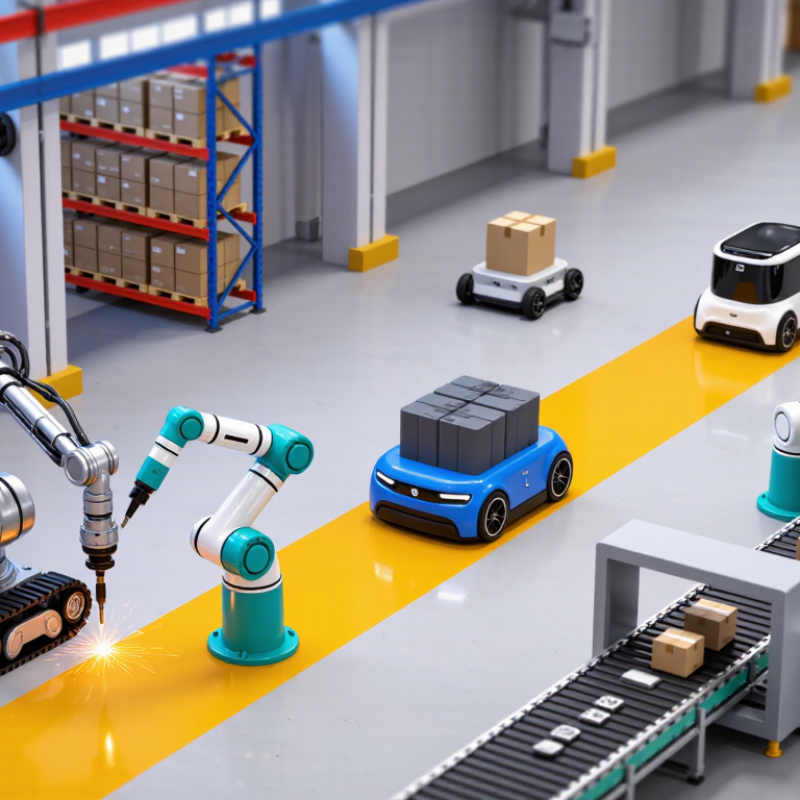
This guide examines major business robot types, including industrial robots, collaborative robots, autonomous mobile robots, delivery robots, and inspection robots. Picture a mobile robot following marked routes through a warehouse, or a collaborative arm placing parts beside an employee. Useful details include payload, operating environment, integration needs, maintenance, and measurable return on investment. Not every task needs a robot. Some deployments also disappoint when workflows are poorly mapped or staff receive too little training. That matters. The categories can overlap, and product labels sometimes obscure real capabilities. A robot called “autonomous” may still depend on carefully prepared routes and human support. Comparing actual tasks, safety features, and operating costs gives businesses a clearer starting point than chasing impressive demonstrations. The right choice is rarely the most futuristic machine; it is the one that works reliably in the conditions a business actually has.
What Defines an AI Robot in a Business?
An AI robot in a business combines a physical machine, sensors, software, and the ability to act on its surroundings. It may use cameras or lidar to detect shelves, people, or obstacles, then adjust its route or task. A fixed machine repeating the same motion is automated, but not necessarily AI-driven. That distinction matters. AI adds interpretation and adaptation, though neither is perfect.
The International Federation of Robotics (IFR) reported about 205,000 professional service robots sold worldwide in 2023. Transportation and logistics accounted for roughly 113,000, according to its World Robotics 2024 report.
Think of a warehouse robot that reads a changing aisle, carries a tote, and pauses when a person crosses its path. The defining feature is the feedback loop: sensing, deciding, acting, and checking what happened.
Physical robots are not the only business systems called AI robots; software agents can also complete digital tasks. The term can be fuzzy. IFR’s World Robotics 2024 report also recorded 541,302 industrial robot installations in 2023, but that figure does not mean every installed robot uses AI. Businesses should check what a system actually perceives, decides, and handles without human input. Ask how it behaves when a label is smudged or an aisle is blocked. Sometimes, a person still needs to take control.
How Are Business AI Robots Classified by Function?
Businesses can classify AI robots by the work they perform, rather than by their shape. This makes comparisons more practical. A compact wheeled unit and a large autonomous vehicle may both handle materials, but their operating needs differ.
Material-handling robots transport goods, sort parcels, or move components between workstations. In a warehouse, one might carry a tote from a storage aisle to a packing bench. Collaborative robots assist with repetitive tasks, such as placing parts into a fixture or tightening fasteners. They can work near employees, though safe layouts and clear handoff procedures still matter. Small details count.
Inspection and maintenance robots gather data from equipment or hard-to-reach areas. Cameras, thermal sensors, and microphones can help detect unusual heat, vibration, or visible damage. Service robots perform practical support tasks, such as delivering supplies or guiding visitors through a facility. Some systems combine these roles, so the categories are not perfectly tidy. That can complicate purchasing decisions. Teams should match a robot’s function to a measurable need, then test it in the actual workspace. A short pilot may reveal bottlenecks that a product description misses. Humans still need to review exceptions and respond when conditions change.
How Do Industrial and Collaborative Robots Support Production?
Industrial robots support production by taking on repeatable, physically demanding tasks. They can weld metal frames, move heavy components, or place parts with consistent timing. In a typical cell, sensors check a part’s position before the robot begins its programmed motion. This can reduce variation between shifts and help protect workers from repetitive strain. Setup still matters. A poorly positioned feeder can leave an expensive robot waiting.
Collaborative robots, or cobots, are designed for tasks shared with people, such as assembling small components or tending a machine. An operator might load a fixture while the robot tightens screws nearby. Force limits and safety sensors can help manage contact risks, but they do not make every workspace automatically safe. Teams need to assess the task, layout, and likely human movements before production begins. Small details count.
The two types can complement each other. Industrial robots often suit fast, stable processes, while cobots can offer flexibility where products or workstations change more often. However, cycle time is only one measure of success. A robot cell may look efficient on paper and still create delays when parts arrive inconsistently or maintenance is difficult. Track downtime, defect rates, and operator feedback during trials. Adjust the workflow, then measure again.
How Do Mobile and Service Robots Improve Daily Operations?
Mobile and service robots reduce repetitive movement during busy shifts. A mobile robot can carry bins between storage, packing, and dispatch areas. A service robot may deliver supplies through hotel corridors or move meals across a care facility. Staff spend less time pushing carts and more time handling exceptions. That matters.
The International Federation of Robotics reported nearly 205,000 professional service robots sold worldwide in 2023, up 30% from 2022. Transportation and logistics robots accounted for about 113,000 units.
These figures show growing adoption, not guaranteed savings for every business. A robot still needs clear routes, safe handoff points, and someone to respond when a lift is busy or a corridor is blocked. Not magic.
Practical gains often come from small changes. In a warehouse, scheduled runs can keep replenishment bins moving during peak hours. In a hotel, deliveries can reduce staff trips between service areas and guest floors. Managers should track travel time, missed tasks, and worker feedback before expanding a fleet.
The awkward part is that robots can expose weak workflows rather than fix them. A poorly placed shelf remains poorly placed.
Where Do Humanoid and Specialized Robots Fit in Business?
Humanoid and specialized robots solve different business problems. A humanoid shape can help when a robot must use tools, shelves, or work areas designed for people. But human-like movement alone does not make a task efficient. In a warehouse, a wheeled robot may move totes more simply; on a production line, a fixed arm can repeat a precise weld. The International Federation of Robotics reported 4.28 million industrial robots operating worldwide in 2023, with 541,302 installations that year, in World Robotics 2024. The scale points to established automation, not proof that humanoids are ready for every workplace. That distinction matters.
Specialized robots are often the practical choice for stable, measurable tasks: moving materials, sorting parcels, or inspecting equipment. IFR’s World Robotics 2024 service-robot report recorded about 205,000 professional service robots sold in 2023, up 30 percent year over year. Humanoids may fit mixed-use settings where layouts change and existing equipment is built for people, but businesses should test reliability, downtime, safety, and total operating cost before expanding a pilot. The awkward part? Real facilities are messy. A robot that succeeds in a clear demo may still struggle with a crowded aisle or an unexpected box. Industry-wide robot figures also cannot tell a manager which design will pay back in one specific workflow.