

An Electric Stacker Lift is a powered machine designed to raise and move palletized loads across relatively short distances. Its forks slide beneath a pallet, while an electric motor raises the load along a vertical mast. Depending on the model, an operator may walk behind the machine or ride on a small platform. The controls, battery, wheels, mast, and forks work together in a compact footprint. Small machine. Useful reach. Capacity and lift height vary, so the rating plate and manufacturer’s specifications matter more than appearance.
In warehouses, workshops, and stockrooms, stackers can help place goods on shelving or move pallets through narrow aisles. They are often considered where a full-sized forklift would be impractical, but they do not suit every load or floor. Uneven surfaces, tight turns, and heavy pallets can change how safely a machine handles. It is easy to assume that electric power makes operation simple; that assumption deserves a second look. Operators still need appropriate instruction, a clear view, and a load kept within the machine’s limits. This guide explains what an Electric Stacker Lift is, how its main parts function, and what to consider when choosing one. Real working conditions matter, and specifications alone cannot tell the whole story.
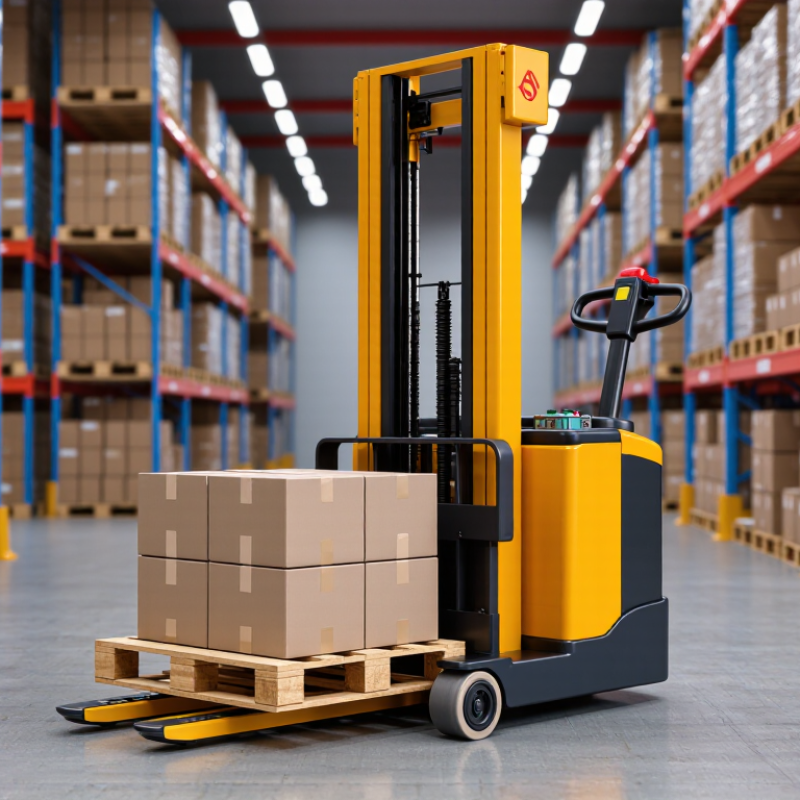
An electric stacker lift is a powered material-handling machine designed to raise and move palletized loads over short distances. Its forks slide beneath a pallet, then an electric lifting system raises it to a practical working height. Some models also use powered travel; others are guided by a walking operator. The exact controls and lifting range depend on the machine’s design.
Its basic purpose is to place pallets on shelving, retrieve them, or move them between nearby work areas. In a compact warehouse, it can handle tasks that would otherwise require repeated manual lifting. Picture a pallet being raised just high enough to clear a shelf beam, with the operator steering along a marked aisle. That is the basic job. A stacker is not a substitute for every forklift: load weight, lift height, aisle width, floor condition, and turning space all affect whether it fits a task. Those details can be easy to underestimate. Choosing one only by its advertised lift height may lead to an awkward setup. Operators should check the machine’s rated capacity at the required lift height and follow its operating instructions.
An electric stacker is a powered warehouse truck designed to lift and position palletized loads, often in aisles where a larger forklift may be less practical. The chart compares indicative lift-height ranges for common material-handling equipment; actual specifications vary by design and model.
Bars show approximate low-to-high lift-height ranges in metres, not rated specifications for a particular product.
An electric stacker lift raises and moves palletized loads using a powered drive system and lifting mechanism. The operator guides it with a handle or control tiller, while buttons or switches command travel and fork movement. On many models, a battery powers both functions, though designs vary. The forks slide beneath a pallet, then rise as the operator activates the lift control. A hydraulic system commonly provides the lifting force. Small motions matter.
As the forks climb, the mast guides them upward and helps keep the load aligned. The operator should keep the pallet centered and watch for overhead obstructions. To travel, they steer at a controlled pace, with the load low enough to improve stability. A turn that feels harmless can still shift a poorly balanced load. Not every floor is even, either; ramps and rough surfaces may affect control. Check the equipment manual and rated capacity before use.
Tips: Inspect the forks, wheels, and controls before work. Keep the path clear, lift only stable loads, and lower the forks before moving through tight spaces. If the lift responds oddly, stop and report it rather than guessing.
An electric stacker lift combines powered travel with a lifting system for moving palletized goods. Its mast guides the carriage upward, while the forks slide beneath a pallet. Fork length and spacing affect how securely different loads sit.
That fit matters.
An electric motor drives the wheels, and a separate motor typically powers a hydraulic pump for lifting. The pump sends fluid to a cylinder, raising the forks along the mast. A rechargeable battery supplies power; its charge level influences how consistently the machine performs through a shift.
The tiller or control handle lets an operator steer, travel, and raise or lower the load. Brakes help stop the stacker, while load wheels support movement beneath the forks.
Small details count.
The frame and load backrest help support the load, but neither makes an unstable pallet safe. Operators should check the forks, wheels, controls, and visible hydraulic lines before use. A clean floor and evenly placed load also make handling more predictable.
One detail is easy to overlook: a stacker may lift a rated load yet feel less stable when that load is raised high. Check the load chart and operating instructions for the specific machine.
What Is an Electric Stacker Lift?
Common Types of Electric Stacker Lifts
Electric stackers lift and move palletized loads in aisles where a full-size forklift may be impractical. Their designs differ in how the operator travels and how the machine supports the load. OSHA classifies electric hand trucks and hand/rider trucks as Class III powered industrial trucks. That category includes equipment with different operating styles, so check the specific model’s capacity and operating instructions.
Walkie stackers are steered on foot, with the operator walking behind the machine. They suit short moves and lower-to-mid-level rack storage; their compact footprint can help in narrow aisles. Rider stackers add a platform or standing area for longer travel. Straddle stackers use legs that extend around the pallet, while counterbalanced models use machine weight to support loads without straddle legs. That matters when pallets sit close to racks or shelving.
OSHA materials cite an estimate of 85 annual deaths and 34,900 serious injuries involving powered industrial trucks; these figures are not specific to stackers. They underline why load height, floor condition, visibility, and operator training matter. A detail I would check on-site: will the support legs clear the actual pallet? A drawing may not show that snag. Walk the route before choosing.
| Stacker Type | How It Works | Typical Rated Capacity | Typical Lift Height | Best Suited For | Key Consideration |
|---|---|---|---|---|---|
| Walkie Electric Stacker | The operator walks behind or beside the powered truck and controls travel and lifting with a handle. | About 1,000–2,000 kg (2,200–4,400 lb) | About 1.6–5.5 m (5–18 ft) | Short-distance pallet movement, low-to-medium rack storage, and loading areas with limited space. | Travel speed and suitability for long routes are generally lower than those of ride-on models. |
| Straddle Stacker | Outriggers extend around the pallet to support the load while the forks raise it. | About 1,000–2,000 kg (2,200–4,400 lb) | About 1.6–5.5 m (5–18 ft) | Stacking open-bottom pallets in warehouses and stockrooms. | The outriggers need clearance beside the pallet; some closed-bottom or oversized loads may not fit. |
| Counterbalance Stacker | A rear counterweight balances the load, so front outriggers are not needed. | About 1,000–2,000 kg (2,200–4,400 lb) | About 1.6–5.0 m (5–16 ft) | Handling closed-bottom pallets, skids, or loads that cannot accommodate straddle legs. | Typically requires more operating space than a comparable straddle model. |
| Reach Stacker | A reach mechanism extends the forks and load forward into a rack, then retracts them for travel. | About 1,000–2,000 kg (2,200–4,400 lb) | About 2.5–5.5 m (8–18 ft) | Higher-density storage and rack aisles where forward load placement is useful. | Capacity can decrease as the load is raised or extended; check the truck’s load chart. |
| Ride-On Electric Stacker | The operator stands on a platform or rides on a compact platform-equipped truck while traveling. | About 1,200–2,000 kg (2,650–4,400 lb) | About 1.6–5.5 m (5–18 ft) | Facilities with frequent or longer-distance pallet transport between storage and work areas. | Needs appropriate aisle and turning space; platform and operating features vary by model. |
| Note: An electric stacker is a powered material-handling truck that lifts and moves palletized loads. The capacity and lift-height figures above are indicative ranges, not specifications for every model. Actual performance depends on the truck design, load center, mast configuration, battery, and operating conditions; consult the manufacturer’s load chart before use. | |||||
Typical Uses and Operating Considerations
An electric stacker is a battery-powered machine that lifts and moves palletized loads. Walk-behind models suit compact warehouses, retail stockrooms, and loading areas. Operators use them for short trips and placing goods on low or mid-height racks. They can save effort where a full-size forklift feels oversized, but they are not suitable for every aisle or load.
Check rated capacity, load center, lift height, and turning clearance before choosing a machine. Uneven floors, tight corners, and overhead obstructions can change how safely it operates.
OSHA’s Powered Industrial Trucks guidance cites about 85 deaths and 34,900 serious injuries annually involving powered industrial trucks in the United States; these figures cover the wider truck category, not stackers alone. A layout can look spacious on a drawing; pallet corners often disagree.
Tips: Keep loads low while travelling, move at a controlled speed, and check the route for people or debris. Confirm the battery is charged and the forks are fully under the pallet. Operators should receive appropriate training. A quick pre-use check can catch damaged forks, worn wheels, or faulty controls before work begins.


