Why Choose a Plastic Cup Lids Making Machine?
Choosing the right Plastic Cup Lids Making Machine can shape production quality, operating costs, and customer satisfaction. It is not simply a purchase decision. It is a long-term manufacturing commitment.
In a busy packaging facility, the machine must form lids accurately and consistently. Each cycle should deliver stable dimensions, clean edges, and reliable stacking. Operators also need practical controls, clear maintenance access, and quick changeover options. These details matter when production runs continue for many hours.
A suitable Plastic Cup Lids Making Machine should match the material, lid design, output target, and available workspace. Buyers should examine forming speed, heating control, mold compatibility, energy use, and safety features. Technical documents and real production samples provide stronger evidence than attractive brochures. Experienced suppliers can explain how different plastics behave during heating and forming. They should also offer installation guidance, training, spare parts, and responsive service.
No machine is perfect. That matters. A high-speed model may require more skilled operators or stricter material control. A lower-cost option may create hidden expenses through downtime and rejected lids. Some buyers overlook these trade-offs. That assumption can fail.
Reliable decisions come from comparing verified specifications, factory performance, warranty terms, and after-sales support. Production teams should test actual materials before signing a purchase agreement. They should record cycle times, defect rates, and energy consumption. Careful evaluation creates a safer path toward efficient, consistent, and responsible lid manufacturing.
What Is a Plastic Cup Lids Making Machine?
What Is a Plastic Cup Lids Making Machine?
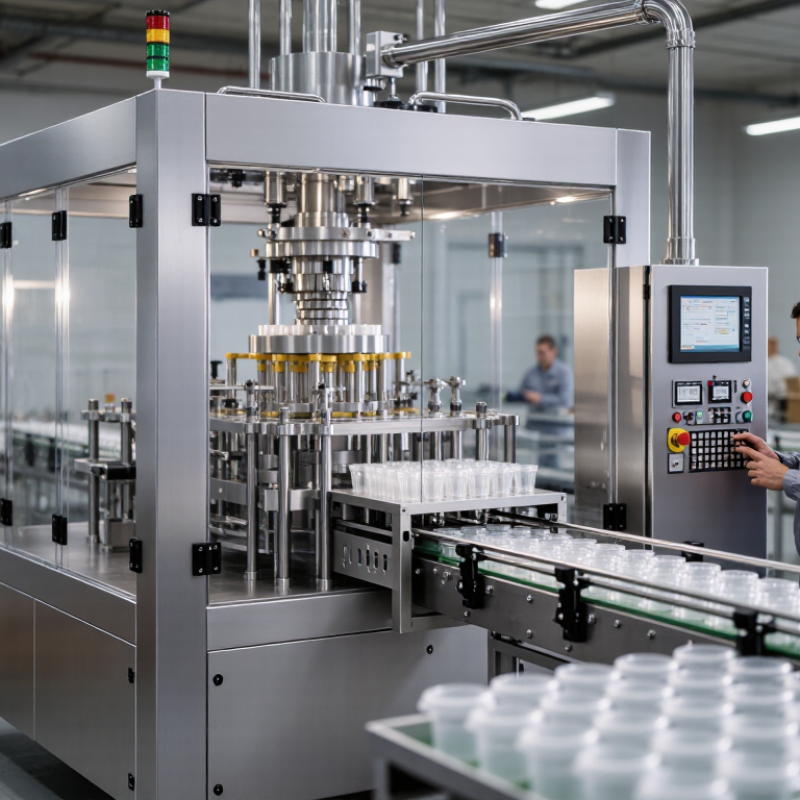
A plastic cup lids making machine is industrial equipment that forms covers for disposable or reusable cups. It usually heats plastic sheets, shapes them inside molds, and cuts each lid precisely. Depending on the mold, it can produce flat lids, dome lids, straw openings, or drinking slots. Some systems also stack finished lids automatically, reducing manual handling during production.
In practical production, operators check heating temperature, mold pressure, cutting accuracy, and stacking alignment. These details affect sealing performance and the lid’s appearance. A small temperature drift can create weak edges or uneven shapes. Material selection also matters. Food-contact applications require suitable plastic and controlled processing conditions. A machine is not magic. Setup errors still happen. Experienced technicians adjust speed and heat after observing actual samples, not only digital readings. This hands-on step is easy to underestimate.
Tips: Keep molds clean and inspect cutting edges regularly. Record temperature, pressure, and output changes for each production run. Test several lids from different moments, especially after starting the machine. Do not judge quality from one perfect sample. Review rejected lids carefully; they often reveal cooling problems, feeding errors, or worn components. Small checks matter.
How Does a Plastic Cup Lids Making Machine Work?
A plastic cup lids making machine converts a flat plastic sheet into formed lids through a controlled sequence. The process begins when a roll or pre-cut sheet enters the feeding unit. Heated plates soften the material without melting it completely. Temperature must match the plastic grade and sheet thickness. Too much heat can create thin rims. Too little heat leaves sharp, uneven edges.
The softened sheet moves over a forming station. Vacuum, compressed air, or both pull the plastic against a cup-lid mold. Small vent holes help the material follow details, including the drinking opening and sealing ring. After cooling, a cutting tool separates each lid from the web. Some machines add automatic stacking. Sensors can monitor sheet position and heating zones. Operators still need to check samples by hand. A lid may look acceptable yet leak under pressure.
In a practical trial, technicians measure rim diameter, fit, thickness, and opening accuracy at regular intervals. They also watch for warping after stacking. Production is rarely perfect. Changes in room temperature, material moisture, or mold wear can affect results. I would record every adjustment rather than trust one successful batch. Cleaning the forming area matters too. Scraps can mark the lid surface or disturb the seal. Clear records make troubleshooting more reliable and help buyers compare machine performance honestly.
Why Choose a Plastic Cup Lids Making Machine?
A plastic cup lids making machine integrates heating, forming, cooling, trimming, and stacking into one continuous production process. The chart compares typical processing-temperature ranges for common lid materials, which helps manufacturers select suitable heating and forming settings.
Polypropylene is widely used for lightweight, heat-resistant lids, while polystyrene and PET are selected for different clarity, stiffness, and application requirements. Actual temperatures vary according to sheet thickness, machine design, mold cooling, and material grade.
Which Materials and Lid Types Can It Produce?
A plastic cup lids making machine can process several materials, depending on its heating, forming, and cutting systems. Polypropylene, or PP, is widely used for flexible, heat-resistant lids. PET offers clarity and stronger visual appeal. PS forms easily, but its use is declining in many markets. Some machines also process PLA-based sheets, when temperature control and tooling are properly matched.
Lid design is equally important. One machine can produce flat lids, dome lids, straw-slot lids, sipping lids, and lids with raised openings. Dome molds suit whipped drinks and toppings. Flat lids use less material and stack efficiently. Small details matter. A poorly aligned cutting edge can create sharp rims or weak sealing points. Experienced operators adjust heating zones, mold pressure, and cooling time for each material.
The OECD’s Global Plastics Outlook reports that packaging created about 40% of global plastic waste in 2019. This figure makes lightweighting more than a cost issue. It is also a design responsibility. Smithers’ Future of Global Packaging to 2028 identifies sustainability and material efficiency as major packaging directions. Recycled-content sheets may reduce virgin plastic use, but they can vary in color, thickness, and forming behavior. That inconsistency is easy to underestimate. A reliable machine should support quick mold changes, stable temperature control, and accurate lid trimming. For high-volume production, these features reduce scrap while keeping different lid styles practical.
What Benefits Does It Offer Manufacturers?
Why Choose a Plastic Cup Lids Making Machine?
What Benefits Does It Offer Manufacturers?
A plastic cup lids making machine can improve production consistency. In daily factory work, manual forming often creates uneven edges, weak sealing areas, and different lid shapes. Automated forming keeps temperature, pressure, and cycle timing more stable. This helps manufacturers produce lids that fit cups more reliably. Small details matter. A loose lid can cause spills during transport.
The machine also supports higher output with fewer repetitive tasks. Operators can monitor material feeding, heating zones, mold pressure, and stacking systems from one control panel. Servo-driven movement may reduce unnecessary motion and improve positioning accuracy. Depending on the design, one production cycle can create several lids. This can lower labor pressure and make scheduling easier. However, faster output is not always better. Poor cooling or rushed adjustments can increase scrap.
Modern equipment can also reduce material waste through controlled forming and accurate cutting. Manufacturers may use inline inspection to identify cracked lids, incomplete shapes, or poor trimming. Production records help technicians trace problems instead of guessing. This supports more dependable quality control and easier maintenance planning. I have seen factories focus heavily on speed while overlooking cleaning and mold checks. That decision often creates avoidable downtime. A reliable machine still needs trained operators, suitable materials, and regular inspection. Manufacturers should compare cycle speed, energy use, mold compatibility, safety features, and after-sales technical support before investing.
What Factors Should You Consider Before Choosing One?
Why Choose a Plastic Cup Lids Making Machine?
What Factors Should You Consider Before Choosing One?
Choosing a plastic cup lids making machine starts with the lid, not the machine. Check the required diameter, rim shape, stacking design, and opening feature. A small mismatch can cause leakage or poor sealing. Confirm that the equipment supports your chosen material, such as PP or PET. Food-contact compliance must be documented, not simply promised.
Production speed matters, but stable output matters more. Ask for tested cycle times under similar conditions. Review the heating system, forming pressure, trimming accuracy, and automatic stacking. Inspect sample lids closely. Uneven edges and thin corners often reveal weak process control. I have seen fast equipment create more waste during long production runs.
Tool changes should be practical. Measure changeover time and ask how many operators are needed. Examine access to heaters, molds, sensors, and cutting parts. Clear maintenance instructions reduce avoidable downtime. Energy use also affects the real purchase cost. A cheaper machine may consume more power and require frequent replacement parts.
Do not overlook technical support. Request training, spare-part availability, and service response details in writing. Ask for references from factories with comparable production needs. I once focused too heavily on output and underestimated cleaning time. That decision looked efficient at first. It was not. A careful factory trial can expose problems before installation.