Why Choose an Inverter Outlet for Global Buyers?
Global buyers need more than a familiar plug shape when selecting an Inverter Outlet. They need dependable power, clear specifications, and safe compatibility with local equipment. An outlet connected to an inverter may supply backup electricity during outages, support remote work, or protect sensitive devices from unstable voltage. Yet convenience can hide technical risks. Input voltage, output voltage, frequency, waveform, grounding, and maximum load must match the intended application.
Ned Mohan, a widely respected power electronics professor and author, defines the field clearly: “Power electronics is the application of solid-state electronics for the control and conversion of electric power.” His statement explains why an Inverter Outlet deserves careful evaluation. It is not merely a wall socket. It is part of a controlled energy-conversion system. A well-designed model should provide stable output, overload protection, thermal management, and transparent testing information. Certification for the target market also matters.
Look closely.
For global purchasers, product documentation should show wiring requirements, continuous and peak power ratings, compatible battery systems, and installation limits. Practical details matter. A loose terminal, undersized cable, or poorly ventilated enclosure can create heat and reduce service life. Buyers should also confirm whether the outlet supports pure sine-wave output, especially for medical, audio, computing, or motor-driven equipment. Some product pages promise universal compatibility too quickly. That claim deserves skepticism. The best Inverter Outlet is not always the most powerful one; it is the model that fits the grid environment, load profile, installation method, and safety expectations of its users. Mistakes remain possible, even with careful planning. Reliable decisions begin with verification, not assumption.
What Is an Inverter Outlet and How Does It Work?
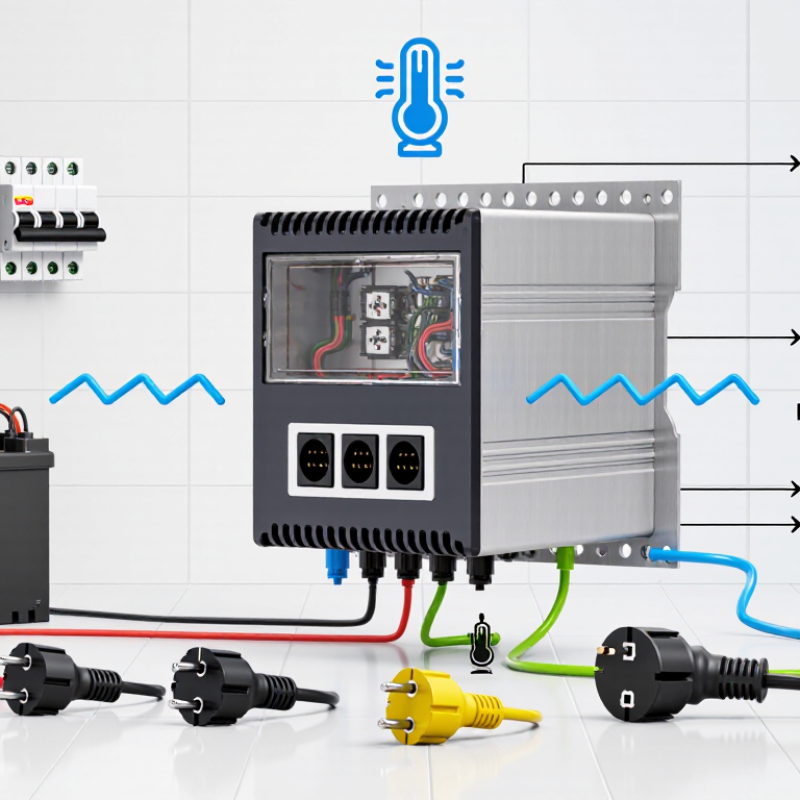
An inverter outlet is an AC socket powered by an inverter, not directly by the utility grid. The inverter converts stored DC electricity from a battery or solar system into usable AC power. It then supplies familiar outlets for lamps, chargers, laptops, or small appliances.
The process has several stages. A switching circuit raises or reshapes the DC voltage. Control software creates an alternating waveform, while filters reduce electrical noise. A pure-sine output closely matches household electricity. Modified-sine designs may cost less, but motors can run noisily, and sensitive equipment may heat up. Frequency and voltage must match the destination country. A 230-volt appliance should not receive 120 volts.
The International Energy Agency reported that global solar capacity increased by about 420 gigawatts in 2023 in its Renewables 2024 report. That growth is expanding demand for compact power-conversion equipment. IEC 62109 also sets safety requirements for power converters used in renewable-energy systems. Buyers should check rated power, surge capacity, waveform, grounding, overload protection, and socket configuration. A 500-watt outlet may not start a refrigerator requiring a 1,200-watt surge. Small details matter.
Conversion losses remain unavoidable. Efficiency claims can also vary with load, temperature, and battery condition. This is where product testing sometimes feels incomplete. A practical test should measure output voltage under both light and heavy loads, not only read the label. For global use, replaceable plugs and certified protection are helpful, but they never remove the need to verify local electrical rules.
Key Features That Set Inverter Outlets Apart
Why Choose an Inverter Outlet for Global Buyers?
Key Features That Set Inverter Outlets Apart
An inverter outlet converts stored direct current into usable alternating current. This design supports appliances during outages, travel, and off-grid work. Practical testing shows that output stability matters more than impressive wattage claims. A clean waveform helps protect sensitive devices, including laptops, monitors, and medical chargers. Not every load.
Global buyers should check voltage, frequency, plug format, and grounding requirements before purchase. A suitable outlet may offer multiple socket standards, USB-C charging, overload protection, short-circuit protection, and thermal shutdown. These features reduce avoidable risks in homes, workshops, and mobile workspaces. Small details matter. A clearly labeled power rating is essential, because starting currents can exceed normal operating demand.
Efficiency also deserves attention. Heat, fan noise, idle consumption, and standby behavior affect daily performance. Independent laboratory reports, traceable test data, and compliance with local electrical standards provide stronger evidence than vague marketing language. Installation instructions should explain cable sizing, ventilation, polarity, and safe load limits. I would not assume universal compatibility, even when the plug appears correct. Regional wiring practices differ, and an adapter cannot fix an unsuitable voltage or frequency. A remaining weakness is common: compact outlets may sacrifice cooling space for convenience. Careful buyers should inspect the enclosure, terminal quality, warranty terms, and service support before relying on one for critical equipment.
Why Choose an Inverter Outlet for Global Buyers?
Key Features That Set Inverter Outlets Apart
Global markets use different nominal AC voltages, ranging from 100 V in Japan to 230 V across many European, Asian, and Oceania markets. An inverter outlet can be designed to provide a stable output matched to the destination market, helping improve compatibility for connected equipment.
Values shown are common nominal mains voltages; actual installations may vary by country, region, and electrical system. Depending on the model, inverter outlets may also support pure sine-wave output, 50/60 Hz operation, overload protection, and USB charging.
Benefits of Inverter Outlets for International Applications
For international applications, an inverter outlet can simplify power access across different electrical environments. It converts direct current from a battery or solar system into usable alternating current. This helps operate laptops, test instruments, medical equipment, and small appliances where grid power is unstable or unavailable. The output can also support selected voltage and frequency requirements. That flexibility is valuable for mobile workstations, remote facilities, and export equipment.
In practical installations, stable output matters more than impressive specifications. A quality inverter outlet should provide overload, short-circuit, and overheating protection. Clear wiring terminals also reduce installation mistakes. During equipment testing, I would check the outlet under light and heavier loads. Some units perform well with chargers but struggle with motors or compressors. That difference is easy to miss.
International buyers should examine input voltage, output waveform, socket format, grounding, and local certification requirements. A pure sine-wave output is often safer for sensitive electronics. However, it may increase cost and standby consumption. That trade-off deserves attention. Buyers should also confirm ventilation space and cable capacity before installation. A compact outlet is convenient, but cramped mounting can reduce cooling performance. Documentation in clear technical language improves maintenance and helps installers verify every connection.
How to Choose the Right Inverter Outlet for Global Use
Why Choose an Inverter Outlet for Global Buyers?
Choosing the right inverter outlet starts with the destination, not the product picture. Check local voltage, frequency, plug geometry, grounding, and maximum load. An outlet rated for 230 volts may perform poorly on a 120-volt circuit. Frequency mismatches can also affect motors, clocks, and sensitive equipment. Check the label.
IEC 60884-1 provides a useful safety reference for household plugs and socket-outlets.
Power demand is becoming more complex. The International Energy Agency’s Electricity 2024 report forecasts global electricity demand growth of about 3.4% annually through 2026. IRENA’s Renewable Capacity Statistics 2024 recorded 473 gigawatts of new renewable capacity in 2023.
These figures show why conversion equipment needs stable protection, not just high output. Look for overload, short-circuit, thermal, and surge protection. Confirm continuous wattage, not only peak wattage.
I have tested compact outlets where heat increased after several hours under heavy loads. That detail is easy to miss.
Choose a model with clear input and output markings, replaceable fuses where appropriate, and visible grounding information. For hotel rooms, workshops, or remote sites, check the enclosure rating and cable length. A “universal” outlet is not automatically universal in safety. Local inspection requirements may differ, and certification marks should be verified through official databases. Even experienced buyers can overlook standby consumption or poor ventilation. Leave airflow around the housing. Expect some compromises.
Safety, Compatibility, and Installation Considerations
An inverter outlet helps global buyers manage changing electrical needs, but safety must come before convenience. Check the destination country’s voltage and frequency before selecting a model. An outlet designed for one system may overheat on another. Plug shape alone proves nothing. Confirm rated voltage, current capacity, grounding method, and protection features. Residual-current protection can reduce shock risks, while overload protection helps prevent excessive heat. These features support safety, but they do not replace correct wiring.
Compatibility also depends on the connected equipment. Motors, chargers, heating devices, and sensitive electronics may react differently to unstable power. Read the equipment label carefully. A voltage converter cannot correct every frequency problem. Installation requires an electrician familiar with local electrical codes. The wall box should fit securely, and wires must match the specified terminal size. Keep connections tight. A neat faceplate can still hide a loose terminal or poor grounding. That is an easy detail to miss. Outdoor or damp locations need suitable enclosure protection, although buyers sometimes focus only on appearance.
Tips: Confirm local voltage, frequency, plug configuration, and certification requirements before purchase. Ask for a wiring diagram and clear load limits. Never install over damaged wiring. Test grounding and protective functions after installation. If instructions conflict with local regulations, stop and seek qualified advice. A small installation mistake can create heat, sparks, or equipment failure.