2026 Top Robotic Arm Design Trends for Global Buyers
The 2026 robotic arm design landscape is moving beyond simple speed and payload comparisons. Global buyers now examine flexibility, energy use, safety, software, and long-term serviceability. A modern arm may weld a steel frame at dawn, handle delicate electronics by noon, and support collaborative assembly later. Its value depends on more than impressive specifications.
Raffaello D’Andrea, a respected roboticist and founder of Kiva Systems, has said, “The future of robotics is going to be very exciting.” His view remains relevant as robotic arms gain better sensing, adaptive gripping, and cloud-connected monitoring. Vision systems can identify changing object positions. Force sensors can detect a fragile surface. Digital twins can reveal maintenance risks before a production stop occurs. However, connected features also require disciplined data management and dependable technical support.
The strongest 2026 designs will likely combine modular joints, compact controllers, safer collaborative functions, and easier programming. Buyers should inspect cable routing, calibration procedures, spare-part access, and local training options. A lower purchase price may hide higher integration costs. That mistake is common.
No forecast is perfect. Some advanced features may remain expensive or difficult to maintain. A highly intelligent arm can still fail when its gripper meets an unfamiliar package. Practical testing matters more than polished demonstrations. Global buyers should compare real cycle times, environmental limits, operator training, and service response. The best robotic arm design may not be the most futuristic model. It may be the one that performs reliably on an ordinary Tuesday.
Robotic Arm Design: Definition, Scope, and Core Components
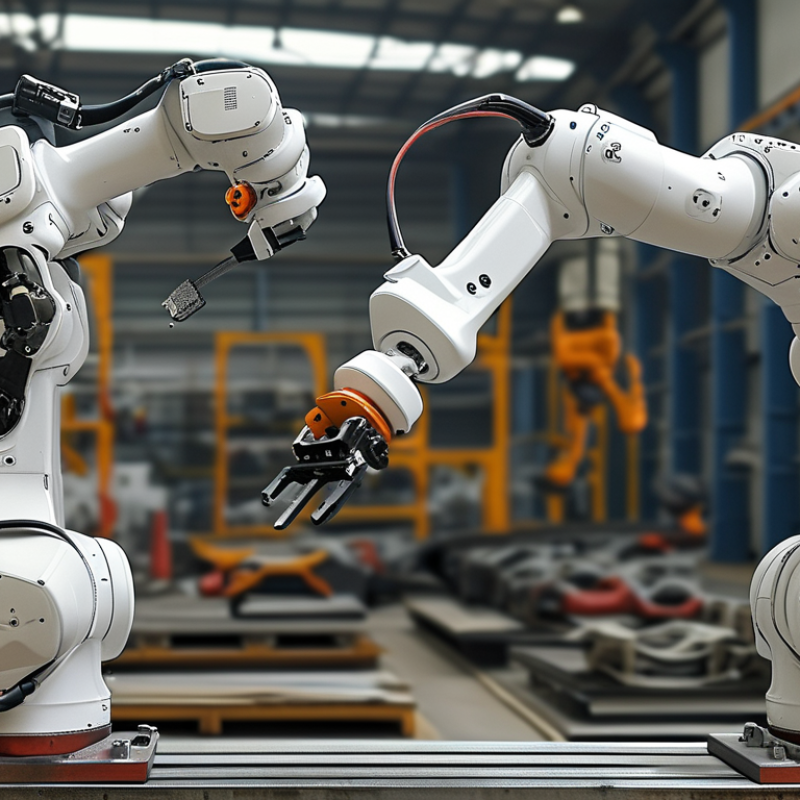
Robotic arm design is the engineering of a programmable mechanism that moves tools or materials through controlled joints. Its scope includes payload, reach, speed, repeatability, workspace, safety, integration, and maintenance. It is not simply a metal arm with a motor.
The core structure usually includes links, rotary or linear joints, actuators, gear reducers, encoders, a controller, cables, and an end effector. Sensors monitor position, force, temperature, or collision risk. Software converts production tasks into coordinated motion. A gripper, welding head, camera, or dispensing tool can change the arm’s practical purpose completely. Small details matter. Cable routing can affect downtime.
The International Federation of Robotics reported 541,302 industrial robot installations worldwide in 2023, while the global operational stock exceeded 4.28 million units in its World Robotics 2024 report. These figures show a large installed base, but they do not guarantee suitable design choices for every factory. Global buyers should compare real payload at full reach, cycle time under load, IP protection, controller compatibility, and local service capability. A compact arm may save floor space yet lose stiffness at maximum extension. That weakness is easy to miss in a brochure. Safety design also needs review, including guarding, speed limits, emergency stopping, and human-machine interaction. According to ISO 10218-1 and ISO/TS 15066 principles, risk assessment must match the actual application, not a generic product description. A technically advanced arm can still be a poor purchase when tooling, training, or spare parts are overlooked.
Key Engineering Trends Shaping Robotic Arms in 2026
In 2026, robotic-arm design is shifting from isolated automation toward connected production systems.
The IFR World Robotics 2024 report recorded 541,302 industrial robot installations in 2023.
The global operational fleet reached 4.28 million units.
That scale changes buyer priorities. Accuracy matters, but serviceability and energy use matter too.
Engineering teams are placing force sensing, 3D vision, and edge AI closer to the arm. Local processing can reduce response delays when parts shift on conveyors. Collaborative designs are becoming lighter, with safer torque monitoring and easier hand-guided setup. Yet collaborative does not mean risk-free. Payload, tooling, cell layout, and validated safety functions still require expert assessment. IFR reports that Asia represented about 70% of global installations in 2023, so designs must tolerate varied factories and maintenance skills.
Modularity is another important 2026 direction.
Quick-change end effectors, standardized interfaces, and predictive sensors can extend equipment life. Interact Analysis forecasts continued double-digit growth for collaborative robotics through 2028, although capital spending may disrupt that path. Forecasts are not promises. Digital twins support commissioning, but models can drift after fixtures, lighting, or materials change. Buyers should request repeatability data, failure-rate records, software-update policies, and cybersecurity controls. Smarter arms can still create inefficient systems. Engineering evidence should outrank impressive demonstrations.
Smart Control, AI Integration, and Human–Robot Collaboration
2026 Top Robotic Arm Design Trends for Global Buyers
Smart control is moving robotic arms beyond fixed, repetitive paths. Vision sensors can now detect position, shape, and unexpected movement. AI models help arms adjust grip force, speed, and trajectory during production. The International Federation of Robotics reported 541,302 industrial robots installed worldwide in 2023, with global operational stock reaching about 4.28 million units in World Robotics 2024. This installed base creates strong demand for smarter retrofits, not only new machines.
Human–robot collaboration will shape purchasing decisions in 2026. Arms must respond to human presence, changing workspaces, and shared tools. Force sensing, safety-rated monitoring, and clearer operator interfaces are becoming practical requirements. A trained operator should adjust task limits without rewriting complex code. Keep humans close. Yet AI can still misread reflective parts, unusual lighting, or unstable objects. A successful demonstration is not always reliable production. Buyers should test failure recovery, maintenance access, and data traceability before approving a system.
Tips: Request a live trial using your actual materials and cycle times. Measure accuracy after repeated shifts, not one impressive run. Check whether the controller explains alarms clearly. The World Economic Forum’s Future of Jobs Report 2025 highlights continuing growth in technology-related skills, but workforce readiness remains uneven. Plan short, hands-on training for operators and technicians. Do not assume automation removes every difficult task; sometimes it simply changes who solves it.
Materials, Modularity, Safety, and Energy-Efficient Design
In 2026, global buyers are evaluating robotic arms beyond reach, payload, and cycle speed. Material selection now affects hygiene, maintenance, heat control, and service life. Aluminum alloys can reduce moving mass, while reinforced polymers help protect sensitive surfaces and lower noise. Stainless steel remains valuable in washdown and demanding production areas. Yet lighter is not always better. A thin housing may vibrate under rapid acceleration. During site trials, engineers should inspect joint temperature, cable wear, and repeatability after extended cycles, not only brochure figures. This practical evidence supports more reliable purchasing decisions.
Modular design is becoming a commercial advantage. Replaceable joints, grippers, covers, and control modules can shorten repairs and simplify future upgrades. A common mechanical interface also helps buyers adapt one arm to inspection, packing, or assembly tasks. However, extra interfaces may create looseness, wiring errors, or unexpected compatibility limits. Documentation matters as much as hardware.
Safety should be designed into every movement. Force monitoring, speed limits, guarded zones, emergency stops, and clear human-machine separation reduce foreseeable risks. Risk assessments must match the actual workspace, including floor space, tooling, and operator habits. Energy-efficient systems use regenerative drives, sleep modes, optimized trajectories, and appropriately sized motors. Lower consumption is useful, but efficiency claims need measured data from real duty cycles. Some designs still waste energy during idle periods. That gap deserves honest review before installation.
How Global Buyers Can Evaluate and Select Robotic Arms
2026 Top Robotic Arm Design Trends for Global Buyers
Global buyers should evaluate robotic arms through production evidence, not impressive brochures. The International Federation of Robotics reported 541,302 industrial robots installed worldwide in 2023. The operational global stock exceeded 4.28 million units. This growth makes selection more complex, especially across different factories and labor markets.
Start with the real task. Measure payload, reach, cycle time, wrist inertia, repeatability, and mounting position. A six-axis arm may look flexible, yet its reach can shrink under a heavy gripper. Test the complete tool, fixture, and workpiece together. Small details matter. Ask for cycle-time data from a comparable application, not only laboratory results. The arm should also match dust, moisture, temperature, and cleanroom requirements.
Safety and integration deserve equal attention. Use risk assessments aligned with ISO 10218 and ISO/TS 15066 when collaborative operation is considered. Check safety functions, recovery procedures, programming access, and network compatibility. The International Federation of Robotics notes that service, software, and system integration strongly influence automation performance. Buyers should calculate total cost, including training, spare parts, downtime, and local technical support. That is often missed. Warranty length alone is a weak reliability indicator. A practical factory trial may reveal vibration, awkward cable routing, or operator confusion. No specification sheet can fully replace that evidence.