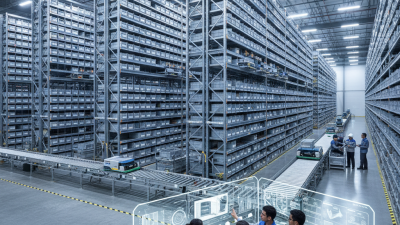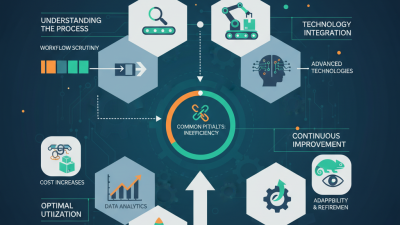

An automated storage and retrieval system can turn crowded warehouse space into a more controlled flow of goods. But the right design depends on what moves, how often it moves, and where orders need to go. A pallet warehouse handling heavy loads has different demands from a parts room picking small cartons. The machinery should fit the work. Not the reverse.
Warehouse-logistics expert Edward H. Frazelle’s work offers a useful design principle, paraphrased here: choose automation around operating needs, rather than automating for its own sake. That distinction matters. A system may look impressive and still create bottlenecks if its capacity, software, or access points do not match daily demand. Even a fast shuttle cannot fix poor slotting.
This guide introduces major AS/RS types, including unit-load cranes, mini-load systems, shuttle systems, vertical lift modules, and cube-based storage. Each handles inventory differently. Some move full pallets between tall rack aisles; others bring small totes directly to a picking station. Picture a worker receiving a labeled bin at waist height, instead of walking through rows to find one component. That is a real operational gain, when the system is properly planned. There are trade-offs, too: throughput, storage density, installation space, and maintenance all deserve scrutiny. No single design wins everywhere. The details matter.
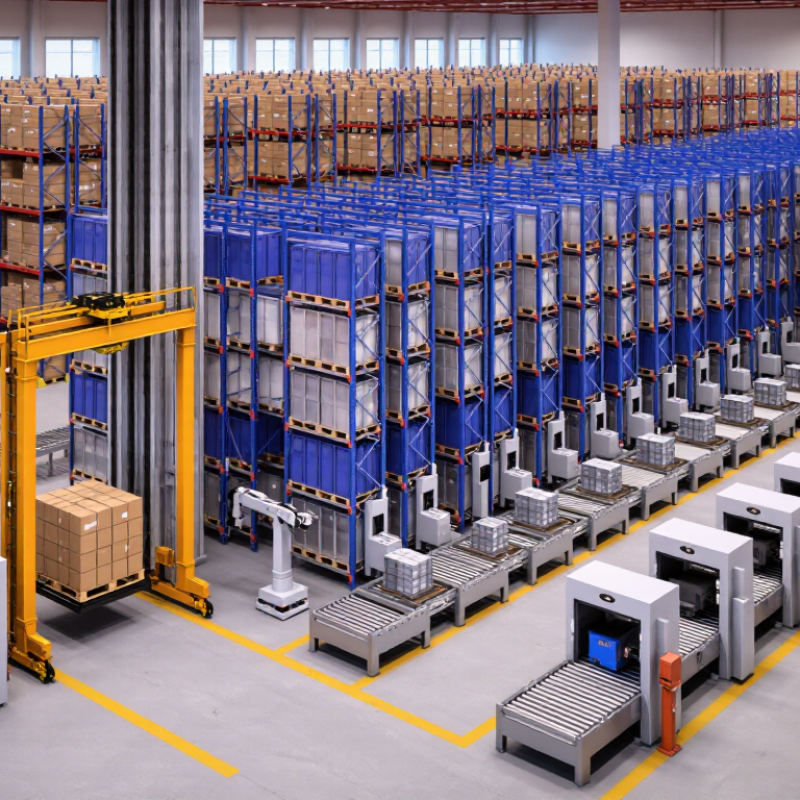
Unit-load automated storage and retrieval systems move pallet-sized loads between storage racks and defined handoff points. A storage and retrieval machine travels along an aisle, lifts a pallet, and places it in an assigned location. Conveyors may carry loads to receiving, production, or shipping areas. The system suits operations that handle many pallet movements and need dense, organized storage. Space matters.
Design starts with the load, not just the rack. Pallet dimensions, weight, stability, and condition affect safe, reliable handling. A pallet with a loose overhang may snag during travel; inconsistent heights can complicate clearances. These details are easy to underestimate. Measure real loads, including packaging, before setting equipment specifications.
Throughput planning should reflect actual work patterns. Review peak-hour moves, order profiles, replenishment needs, and the time required at conveyor handoff points. Software must coordinate inventory records with equipment commands, while operators need clear procedures for exceptions such as damaged pallets or a blocked location. Not every site benefits from full automation. Forecasts can be wrong, and a system designed around average demand may struggle during a sharp peak. Pilot testing with representative loads can expose gaps before installation.
Mini-load automated storage and retrieval systems handle small totes or cartons in dense racks. Cranes or shuttles bring each load to a picking station. They suit facilities with many small stock-keeping units, including spare parts and electronic components. Instead of walking long aisles, a worker picks items from a delivered tote. Small parts, fast.
System capacity depends on more than rack height. Tote dimensions, order peaks, replenishment timing, and workstation layout all affect throughput. McKinsey Global Institute’s 2017 report, A Future That Works, estimated that 57% of activities in transportation and warehousing had technical potential for automation using then-available technologies. That is a broad estimate, not a promise for any one facility. Not every site.
Mini-load systems can reduce travel, but they also concentrate operational risk. A blocked conveyor or poor slotting plan may slow downstream work. MHI’s 2023 Annual Industry Report found that respondents expected robotics and automation adoption to rise from 37% to 77% over five years. Treat that as an investment signal, not proof of fit. Measure order lines per hour, peak-hour swings, tote compatibility, and recovery time after faults. A forecast can be wrong; so can a tidy spreadsheet. Pilot with representative items and real order profiles, then adjust the design when operating data disagrees.
Mini-load AS/RS commonly stores and retrieves totes, trays, or cartons. These light, standard, and heavy payload bands are illustrative planning categories, not universal equipment specifications; allowable loads vary by system design and the stored item.
Shuttle-based automated storage and retrieval systems move totes or trays through dense rack structures. A powered shuttle travels along a storage level, while lifts transfer loads between levels and conveyors connect the system to work areas. This arrangement can reduce forklift travel and make good use of building height. It suits operations handling many small, repeatable loads.
Performance depends on more than shuttle speed. Engineers need to consider order patterns, load dimensions, peak-hour demand, and how replenishment reaches the system. For example, a busy packing line may need quick access to fast-moving items, not simply the highest possible storage density. Software coordinates locations and movements, but accurate inventory data remains essential. Small errors matter.
Maintenance planning matters too. Shuttles, sensors, lifts, and charging equipment all need inspection. A blocked transfer point can affect several movements, even when the rack itself is intact.
A small caution.
Dense storage may also leave less room for manual access, so recovery procedures should be planned before installation. The trade-off is not always obvious: adding more capacity can increase complexity, and a system designed around yesterday’s order mix may feel restrictive later. Teams should test realistic load profiles and discuss downtime scenarios with qualified integrators before committing.
A vertical lift module stores inventory on trays arranged in a tall, enclosed frame. An extractor brings the requested tray to an access opening, so staff do not need to search multiple shelves.
That matters.
Small parts, maintenance supplies, and packaged components can be grouped by item or task. Inventory software may track locations and prompt replenishment, though accuracy depends on disciplined scanning and data entry.
Operators can retrieve items at a consistent working height, reducing repeated bending and ladder use. The system can also use floor space efficiently when ceiling height is available.
Not every item fits.
Bulky goods, irregular cartons, or heavy loads may use tray space poorly, and the rated capacity must suit both individual loads and the full system.
A practical detail is often missed: trays need clear labels and sensible item grouping, or retrieval slows despite automation.
Before installation, teams should measure their tallest items, review order patterns, and check access for maintenance. The technology helps, but it does not correct unclear inventory records or rushed replenishment.
Carousel-Based Automated Storage and Retrieval Systems
Carousel-based automated storage and retrieval systems bring bins or shelves to a fixed operator station. Horizontal models rotate carriers along a track; vertical models move trays within a tall enclosure. The result can be less walking and more usable floor space. A picker might retrieve a small carton at waist height instead of crossing several aisles. But the equipment does not remove every bottleneck. A busy picking station can still create a queue.
The 2024 MHI Annual Industry Report found that 55% of surveyed supply chain professionals planned to increase technology investment. That figure covers supply chain technology broadly, not carousel systems specifically. It signals growing interest, not proof that one solution suits every warehouse. Before choosing, review order-line volume, item size, peak-hour demand, and replenishment needs. Measure actual pick times during busy shifts; a neat demonstration may not reflect a crowded operation. One useful check is whether the station can handle expected demand when one unit is unavailable for service. Small detail. Often overlooked.
Tips: Group frequently picked items near the operator’s natural reach, and keep heavy cartons at safe handling heights. Track picks per hour, errors, and station wait time after installation. If those measures do not improve, revisit slotting and staffing—not just the machine settings.
| System Type | Configuration and Movement | How Items Are Retrieved | Typical Applications | Key Considerations |
|---|---|---|---|---|
| Horizontal Carousel | A series of storage carriers circulates horizontally along an oval track, usually within a workstation or shelving enclosure. | The system rotates the requested carrier to an access opening, where an operator picks or replenishes items. | Order-picking areas, small-parts storage, and operations with many frequently accessed items. | Uses floor space and is commonly arranged in banks. Performance depends on item mix, order profile, and workstation design. |
| Vertical Carousel | Carriers move vertically in a continuous loop, traveling up one side and down the other inside a tall enclosure. | The selected carrier is brought to an ergonomic access opening, typically near floor level. | Small components, tools, documents, and other inventory stored in facilities with limited floor space. | Makes use of vertical space. The building must provide adequate height, floor capacity, and suitable installation clearance. |
| Carousel-Based Picking Workstation | One or more horizontal or vertical carousels are integrated with a stationary picking station and inventory-control software. | The carousel presents the required storage location; light or screen instructions can guide the operator through the pick. | Piece picking, kitting, parts distribution, and workflows that benefit from goods-to-person presentation. | Requires process planning, compatible inventory software, and clear procedures for replenishment and exception handling. |
System selection depends on item dimensions and weight, order patterns, available building space, required access, and integration needs.