
• Gantry Robot Manufacturer & Articulated Arm Integrator

Why Choose Automated Storage Solutions for Warehouses?

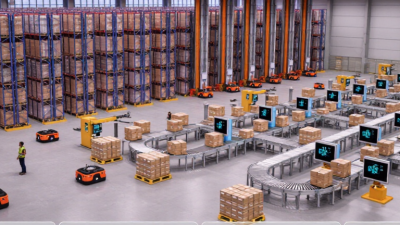
Warehouses face rising order volumes, tighter delivery windows, and persistent pressure to reduce operating costs. Automated storage solutions can address these demands by organizing inventory, improving access, and reducing unnecessary movement across the facility. A well-designed system may include automated storage and retrieval machines, vertical lift modules, conveyors, and inventory software. Together, these tools create a clearer flow from receiving to dispatch.

The benefits become visible in practical moments. A machine retrieves a tote while workers prepare the next order. Barcode scans update stock records within seconds. Narrower aisles can also release valuable floor space for additional inventory or packing stations. These improvements support accuracy, workplace safety, and more consistent service.

However, automation is not a universal shortcut. Poorly labeled products, weak data, or unsuitable software can create expensive delays. A warehouse must assess order profiles, product dimensions, storage density, maintenance needs, and staff capabilities before investing. Experienced integrators usually study real transaction data instead of relying on impressive demonstrations. That approach builds credibility and reduces avoidable risk.

The strongest results come from measured decisions. Pilot testing can reveal retrieval bottlenecks, awkward packaging, or training gaps before full deployment. Human oversight still matters. Equipment can fail, demand can change, and forecasts can be wrong. Even reliable systems require preventive maintenance, clear safety procedures, and regular performance reviews. For these reasons, choosing automated storage solutions should be viewed as a long-term operational decision, not merely a technology purchase.
Why Choose Automated Storage Solutions for Warehouses?

What Automated Storage Solutions Are

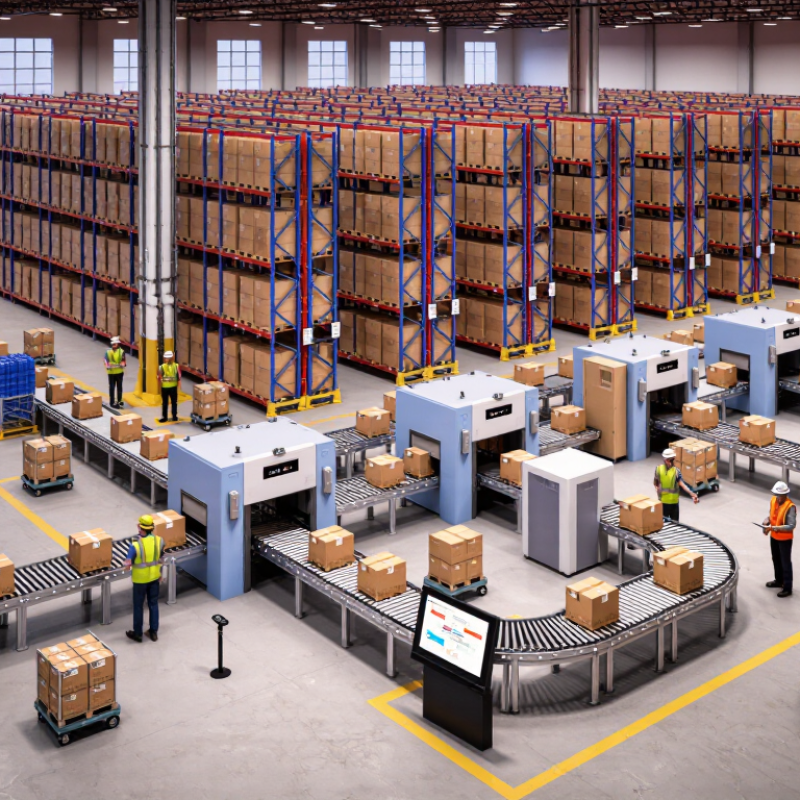
Automated storage solutions are systems that locate, move, and retrieve inventory with limited manual travel. They combine racks, cranes, shuttles, lifts, conveyors, scanners, and control software. A pallet AS/RS supports dense bulk storage, while a mini-load system handles cartons or totes. Vertical lift modules use enclosed trays for small parts. The software matters as much as the steel. It assigns locations, confirms scans, and releases work to picking stations. That is what they are.

MHI’s 2024 Annual Industry Report reported that 83% of supply chain professionals expect robotics and automation adoption within five years. The International Federation of Robotics recorded 541,302 industrial robot installations worldwide in 2023. These figures do not prove every warehouse needs automation. They show why storage design is moving beyond static shelving. In practical operations, the benefit appears as fewer footsteps: a tote arrives at waist height, beneath a barcode light. This can improve throughput and reduce search errors during peak periods. But promises can be too smooth.

Bad master data can still send the wrong item quickly. Blocked aisles, weak maintenance access, or poor exception handling may erase expected gains. A credible project starts with SKU dimensions, order profiles, replenishment rules, fire protection, and labor constraints. It should also measure travel time, touches per order, uptime, and recovery time after faults. The best solution may be partly automated, not fully automated. That is easy to overlook.

How Automated Storage Systems Operate

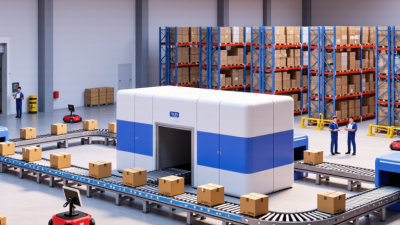
Automated storage systems operate through coordinated software, sensors, and mechanical equipment. When goods arrive, an operator scans each carton or pallet. The warehouse management system then assigns a storage location based on size, demand, and available space. A control system sends instructions to shuttles, cranes, or lifts. These machines move goods through narrow aisles, often with millimetre-level positioning.

At retrieval, the system receives an order and selects the shortest practical route. A shuttle brings the required load to a workstation, while software updates inventory immediately. This reduces manual searching and creates a clearer audit trail. The 2024 MHI Annual Industry Report found that 55% of supply chain professionals were increasing investment in automation and robotics. That figure suggests strong confidence, but it does not guarantee success.

The physical details matter. A pallet may enter at 8:00 a.m. and reach a picking station minutes later. Sensors can detect an open location, damaged packaging, or an unexpected obstruction. Still, automation is not self-correcting. Poor product data can place fragile cartons in unsuitable positions. A weak maintenance plan can also stop an entire aisle. Interact Analysis reported continued double-digit growth in warehouse automation demand through the middle of this decade, reflecting operational pressure rather than simple enthusiasm. Careful testing remains necessary. Human oversight still matters.

Why Choose Automated Storage Solutions for Warehouses?

Automated storage and retrieval systems reduce operator travel by bringing inventory directly to a workstation. The chart compares representative retrieval times for common warehouse storage approaches. Automated systems coordinate storage locations, conveyors, shuttles, lifts, and warehouse control software to improve access speed and process consistency. Actual performance varies with layout, load size, order profile, and system configuration.

Key Warehouse Efficiency Benefits

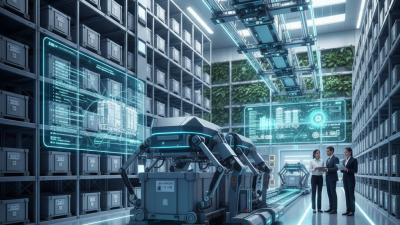
Automated storage solutions can improve warehouse efficiency by reducing travel, retrieval delays, and picking errors. In a well-planned system, inventory moves to the operator instead of workers walking through long aisles. This can shorten order cycles and release floor space for higher-value tasks.

Real gains depend on accurate item data, sensible slotting, and regular maintenance. Automation is not magic. A poorly mapped process can simply make mistakes happen faster.

Efficiency also becomes easier to measure. Supervisors can track retrieval time, order accuracy, equipment uptime, and space utilization through one operating record.

These figures support staffing decisions and reveal bottlenecks before they become expensive. Safety may improve when people spend less time lifting, reaching, or driving through busy aisles. However, every site needs trained staff, clear emergency procedures, and manual recovery plans. Technology should support judgment, not replace it.

Tips: Measure before investing. Audit current travel paths, picking errors, and peak workloads. Start with one measurable process, then compare results after implementation. Keep people involved. Their feedback may expose awkward workflows that reports miss. Also review maintenance records regularly, because a small sensor fault can interrupt an entire shift.

Types of Automated Storage Technologies

Automated storage technologies help warehouses use height, floor space, and labor more effectively. The right choice depends on inventory profiles, order frequency, building limits, and safety procedures. The fit is not always obvious.

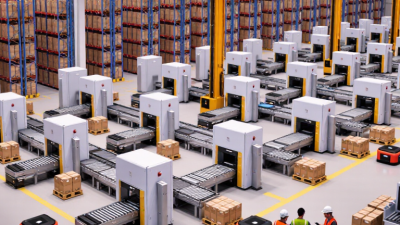
Automated storage and retrieval systems use cranes to store pallets in tall racks and retrieve them when required. They suit stable, high-volume inventory with predictable movements. Mini-load systems handle cartons or totes, while shuttle systems move containers through dense storage lanes.

Vertical lift modules bring trays to an operator at an ergonomic access point. Horizontal carousels rotate shelves toward the workstation. Automated mobile robots can also transport totes between storage zones and picking stations.

The 2024 MHI Annual Industry Report found that 37% of surveyed supply-chain professionals were using robotics and automation, while 44% expected adoption within the next two years. These figures show momentum, not guaranteed savings. A system designed for pallets may perform poorly with irregular cartons. Warehouse managers should examine order lines, SKU dimensions, replenishment cycles, and peak-season congestion before investing.

The International Federation of Robotics reported 541,302 industrial robot installations worldwide in 2023, but warehouse automation requires different performance measures. Travel distance, storage density, retrieval accuracy, maintenance access, and recovery time matter more than impressive machine counts.

Small pilot areas can reveal hidden issues, including barcode quality, damaged packaging, and operator training gaps. That assumption can fail. Reliable data and practical testing should guide the technology selection.

Factors for Selecting the Right System

Choosing automated storage solutions starts with warehouse reality, not impressive machinery. Measure order volume, SKU variety, product dimensions, and peak-period demand. A system handling 400 cartons per hour may fail when seasonal orders double. Record aisle widths, ceiling height, floor strength, temperature, dust levels, and available power before comparing equipment.

The right system should match both current needs and realistic growth. Consider storage density, retrieval speed, worker safety, software compatibility, maintenance access, and staff training. Check whether the control software can communicate reliably with inventory and order-management systems. Ask for documented uptime, response procedures, spare-parts availability, and service coverage. These details often matter more than headline capacity.

Test difficult items, not only standard cartons. Include irregular packaging, damaged labels, urgent orders, and inventory counting. A small pilot can reveal congestion near loading doors or delays during replenishment. Initial calculations are sometimes too optimistic. We once overlooked manual exception handling in a planning exercise, and the estimated labor savings changed significantly. Build those exceptions into the evaluation. Compare total ownership costs, including installation, energy, software updates, inspections, repairs, and future expansion. A flexible layout may cost more initially but reduce disruption when product lines change. Keep operators involved. Their daily observations often expose practical problems that a spreadsheet misses.

Why Choose Automated Storage Solutions for Warehouses? – Factors for Selecting the Right System

Selection Factor Manual Storage Mechanized Storage Automated Storage and Retrieval Recommended Evaluation Approach
Typical Storage Density Baseline; depends on aisle width and layout Approximately 20–40% higher than conventional shelving Approximately 40–80% higher than conventional shelving Compare usable storage locations per square meter and cubic meter
Order-Picking Productivity Typically 60–120 picks per labor hour Typically 100–200 picks per labor hour Typically 150–600+ picks per labor hour, depending on system design Use actual order profiles, SKU dimensions, batch size, and peak demand
Inventory Accuracy Typically 95–99%, depending on procedures Typically 97–99.5% with barcode control Typically 99.5% or higher with integrated identification and software controls Set a target based on order-error cost and customer service requirements
Labor Requirement High; operators travel to storage locations Medium; equipment reduces travel and handling effort Low for storage and retrieval; skilled technical support is required Calculate total labor hours across receiving, replenishment, picking, and shipping
Space Utilization More floor area is required for aisles and access Improved through narrower aisles and vertical storage High vertical and cubic-space utilization; aisle requirements are minimized Assess ceiling height, floor loading, fire protection, and building constraints
Throughput Consistency Strongly affected by staffing, travel distance, and congestion More consistent during normal operating periods Highly consistent when properly sized and maintained Compare hourly capacity during normal, promotional, and seasonal peaks
Scalability Easy to expand, but usually requires more labor and floor space Moderate; expansion may require layout changes High when the system is modular and software supports additional capacity Review five-year SKU, order-volume, and service-level forecasts
Implementation Complexity Low; limited infrastructure and software integration Medium; requires equipment, controls, and operator training High; requires engineering, controls, warehouse software, testing, and training Allow time for site surveys, integration testing, commissioning, and ramp-up
Capital Investment Low initial investment Medium initial investment High initial investment Compare total cost of ownership rather than equipment price alone
Operating Cost Potential Higher variable labor and travel costs Moderate labor and maintenance costs Lower direct handling labor, with ongoing maintenance and software costs Include labor, energy, maintenance, downtime, software, and training costs
Return on Investment Suitable where volumes and labor costs are low Suitable for steady growth and moderate throughput requirements Often most attractive where labor, space, accuracy, or throughput constraints are significant Model payback using verified demand, labor rates, space costs, and utilization
Best-Fit Operating Profile Low-to-medium volume, many irregular items, and flexible processes Medium volume with repeatable handling and moderate SKU standardization Medium-to-high volume, compact items, frequent picks, and strict service targets Match the system to SKU size, weight, velocity, turnover, and order-line profile
Business Continuity Can continue operating with basic manual procedures Partial manual workarounds are generally possible Requires documented fallback procedures, spare parts, and preventive maintenance Evaluate redundancy, emergency access, service response, and recovery time
Safety and Ergonomics Higher exposure to walking, lifting, reaching, and vehicle traffic Reduced travel and handling exposure Can reduce operator travel and repetitive handling when correctly designed Review lifting frequency, reach zones, traffic separation, guarding, and access controls
Energy Considerations Low equipment energy use; larger facilities may require more lighting and climate control Moderate energy use from conveyors, lifts, or vehicles Energy use varies by equipment type, duty cycle, load, and regenerative features Request measured or estimated energy consumption per order line or pallet movement
Primary Selection Trigger Lowest complexity and maximum process flexibility Improved productivity without full automation

Note: The figures are typical planning ranges for warehouse evaluation and are not guaranteed performance levels. Actual results depend on SKU dimensions, weight, order profile, operating hours, system configuration, building conditions, software integration, staffing, and maintenance practices.