
• Gantry Robot Manufacturer & Articulated Arm Integrator

Best China Material Handling Robots for Global Buyers?

Global buyers are looking beyond low prices when choosing material handling robots. They need dependable movement, safe operation, and measurable payback. A robot may look impressive on a showroom floor. The real test starts at 2 a.m., beside a crowded pallet lane.

Raffaello D’Andrea, a robotics researcher and co-founder of Kiva Systems, has said, “The future of robotics is about enhancing human capabilities.” This principle matters in warehouses. The strongest systems support workers instead of creating new obstacles. They move cartons, pallets, totes, and shelving with steady accuracy. They also communicate clearly with warehouse management systems.

This guide examines China’s leading material handling robots for international purchasers. It considers payload capacity, navigation, battery life, software integration, service networks, and spare-part access. Certification and local safety requirements also deserve careful attention. A competitive quotation means little if installation support remains unclear. Neither does a fast robot help much when its battery stops before the night shift ends.

China offers a broad manufacturing base, flexible engineering, and increasingly mature automation suppliers. However, quality varies between factories. Some product pages promise more than field data proves. That is uncomfortable, but important. Buyers should request test videos, reference sites, maintenance records, and total-cost calculations.

The best choice may not be the fastest machine. It may be the one operators trust daily. A careful evaluation can reveal that difference.
Best China Material Handling Robots for Global Buyers?

What Are Material Handling Robots and Why Choose China?

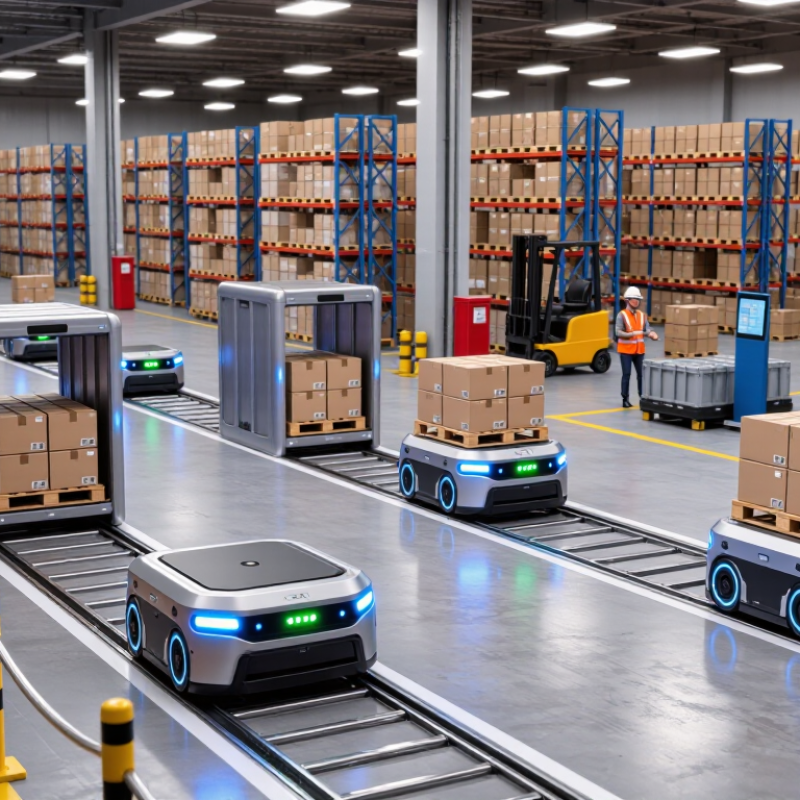
Material handling robots are machines designed to move, lift, sort, pack, or position goods with limited human intervention. In warehouses, an autonomous mobile robot may carry cartons between receiving docks and storage aisles. A robotic arm can palletize boxes beside a production line. Guided vehicles handle repeatable routes. Speed is not everything. These systems can improve workplace safety, stabilize output, and use floor space more efficiently.

Why choose China?

China has a deep manufacturing ecosystem for motors, sensors, controllers, batteries, and steel frames. This connected supply chain can shorten development time and support practical customization. Overseas buyers may request different pallet sizes, warehouse layouts, software interfaces, or voltage standards. Chinese engineering teams often adapt these details faster than a general catalog suggests. Costs can also be competitive, but price alone is a weak selection method. It may hide integration work, training gaps, or spare-parts delays. Not every site fits.

A reliable purchase needs evidence. Ask for load tests, route trials, safety documentation, software demonstrations, and references from similar facilities. Check communication during installation, not only during sales meetings. A useful acceptance test should measure battery endurance, positioning accuracy, obstacle response, and recovery after network interruptions. Even good equipment may need tuning. Dust, uneven floors, mixed cartons, and changing workflows expose weaknesses that factory videos rarely show. Buyers should verify applicable safety requirements in the destination market and leave contingency time for installation. That practical caution is often underestimated.

Which Types of China-Made Handling Robots Serve Global Warehouses?

Global warehouses rarely need one robot type. China-made systems usually serve four roles: AMRs, AGVs, pallet movers, and robotic picking cells. AMRs use sensors and maps to carry totes between storage and packing stations. AGVs follow fixed routes, making them predictable for repetitive pallet movement. Autonomous pallet trucks fit dock-to-rack work, while robotic arms handle cartons, bins, or mixed-case picking. Real warehouses are messier.

The International Federation of Robotics’ World Robotics 2024 report recorded about 113,000 professional transportation and logistics robots in 2023. That category grew 35% year on year. This demand favors modular Chinese platforms, especially where buyers need lower entry costs, spare parts, and faster software customization. Yet purchase price alone misleads. Buyers should test battery endurance, obstacle recovery, localization accuracy, payload stability, and handover performance during peak traffic. Independent trials matter because advertised throughput can assume unusually clear aisles.

Global deployment also requires documented risk assessment and conformity with relevant machinery and workplace-safety requirements. For mobile robots, ISO 3691-4 provides a useful reference for driverless industrial trucks. Robotic cells may also require safeguards based on ISO 10218. Integration quality often decides results. Ask for API documentation, remote diagnostics, local service capacity, cybersecurity controls, and replacement timelines. Some systems look impressive in demonstrations but struggle with reflective floors or irregular cartons. That uncomfortable gap deserves a paid pilot before full rollout.

How to Compare Robot Performance, Safety, and Integration?

Best China Material Handling Robots for Global Buyers?

Comparing material handling robots requires more than reading payload figures. In warehouse trials, measure full cycles: pickup, travel, placement, and return. Record results with a loaded pallet, not an empty platform. A robot rated for 1,500 kilograms may slow sharply on ramps or uneven floors. Check turning accuracy near racks, battery endurance across a full shift, and recovery time after a blocked route. Small details matter.

Safety should be tested in the real workplace. Observe stopping distance near people, sensor performance under dust, and behavior beside reflective packaging. Confirm emergency controls, speed limits, warning signals, and safe restart procedures. Ask for risk assessment documents, maintenance records, and operator training materials. Requirements differ by country, so buyers should verify applicable machinery and workplace safety standards locally. Never accept a certificate without checking its scope and date.

Integration often decides whether a robot succeeds. Review communication options, map updates, fleet controls, and connections with warehouse software. Test order changes during peak activity. Watch how the system handles a missing pallet or a closed aisle. I have seen impressive demonstrations fail during these ordinary disruptions. No robot wins every test. A practical pilot should include real pallets, real floor markings, and several weeks of support. Leave room for honest findings; some manual steps may still be safer and faster.

What Certifications and Support Should International Buyers Verify?

For global buyers, certification is not a decorative document. It is evidence that a material handling robot was designed, tested, and documented for a defined risk environment. The IFR World Robotics 2024 report recorded 541,302 industrial robot installations in 2023. This growth increases the need for consistent safety verification. Buyers should request ISO 10218 compliance for robotic systems and ISO 13849-1 safety-control validation. Driverless vehicles may also require EN ISO 3691-4 assessment. Electrical documentation should reference IEC 60204-1, while market access may require CE, UKCA, or other local conformity procedures. A certificate alone is not proof of a safe installation.

Support quality matters just as much. Ask for factory acceptance testing, site acceptance testing, risk assessments, manuals, software version records, and operator training. Request a written response-time agreement for breakdowns. Spare parts availability should include batteries, sensors, wheels, and safety scanners. The International Federation of Robotics also reported more than four million industrial robots operating worldwide in 2023, showing why maintenance capacity cannot be treated as an afterthought. In practice, many buyers check the robot, but not the service network. That is a costly gap.

Tips: Verify the certificate number with the issuing body. Ask whether testing covers the complete system, not only the robot module. Check local-language manuals and emergency procedures. Review cybersecurity controls, preferably aligned with ISO/IEC 27001. Test remote support before signing. No checklist is perfect. A short pilot may reveal more than a polished sales presentation.

International Buyer Verification Priorities for Material Handling Robots

The chart maps widely recognized safety standards and buyer-support evidence to the robot application where they are most relevant. Applicability depends on the final configuration, operating environment, and destination-market rules. Buyers should request the current certificate, declaration, test report, scope, and issuing body details rather than relying on logos alone.

How to Select the Best Chinese Supplier for Your Application?

Best China Material Handling Robots for Global Buyers?

Selecting the right Chinese supplier starts with your application, not a product catalogue. Define payload, load dimensions, aisle width, floor conditions, travel distance, and daily cycles. Include peak demand, not only average demand. A robot moving 500 kilograms may perform differently on uneven floors or tight turning paths. Ask the supplier for test data using loads similar to yours. Request videos, technical drawings, and a live factory demonstration when possible. A polished demo can still hide integration problems.

Evaluate engineering depth, quality controls, and communication habits. Check whether the supplier can provide risk assessments, relevant safety documentation, traceable components, and clear software support. Ask about factory acceptance testing, installation training, spare parts, and response times in your region. Contact comparable customers, but verify their applications and operating conditions. A low quotation is not always economical. Software changes, custom fixtures, and delayed replacement parts can increase the real cost. No evaluation is perfect. Leave room for independent inspection.

Tips: Prepare a written checklist before supplier discussions. Require measurable acceptance targets, such as positioning accuracy, battery runtime, charging time, and hourly throughput. Clarify which party handles site surveys, network access, commissioning, and operator training. Compare total ownership costs over five years. Also, ask difficult questions twice. Inconsistent answers deserve attention.