
• Gantry Robot Manufacturer & Articulated Arm Integrator

10 ASRS System Warehouse Tips for Global Buyers

An asrs system warehouse is no longer a distant concept reserved for giant distribution centers. It now supports retailers, manufacturers, and third-party logistics providers facing tighter labor markets and faster delivery expectations. The International Federation of Robotics reported 541,302 industrial robots were installed worldwide in 2023, a 10% increase from the previous year. That momentum signals growing confidence in automation, but it does not make every project suitable.

Global buyers must examine more than storage density. A reliable evaluation should consider SKU dimensions, order profiles, peak-season volume, building height, local power standards, software compatibility, and after-sales support. The MHI Annual Industry Report 2024 highlights continuing investment in digital technologies, robotics, and supply-chain resilience. However, a supplier’s impressive demonstration may not represent daily performance in a humid warehouse, a dusty production site, or a facility with unstable network coverage.

Details matter. A tote shuttle may look efficient until oversized cartons enter the process. A high-speed crane may increase throughput, yet require costly maintenance access. Buyers should request tested cycle times, energy data, safety documentation, integration records, and references from comparable installations. They should also clarify spare-parts availability across borders and technician response times.

The numbers are persuasive. The choice is still messy.

These ten practical tips for global buyers focus on measurable fit, not fashionable equipment. They encourage site surveys, realistic return-on-investment models, phased implementation, and honest risk reviews. No system is perfect. A well-designed asrs system warehouse simply makes limitations visible earlier, giving decision-makers time to correct them before daily operations depend on automation.
10 ASRS System Warehouse Tips for Global Buyers

Define ASRS Types and Their Best-Fit Warehouse Applications

10 ASRS System Warehouse Tips for Global Buyers

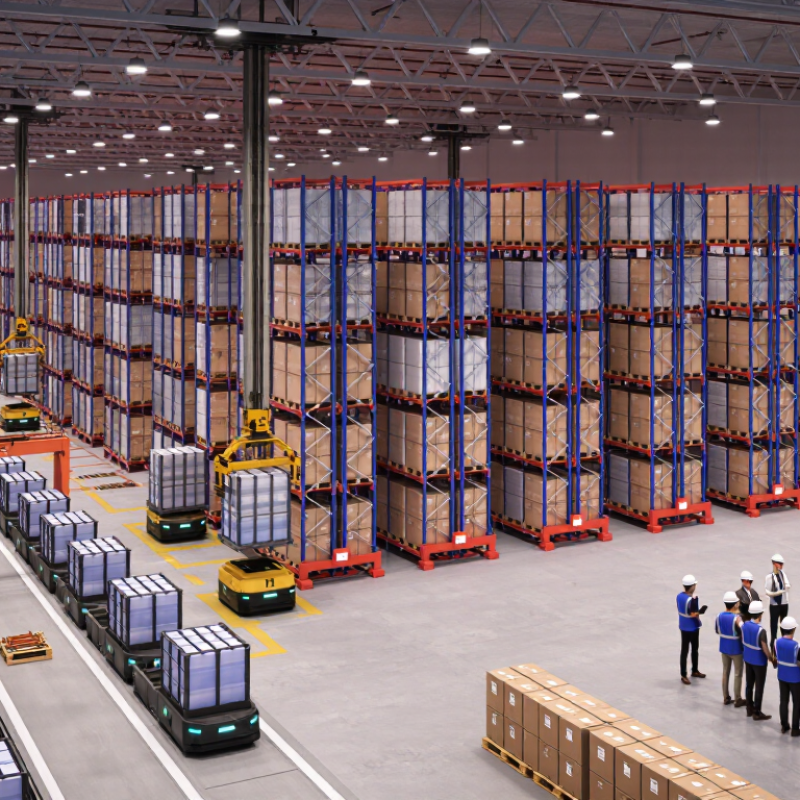
Choosing an ASRS begins with the product, not the machine. Unit-load crane systems suit palletized goods, especially when storage height exceeds 10 meters. Mini-load cranes handle totes, cartons, and smaller cases with controlled access. Shuttle systems fit warehouses needing fast pallet movement and dense storage. Vertical lift modules support ergonomic picking where floor space is limited.

Application matters more than impressive specifications. High-volume e-commerce operations may need goods-to-person shuttles and robotic picking stations. Cold-storage facilities often favor pallet ASRS because fewer workers enter low-temperature zones. Slow-moving spare parts can fit vertical carousels, but only after careful SKU analysis.

MHI’s 2024 Annual Industry Report found that 55% of surveyed supply-chain leaders planned to increase technology investment within two years. That investment still requires disciplined site data.

Measure order lines, pallet profiles, peak hours, inventory turnover, and ceiling limits. Do not trust average daily volume alone. A system designed for average demand may fail during seasonal surges.

Interact Analysis’ warehouse automation research also highlights continued growth in automated storage demand, but forecasts depend heavily on labor costs and throughput assumptions. This is where buyers often underestimate integration work.

Software mapping, fire protection, maintenance access, and local electrical standards can change the final design. A neat spreadsheet can still lie. Test representative products, including damaged cartons and irregular totes, before approving the layout.

Assess Storage Capacity, Throughput, and Product Requirements

10 ASRS System Warehouse Tips for Global Buyers

Assess Storage Capacity, Throughput, and Product Requirements

An automated storage and retrieval system should fit the operation, not merely the building. Measure clear height, usable floor area, aisle width, and fire-protection limits before selecting equipment. Include columns, beams, doors, ramps, and maintenance zones in the layout. These details often reduce theoretical capacity. A dense design is not always an efficient design.

Calculate storage capacity using real inventory data. Separate fast-moving, slow-moving, seasonal, damaged, and quarantined goods. Record each product’s dimensions, weight, packaging strength, and handling limits. Totes, cartons, pallets, and irregular containers may require different storage positions. Small measurement errors can create large retrieval problems. Keep several spare locations for inventory changes.

Throughput needs more than a daily order total. Review peak hourly arrivals, departures, replenishment tasks, and order-line patterns. Test whether the system can handle sudden demand without creating long queues.

I once saw a capacity plan fail because it used average volume only. That was a useful warning.

Ask for performance data from comparable operating conditions, not ideal demonstrations.

Consider product sensitivity, temperature requirements, dust control, and safe handling procedures. Confirm barcode quality, software integration, backup processes, and operator access. Global buyers should also verify local installation standards, training arrangements, spare-part availability, and service response times. Request clear assumptions in every quotation. Ambiguous assumptions become expensive later. Review the design with warehouse staff who know the daily exceptions. Their criticism may expose weaknesses that spreadsheets miss.

Compare Automation Features, Software, and System Compatibility

10 ASRS System Warehouse Tips for Global Buyers

When comparing ASRS systems, start with the physical task, not the brochure. Check pallet weight, tote dimensions, aisle height, temperature, and required retrieval speed. A system handling 1,000 pallets may still fail during peak hours. Ask for tested throughput using your actual load profiles. Request recent installation data, not only laboratory figures. Small details matter.

Software compatibility deserves equal attention. Confirm whether the warehouse control system connects with your WMS, ERP, barcode scanners, and warehouse robots. Review API documentation, data formats, alarm handling, and user permissions. Test order changes, inventory corrections, and network interruptions before signing. A clear dashboard helps operators find blocked locations quickly. Strong systems also record every movement for audits and troubleshooting.

Think beyond installation. Ask about spare parts, remote diagnostics, training, cybersecurity updates, and local service coverage. Confirm how the system behaves during power loss or software failure. Manual recovery should be practical. I have seen projects overvalue storage density and underestimate integration work. That mistake can create weeks of delays. Compatibility testing may feel slow, but rushed testing is slower later. Leave room for future equipment, changing carton sizes, and higher order volumes. The best comparison includes lifecycle cost, operator workload, and measurable recovery time. Expect some uncertainty. Real warehouses rarely behave like simulations.

10 ASRS System Warehouse Tips for Global Buyers - Compare Automation Features, Software, and System Compatibility

No. Buyer Tip Automation Feature to Compare Software and Controls Compatibility Check Practical Benchmark Questions for Suppliers
1 Define the storage mission Compare pallet, tote, mini-load, shuttle, vertical lift, and unit-load ASRS configurations according to load type and order profile. Check whether the warehouse control system supports storage, retrieval, replenishment, cycle counting, and exception workflows. Confirm load dimensions, weight, packaging quality, barcode location, and allowable product variability. The selected equipment should match the highest-volume SKU and load class, not only the average case. Which load sizes and weights are supported without manual intervention?
2 Verify throughput with a workload model Compare crane, shuttle, robot, conveyor, lift, and workstation capacities for inbound, outbound, and replenishment movements. Require simulation or capacity calculations using real order lines, peak waves, travel distances, and replenishment demand. Check one-way versus dual-cycle operation and whether interfaces can handle peak message volumes. Evaluate sustained peak throughput separately from short-duration maximum speed. Is the quoted rate sustained, tested, or only a theoretical equipment speed?
3 Compare storage density Assess aisle width, clear height, rack depth, load spacing, fire-protection clearances, and access requirements. Review slotting logic, dynamic location assignment, inventory rules, and location blocking. Validate building height, floor flatness, column positions, slab loading, seismic conditions, and local fire codes. Compare usable storage positions per square metre, including conveyors, service zones, and safety areas. Does the density calculation include maintenance access and non-storage footprint?
4 Check software integration Compare native integration with conveyors, scanners, dimensioners, weighing equipment, robots, and picking stations. Look for documented APIs, message queues, database interfaces, REST or SOAP services, and standard industrial protocols such as OPC UA. Confirm compatibility with the existing WMS, ERP, warehouse control layer, identity system, and reporting tools. Every interface should have defined message ownership, acknowledgements, retries, and error handling. Can the supplier provide interface specifications and a test environment before commissioning?
5 Evaluate barcode and identification options Compare 1D barcode, 2D code, RFID, vision inspection, and redundant identification methods. Check support for GS1 identifiers, license-plate tracking, lot numbers, serial numbers, expiry dates, and status codes. Confirm label size, print quality, scan orientation, reflective packaging, and read-rate requirements. The identification process should preserve traceability through receiving, storage, picking, and shipping. How are unreadable labels, duplicate IDs, and mixed lots handled?
6 Review safety and compliance Compare guarding, safety scanners, interlocks, emergency stops, access gates, light curtains, and safe maintenance modes. Check safety PLC architecture, event logging, permissions, lockout procedures, and alarm escalation. Confirm conformity with applicable local regulations and relevant standards, such as ISO 12100, ISO 13849, IEC 60204-1, and ISO 3691-4 where applicable. Safety design must cover normal operation, jam clearing, inspection, cleaning, and maintenance. Which party supplies the risk assessment and final compliance documentation?
7 Assess energy and utility requirements Compare regenerative drives, standby modes, efficient motors, battery systems, compressed-air needs, and heat generation. Review energy monitoring, equipment sleep schedules, demand peaks, and alarms for abnormal consumption. Validate voltage, frequency, grounding, network infrastructure, HVAC requirements, and backup power strategy. Request consumption figures for idle, average, and peak operating conditions rather than one single rating. What is the measured energy use per operating hour or completed movement?
8 Plan for scalability Compare modular racks, additional shuttles or robots, expandable conveyors, extra workstations, and software licensing options. Check whether capacity can be expanded without replacing the core WCS, database, PLCs, or network architecture. Reserve physical space, electrical capacity, network ports, fire protection, and integration capacity for future phases. Define expansion triggers using storage occupancy, peak throughput, order growth, and SKU growth. What capacity can be added during live operation, and what downtime is required?
9 Compare maintenance and availability Review modular components, condition monitoring, spare equipment, manual bypasses, and recovery procedures. Look for remote diagnostics, audit trails, alarm history, predictive maintenance indicators, and role-based access. Confirm local service coverage, spare-parts lead times, technician training, and multilingual documentation. Measure availability with a defined formula that excludes or includes planned downtime consistently. What are the response time, restoration target, and guaranteed spare-parts availability?
10 Use a complete acceptance test Compare demonstrations using representative loads, peak order patterns, fault scenarios, recovery operations, and manual procedures. Require functional specifications, factory acceptance testing, site acceptance testing, cybersecurity controls, backups, and version management. Test end-to-end transactions from WMS order release through equipment execution, confirmation, inventory update, and shipping. Acceptance criteria should include throughput, accuracy, recovery time, inventory integrity, safety, and documentation. Which performance metrics are contractually guaranteed, and how are failed tests corrected?

Note: Actual capacity, storage density, energy consumption, and availability depend on load characteristics, building conditions, software configuration, operating procedures, and local regulations.

Verify Supplier Expertise, Compliance, Service, and Total Costs

10 ASRS System Warehouse Tips for Global Buyers

Verify supplier expertise before discussing price. Request three comparable installations, throughput records, and named technical contacts. Ask how the system handles damaged cartons, barcode failures, and peak-season surges. Demand proof. A polished demonstration may hide weak recovery procedures. MHI’s 2024 Annual Industry Report found that 55% of supply chain leaders increased technology investment, showing strong demand for automation expertise.

Check compliance for the destination country and warehouse environment. Review machine guarding, emergency stops, electrical documentation, software cybersecurity, and worker training. Relevant standards may include ISO 13849, EN 528, and local occupational-safety requirements. Independent inspection is wise. Deloitte’s 2024 Smart Manufacturing and Operations Survey reported that 86% of manufacturers view smart operations as important for competitiveness, but adoption does not remove accountability.

Service quality often decides uptime. Confirm spare-parts locations, remote-support hours, response times, and technician coverage across regions. Request a written preventive-maintenance schedule. Calculate total cost, including installation, integration, training, software licenses, energy, upgrades, and downtime. A low purchase price can become expensive after five years. Build a lifecycle model using your actual order profile, not the supplier’s best-case assumptions. Recheck it after pilot testing; forecasts are often imperfect.

Plan Installation, Training, Maintenance, and Future Expansion

10 ASRS System Warehouse Tips for Global Buyers

Plan installation around the real building, not a perfect drawing. Before ordering an ASRS system, check floor loading, ceiling height, columns, fire protection, drainage, and emergency access. Confirm local electrical standards and seismic requirements with qualified engineers. Leave clear space for delivery routes and lifting equipment. Our early layout was too optimistic. Door widths and temporary storage were underestimated. A site survey prevented costly changes.

Training should begin before commissioning. Operators need hands-on practice with normal tasks, alarms, recovery procedures, and safe access rules. Maintenance teams should learn inspection points, lubrication schedules, spare-part control, and software diagnostics. Use local-language procedures where needed. Keep short videos near the control station. They help during night shifts. Do not train only one “expert.” Staff changes, holidays, and turnover can expose that weakness.

Build maintenance into the contract and budget. Define response times, remote support limits, inspection frequency, and critical spare parts. Test backup power, network recovery, and manual retrieval procedures. Record every fault, even minor stoppages. Small delays often reveal larger design issues. For future expansion, reserve electrical capacity, floor area, network ports, and safe access corridors. Design interfaces that can accept additional storage or handling equipment later. However, expansion assumptions can be wrong. Review demand forecasts annually, and avoid paying for unused capacity too early. Clear documentation makes upgrades safer for global teams.

10 ASRS System Warehouse Tips for Global Buyers

Typical planning benchmarks for installation, training, maintenance, and future expansion.

Use these practical time allowances as an early-stage planning reference. Actual schedules vary according to warehouse size, building readiness, integration scope, local regulations, workforce availability, and expansion requirements.