
• Gantry Robot Manufacturer & Articulated Arm Integrator

What Is the Best Pick and Place Robot in 2026?

Choosing the best pick and place robot in 2026 starts with the work it must perform. A compact tabletop unit may suit small parts and short runs. A larger arm may be better for heavier loads, wider reach, or continuous production. There is no single winner for every factory.

Look beyond headline speed. Check payload, reach, repeatability, cycle time, and the space required around the cell. Consider whether the robot can handle a part as it arrives on a conveyor, then place it accurately into a tray. Vision systems and grippers also matter. A capable arm can still struggle with reflective surfaces, changing part positions, or a poorly matched end effector. Small details matter.

The best choice depends on how these specifications perform in your actual process. Ask suppliers for application data, integration requirements, maintenance guidance, and a demonstration using representative parts. Where possible, compare cycle times under the same conditions. Published figures may not reflect your line.

This guide examines the factors that shape a practical choice in 2026, from robot type and sensing to software and support. It also considers trade-offs that are easy to miss during a quick comparison. Some recommendations will remain conditional. That is honest. The right pick and place robot is the one that meets your production needs reliably, fits your workspace, and can be supported over time—not simply the one with the most impressive specification sheet.
What Is the Best Pick and Place Robot in 2026?

What Is a Pick-and-Place Robot?

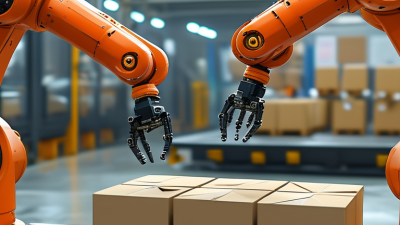
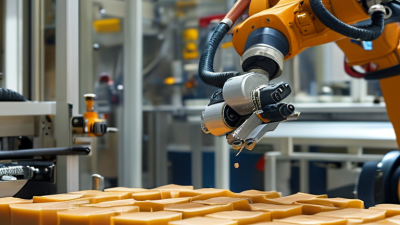
A pick-and-place robot is an automated system that moves an object from one location to another. It may lift a metal fitting from a conveyor, place a carton in a tray, or sort small components into bins. The task sounds simple. Precision is not.

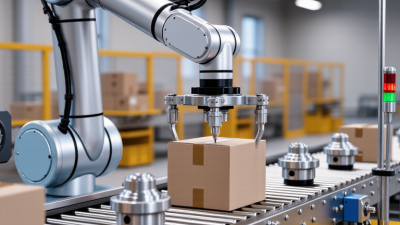
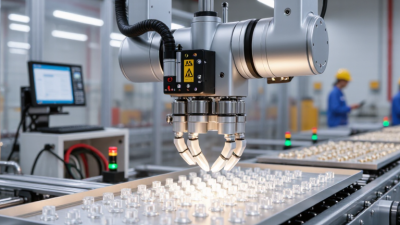
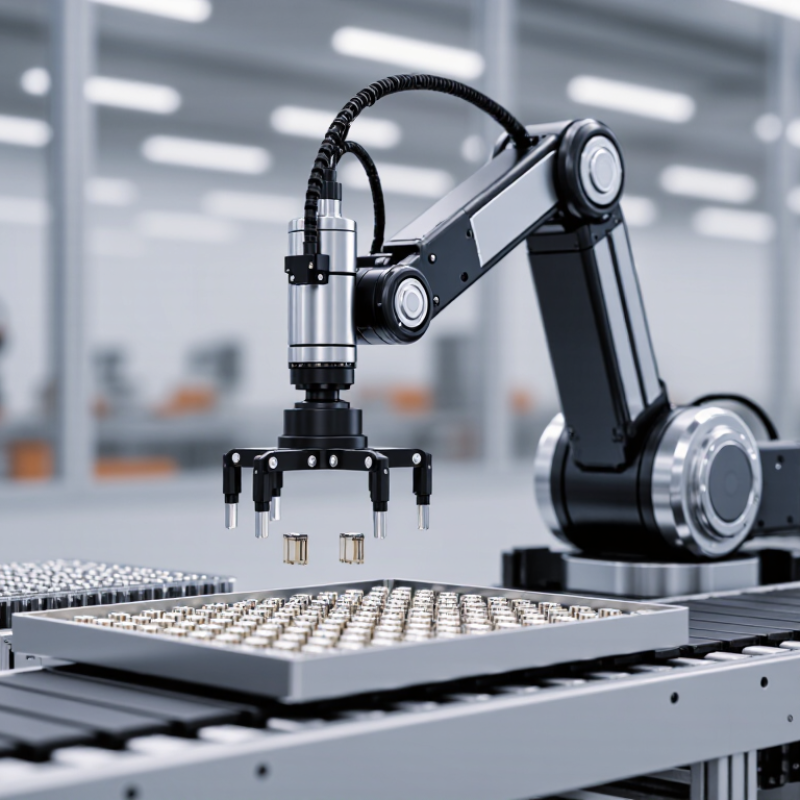
A typical setup combines a robot arm or gantry, a gripping tool, sensors, and a controller. The gripper might use suction for flat packages or fingers for rigid parts. Cameras can help locate objects, while sensors check position or confirm a successful grip. The controller coordinates each movement and adjusts the cycle to match the production line. Small changes matter: a glossy surface, a shifting box, or a slightly uneven conveyor can affect pickup accuracy.

These robots are useful when tasks repeat often, objects follow predictable paths, or workers face tiring motions. Choosing a system depends on payload, reach, speed, accuracy, and how easily it can handle different objects. A fast robot is not automatically the best fit. In real installations, teams also need to consider guarding, maintenance access, and how the robot interacts with people nearby. A neat cycle-time calculation can miss those details. It can also be hard to predict how messy real objects will behave. Testing with representative parts gives a more reliable picture than relying on specifications alone.

How Pick-and-Place Robots Work

What Is the Best Pick and Place Robot in 2026?

How Pick-and-Place Robots Work

A pick-and-place robot transfers an item from one location to another using programmed motion. A feeder, conveyor, or tray presents each part within the robot’s reach. A camera or position sensor can help locate the item and estimate its orientation. The controller then converts that information into coordinates the robot can follow. Small changes matter.

At the pickup point, an end effector grips the part. Vacuum cups often suit flat, smooth surfaces, while mechanical fingers can handle shapes that are less predictable. Sensors may check whether the grip succeeded before the robot moves. The arm follows a planned path, places the item, and releases it at the target location. A missed grip can disrupt the sequence.

In practice, reliable operation depends on more than arm speed. Part weight, shape, surface, and spacing all affect the choice of tooling and motion settings. Calibration also matters: a camera mounted slightly out of position can send parts to the wrong spot. I would test with real parts and normal production variation, not just ideal samples. The first setup may look precise, yet still need adjustment. Dust, glare, or a shifting tray can expose weaknesses that were easy to overlook.

Key Criteria for Comparing Robots in 2026

When comparing pick-and-place robots in 2026, judge the complete workcell, not the arm alone. IFR’s World Robotics 2024 report recorded 541,302 industrial robot installations worldwide in 2023, with 4.28 million robots operating. That scale makes serviceability and integration practical buying criteria, not side notes.

Ask for cycle-time measurements using your actual part, gripper, approach path, and handoff—not a best-case brochure number. A fast empty-motion demonstration proves little.

Compare payload at full reach, repeatability, vision performance, and changeover time. Test glossy, dark, or randomly oriented parts under real factory lighting. Check whether the controller shares useful fault data with existing equipment. Include fixtures, guarding, training, and downtime in the cost.

Small details matter. A claimed 0.2-second cycle advantage can vanish when operators clear jams every hour.

IFR tracks installations, not task-level productivity, so its figures show adoption, not which robot performs best for your application. Run a timed pilot across representative shifts and record successful picks, rejects, stoppages, and recovery time. The awkward part: edge cases often decide the purchase. Not the demo.

Leading Robot Types and Their Best-Fit Applications

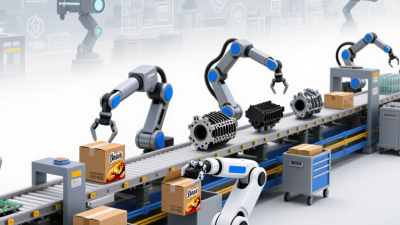
SCARA robots suit fast, repeatable transfers on flat work surfaces. They commonly load trays, place small components, and serve compact assembly cells. Their motion is quick, but reach and orientation are limited. Delta robots excel at lightweight sorting, such as moving colorful packages from a moving belt into separate bins. They need a carefully designed work area. Speed matters.

Cartesian robots move along straight axes, making them a practical fit for palletizing, machine tending, or handling large, regular layouts. Their frames can span long distances, though they may occupy substantial floor space. Six-axis robots handle angled placement and changing part orientations, useful for kitting or loading irregular items. More flexibility usually means more programming and setup.

Collaborative robots can work near people in suitably assessed tasks, such as feeding parts to a bench station. They are not automatically the safest or fastest option; tooling, payload, reach, and the task itself matter. A common selection mistake is comparing cycle-rate figures without testing the actual part. A gripper that slips on oily components can erase any speed advantage. I would test representative parts, including awkward ones, before fixing the robot type. A little uncertainty belongs in the plan.

What Is the Best Pick and Place Robot in 2026?

Typical payload ranges by robot type (kg). Ranges are approximate and vary by model; the horizontal axis uses a logarithmic scale.

Best fit: Delta robots are suited to very high-speed, lightweight sorting; SCARA robots to fast assembly and small-part handling; collaborative robots to flexible, lower-speed work near people; six-axis robots to versatile handling across orientations; and Cartesian or gantry systems to large workspaces and straight-line movement. Select based on payload, reach, cycle time, accuracy, and workspace—not payload alone.

How to Select the Right Robot for Your Operation

What Is the Best Pick and Place Robot in 2026?
How to Select the Right Robot for Your Operation

Choosing the best pick-and-place robot starts with the part and the task, not a headline speed. Start with the part. Record its weight, dimensions, surface, and how much its position varies. A small, oily component may need a different gripper from a rigid carton. Then test it. Measure required picks per minute, reach, placement tolerance, and operating hours per shift.

Compare candidate robots using the complete tool load, including the gripper, cables, and any sensors. Check whether the working area allows safe access for loading and maintenance. Vision systems can help when parts arrive in inconsistent positions, but they add setup and calibration needs. A perfect demo is not enough. Run representative parts at realistic line speeds, including awkward orientations and occasional delays.

Check how the robot will connect with conveyors, controls, and existing safety equipment. Ask who will maintain it, how quickly common wear parts can be replaced, and what training operators need. Have operators review the proposed cell layout; they often notice access problems early. Leave room for product changes, too. A spreadsheet can make a borderline setup look safer than it is, so verify key assumptions on the production floor. The right choice balances repeatable handling, achievable throughput, practical upkeep, and the limits of your actual workspace.

What Is the Best Pick and Place Robot in 2026? - How to Select the Right Robot for Your Operation

Robot Type Typical Payload Range Typical Reach or Work Area Typical Repeatability Best Suited For Key Selection Considerations
Delta (parallel robot) About 0.5–8 kg Typically a circular work area with roughly 300–1,600 mm diameter, depending on design Often around ±0.1 mm; varies by model and setup Very fast sorting, food handling, and lightweight packaging from a conveyor Choose it when cycle speed and overhead access matter more than heavy payload or a large three-dimensional work envelope. Confirm that the conveyor, vision system, and end effector can support the required pace.
SCARA About 1–20 kg Typically 200–1,000 mm arm reach Often around ±0.01–0.03 mm Fast assembly, loading, and pick-and-place on a horizontal plane A strong option for accurate, rapid horizontal moves. Check vertical stroke, reach at the required positions, payload including tooling, and whether the task needs more flexible orientation.
Cartesian (gantry) About 1–100+ kg, depending on axis design Configurable linear travel; large work areas are possible Often around ±0.02–0.1 mm, depending on components and travel Machine tending, palletizing, and applications requiring long, rectangular travel Useful when the work area is large or the load is heavy. Assess frame stiffness, footprint, axis travel, installation requirements, and access to the work cell.
Six-axis articulated robot About 1–100+ kg across different sizes Typically about 500–2,000+ mm reach Often around ±0.02–0.1 mm, depending on robot size and model Handling tasks that need flexible approach angles, reach around obstacles, or varied part orientation Offers broad motion flexibility but may be more than a simple planar task requires. Verify reach throughout the full path, wrist payload, cycle time, and guarding needs.
Collaborative robot (cobot) Commonly about 3–20 kg Typically about 500–1,300 mm reach Often around ±0.02–0.1 mm, depending on model Flexible, lower-volume handling and tasks where people work near the robot Assess the complete application—not just the robot—for safety. Tooling, sharp parts, speed, payload, and workspace can require risk reduction measures such as guarding or safety-rated monitoring.

How to choose: There is no single best pick-and-place robot for every operation. Compare required payload (including gripper and cables), reach, part orientation, target cycle time, positioning accuracy, work area, integration cost, and safety requirements. The figures above are representative ranges rather than guarantees; specifications vary by model, tooling, motion profile, and application.