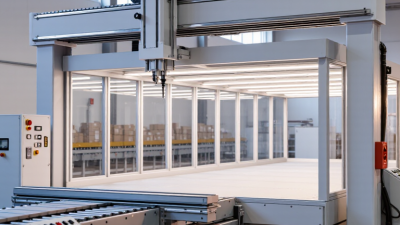

A gantry robot can move loads across a wide work area, but its frame alone does not determine whether it suits a production line. Buyers should compare motion axes, payload, reach, speed, accuracy, and the space available for installation. The Top 10 Types of Gantry Robots for Buyers explores Cartesian, bridge, overhead, cantilever, XYZ, and other common configurations. Some categories overlap. That can make comparisons less tidy than a product brochure suggests.
Robotics researcher Henrik Christensen is not being presented here as the source of a verified gantry-specific quotation. Instead, this buyer-focused principle reflects a broader robotics lesson: “Choose a robot around the task, the environment, and the people who must operate it.” The point is practical. A robot moving cartons between conveyors faces different demands from one positioning a tool over a large machine bed. Buyers should check cable routing, guarding needs, maintenance access, and the actual load, including grippers and fixtures.
Small details matter. A long span may require a stiffer structure; a faster cycle may increase vibration. Ask suppliers for application data, test results, and clear assumptions behind quoted performance. Then compare total system requirements, not just headline payload. A neat specification sheet is useful. It is not the whole decision. Some choices will still involve trade-offs, and buyers should document what remains uncertain before selecting a configuration.
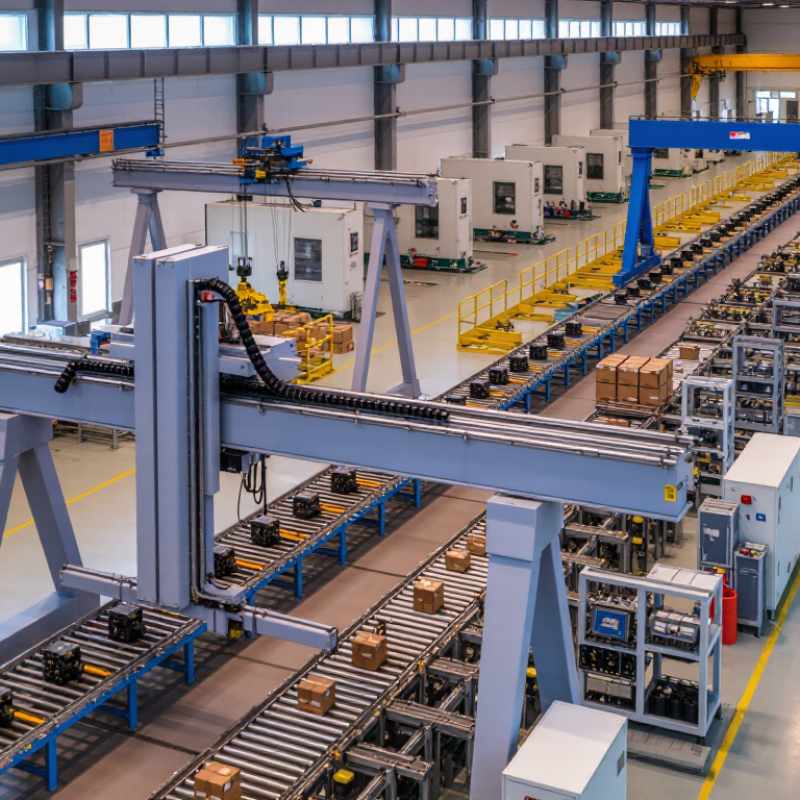
Gantry robots are best classified by structure, motion, and task—not by size alone. A Cartesian gantry moves along straight X, Y, and Z axes, making its path predictable over a worktable or production line. Single-beam designs suit lighter loads and narrow spaces. Dual-beam frames can improve stiffness across wider spans, but they need careful alignment. Overhead gantries keep floor space open; floor-mounted systems may be easier to access. Small details matter.
Motion separates systems further. Some use three linear axes for pick-and-place; others add a rotary wrist for part orientation. A long X-axis can serve a palletizing cell, while a compact XYZ unit may load a machine. Ask how payload, reach, speed, and accuracy interact. A faster move can increase vibration, especially with an extended beam. The catalog number will not tell you everything.
Task is the practical filter: handling, dispensing, inspection, or machine tending each demands different tooling and control. The International Federation of Robotics’ World Robotics 2024 report recorded 541,302 industrial robot installations worldwide in 2023. This figure covers industrial robots broadly, not gantry units specifically, so it signals automation activity rather than gantry market share. That distinction is easy to miss. Before choosing a frame, map the real workspace, include cable routing, and test the heaviest part at the farthest reach. I would also question whether the stated cycle time reflects production conditions.
Frame design determines how a gantry robot uses space, carries loads, and reaches work. Overhead gantries suspend the moving assembly from a ceiling-supported structure, keeping the floor clear for carts and operators. They suit stable buildings with verified roof capacity and predictable travel paths. Check deflection carefully: even small beam movement can affect positioning during fast moves. Clear floors matter.
Bridge gantries span two parallel rails, with a crossbeam carrying the carriage between them. Their broad work envelope suits palletizing, machining, and inspection across a fixed cell. Rail alignment and foundation stiffness deserve attention; a long span can amplify small installation errors.
Floor-mounted designs place rails or supports at ground level. They are easier to access for service, but rails may collect chips, dust, or washdown residue, and can interrupt traffic. Not always convenient.
Cantilever gantries support the beam from one side, leaving an edge open for loading parts. This helps when a fixture sits beside a machine or operators need side access. The trade-off is leverage: extending reach increases bending and can reduce payload or speed. Compare the actual load, tool offset, acceleration, and required accuracy, not just rated capacity.
A useful detail is often missed: future maintenance access. A compact frame can fit neatly, yet leave little room to replace a motor or clean a rail. Measurements from the real cell beat a tidy drawing.
Top 10 Types of Gantry Robots for Buyers
Axis Configurations: Single-, Two-, and Three-Axis Gantry Robots
Axis count shapes what a gantry robot can do, how much space it needs, and how complex setup becomes. A single-axis system moves along one straight path. It suits loading, dispensing, or inspection where parts follow a fixed line. For example, a carriage might travel above a conveyor and stop at repeatable positions. Simple can be enough.
A two-axis gantry adds movement across a second direction, often forming an X-Y plane. It can serve multiple stations or cover a work surface without moving the product. Buyers should check the usable travel, payload, and speed together. A long span carrying a heavy tool may flex, affecting positioning. That detail is easy to miss.
Three-axis models add vertical travel, enabling pick-and-place, machine tending, or layered assembly. They offer more reach, but added motion can increase cost, maintenance, and programming effort. Match the Z-axis stroke to the actual part height, not a generous guess. Also consider cables, end-effector weight, and clearance around fixtures. More axes are not automatically better. A buyer’s requirements may change, too, so leave practical room for adjustment without paying for unused travel.
A gantry robot’s axis count indicates how many independent linear directions it can move along. Single-axis systems move in one direction; two-axis systems combine two directions (such as X–Y); and three-axis systems add a third direction (X–Y–Z). These are configuration categories, not a ranking of robot types.
Pick-and-place gantries suit repetitive transfers between conveyors, trays, and assembly stations. Their value depends on more than top speed. Check payload, travel distance, positioning accuracy, and how the gripper handles each part. A small plastic component needs a different touch from a heavy metal housing. Speed matters. If parts arrive unevenly spaced, a fast gantry may still wait for the line.
Machining gantries move tools or workpieces across a defined area for cutting, drilling, or trimming. Buyers should consider stiffness, chip protection, vibration, and access for maintenance. Even a modest amount of frame deflection can affect finish quality. Dust changes everything. One trade-off is easy to underestimate: adding protective covers can limit access and complicate cleaning. It is worth reviewing the full work cycle, not just the machine’s advertised travel speed.
Palletizing gantries stack cartons, bags, or containers into stable patterns. Their layout can free floor space, but the robot must reach every pick and placement point without striking nearby equipment. Measure the tallest load, pallet position, and conveyor height on site. Also check whether package sizes change often. A pattern that works beautifully for one box can become awkward with another. Buyers may need to balance throughput against simpler changeovers; the fastest arrangement is not always the easiest to run reliably.
| Type | Typical Configuration | Common Tasks | Typical Payload | Typical Work Envelope | Typical Repeatability | Buyer Considerations |
|---|---|---|---|---|---|---|
| 1. Cartesian Pick-and-Place Gantry | Two or three linear axes, usually with a vacuum or mechanical gripper | Loading, unloading, sorting, transfer, and assembly-line handling | About 1–50 kg | Axis travel commonly ranges from a few hundred millimeters to several meters | About ±0.05–0.2 mm | Match cycle speed, gripper design, and travel length to the product and line layout. |
| 2. High-Speed Pick-and-Place Gantry | Lightweight two- or three-axis system with a compact end effector | Small-part handling, packaging, kitting, and repetitive transfer | About 0.1–5 kg | Typically compact to medium; often designed around a defined picking zone | About ±0.02–0.1 mm | Check acceleration, settling time, and the effect of payload and reach on cycle time. |
| 3. Palletizing Gantry | Overhead or floor-supported X-Y-Z axes with a palletizing gripper | Stacking cartons, bags, cases, and containers onto pallets | About 10–200 kg, including the end effector | Often sized to cover one or more pallet positions and the product infeed area | About ±0.1–0.5 mm | Account for the heaviest product, stacking height, pallet pattern, and access for pallet exchange. |
| 4. CNC Machine-Loading Gantry | Linear gantry axes with a gripper or part-specific handling tool | Loading and unloading lathes, mills, presses, and other production machines | About 5–100 kg | Usually spans the machine opening, load station, and any required buffer positions | About ±0.05–0.2 mm | Verify machine-door access, part orientation, chip and coolant exposure, and interlocks. |
| 5. Gantry Machining System | Rigid bridge or overhead structure carrying a spindle or machining head | Milling, drilling, trimming, routing, and machining large workpieces | Tooling and cutting forces are application-dependent; workpiece capacity is defined separately | Commonly large-format, with travel selected to cover the workpiece and tool path | Depends on structure, drive system, thermal control, and cutting load | Compare stiffness, spindle power, structural deflection, thermal behavior, and required machining tolerance. |
| 6. Heavy-Duty Overhead Gantry | Bridge spanning parallel rails, with a trolley and lifting or robotic tooling | Moving large components, molds, fixtures, and industrial assemblies | From hundreds of kilograms to many tonnes, depending on design | Long travel is possible; span and lift height are engineered for the facility | Application-dependent; lifting systems are not generally specified like precision positioning robots | Confirm structural load ratings, deflection limits, foundation requirements, and safety provisions. |
| 7. Four-Axis Gantry with Rotary Axis | X-Y-Z linear motion plus a rotary wrist or part-positioning axis | Part orientation, multi-face handling, dispensing, and light assembly | About 1–30 kg | Linear travel ranges from compact work cells to multi-meter spans | About ±0.05–0.2 mm on linear axes; rotary performance varies by design | Check the rotary axis range, cable routing, tool orientation, and combined-axis accuracy. |
| 8. Dispensing and Sealing Gantry | Two- or three-axis gantry carrying a pump, nozzle, or metering tool | Adhesive application, sealant dispensing, potting, and coating | Usually determined by the tool and material-delivery equipment | Configured to follow the surface or path of the target part | About ±0.1–0.5 mm, depending on setup and process | Evaluate path accuracy, flow control, material compatibility, and cleaning access. |
| 9. Inspection and Metrology Gantry | Precision linear axes carrying cameras, probes, scanners, or sensors | Dimensional inspection, surface scanning, measurement, and machine vision | Typically a light sensor payload, often under 10 kg | Selected to cover the inspection area while maintaining sensor standoff | System measurement performance depends on calibration, sensor, and environment | Look beyond motion repeatability: assess calibration, vibration, lighting, and measurement uncertainty. |
| 10. Modular Multi-Station Gantry | Shared overhead or floor-mounted axes serving multiple workstations | Part transfer, machine tending, assembly, and production-line buffering | About 2–100 kg per handling unit | Often spans several stations; travel is determined by line length and station spacing | About ±0.1–0.5 mm, depending on station and tooling requirements | Review station access, traffic sequencing, guarding, maintenance access, and future expansion. |
| Selection note: Payload, travel, and repeatability figures are indicative ranges, not guaranteed specifications. Actual performance depends on the gantry structure, drive system, tooling, mounting, operating speed, and application requirements. Confirm final values with an application-specific design review. | ||||||
Buyers comparing gantry robot types should start with the part, not the catalog. Measure its weight, dimensions, grip points, and required travel. A three-axis Cartesian gantry suits predictable pick-and-place paths, while bridge designs can cover wide work cells. Cantilever layouts may reach over a machine, but their unsupported span can limit payload or rigidity. Check the actual working envelope, including space for cables and tooling.
Capacity matters. The International Federation of Robotics reported 541,302 industrial robot installations worldwide in 2023, in its World Robotics 2024 report. That figure describes industrial robots overall, not gantry systems specifically. It does show the scale of automation investment. For a gantry application, compare payload at full reach, cycle time under real loads, positioning repeatability, and duty cycle. Ask suppliers for test conditions; a speed figure without payload and travel distance is hard to compare.
Then inspect the site. A floor-mounted frame may simplify access, while an overhead gantry can preserve floor space but needs suitable building support. Clean or dusty environments may call for different covers, seals, and maintenance intervals. Small details matter. Check gripper changes, guarding, and service access before settling on a layout. I would not choose from a type label alone; even a familiar design can disappoint when the part varies more than expected.